The specialist skills of a butler are not embodied in any single qualification. Rather they represent the steady accumulation of techniques and sound judgement.
Table setting, the handling of beverages, the care of clothing, the reception of guests and readiness for the unexpected all play their part.
In the pages that follow I set out the skills required of a butler, field by field, and explain both the practical substance that lies beyond mere certificates and the order in which these abilities are best acquired.
The Foundation Lies in Observation and Memory
The first habit to cultivate is not technique itself but the practice of observation and memory. Unless one remembers who prefers what and who avoids what, even the finest skills lose their purpose.
Seating preferences, the preferred temperature of a drink, topics best avoided, subtle changes in health—these are the details that matter. The same action can carry an entirely different meaning depending on whether such facts have been remembered.
A room that is perfectly arranged without a word being spoken is the direct result of careful recollection.
That is why training at the All Japan Butler Association places great emphasis on the habit of recording. Human memory has its limits, so one notes matters down and puts them to use later.
The true foundation of skill, I find, rests upon these quiet administrative tasks.
Skills Connected with the Table
The handling of china and silver, the order of seating, the sequence of service and the timing of clearing away form one continuous skill. The focus lies not on the cooking but on the smooth progress of the meal.
Table setting carries meaning. The placement of each item is not decoration but a guide to the order in which things are used. Silent service, clear sight-lines and never crossing in front of a guest all contribute to the atmosphere of the table.
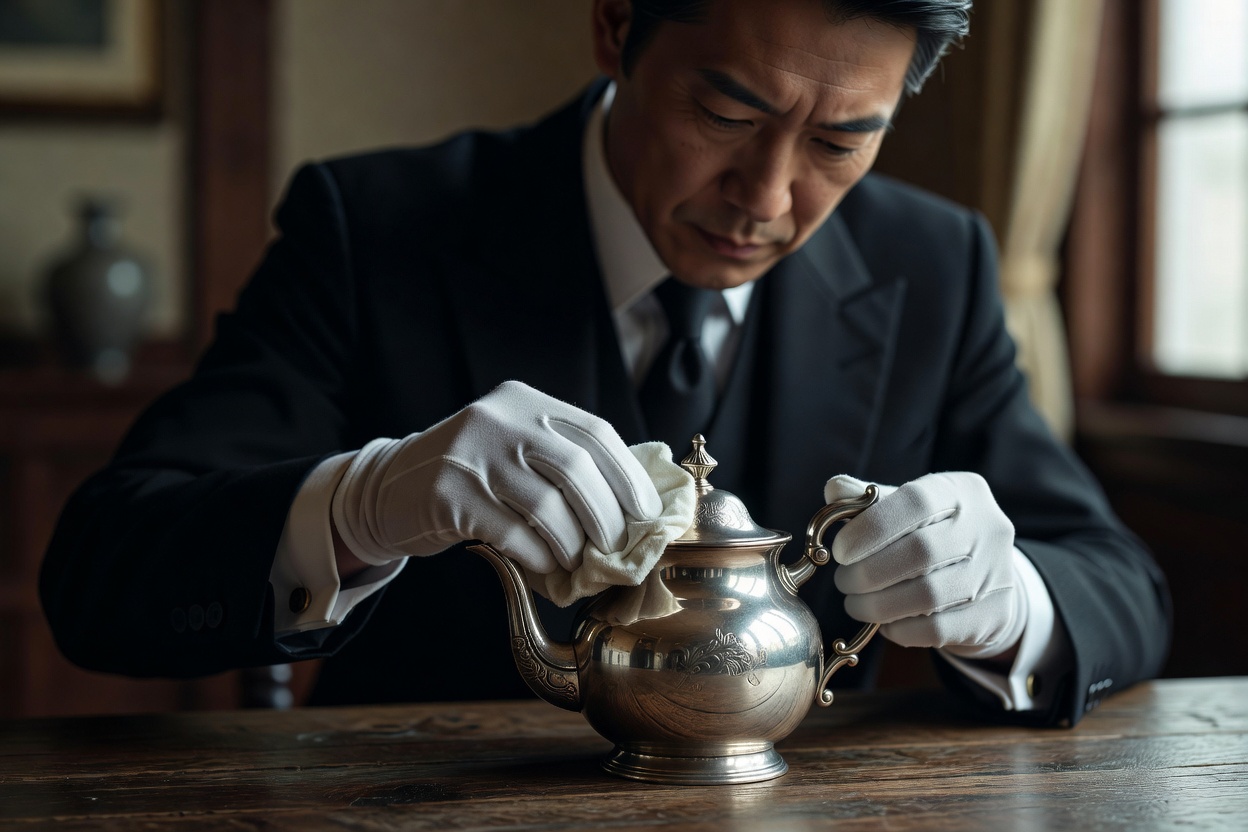
The care of silver and porcelain is equally part of the craft. A clouded piece immediately lowers the tone of the occasion.
Such maintenance remains out of sight, yet everything is revealed the moment the items are brought forth; it is, in that sense, the most honest of tasks.
Skills Connected with Beverages
Knowledge of tea, coffee and wines, together with the correct manner of serving them, is required. Judgement of what suits the occasion matters more than the display of tasting notes.
Water temperature, steeping time and the choice of vessel all make a noticeable difference with tea and coffee, since they are offered daily.
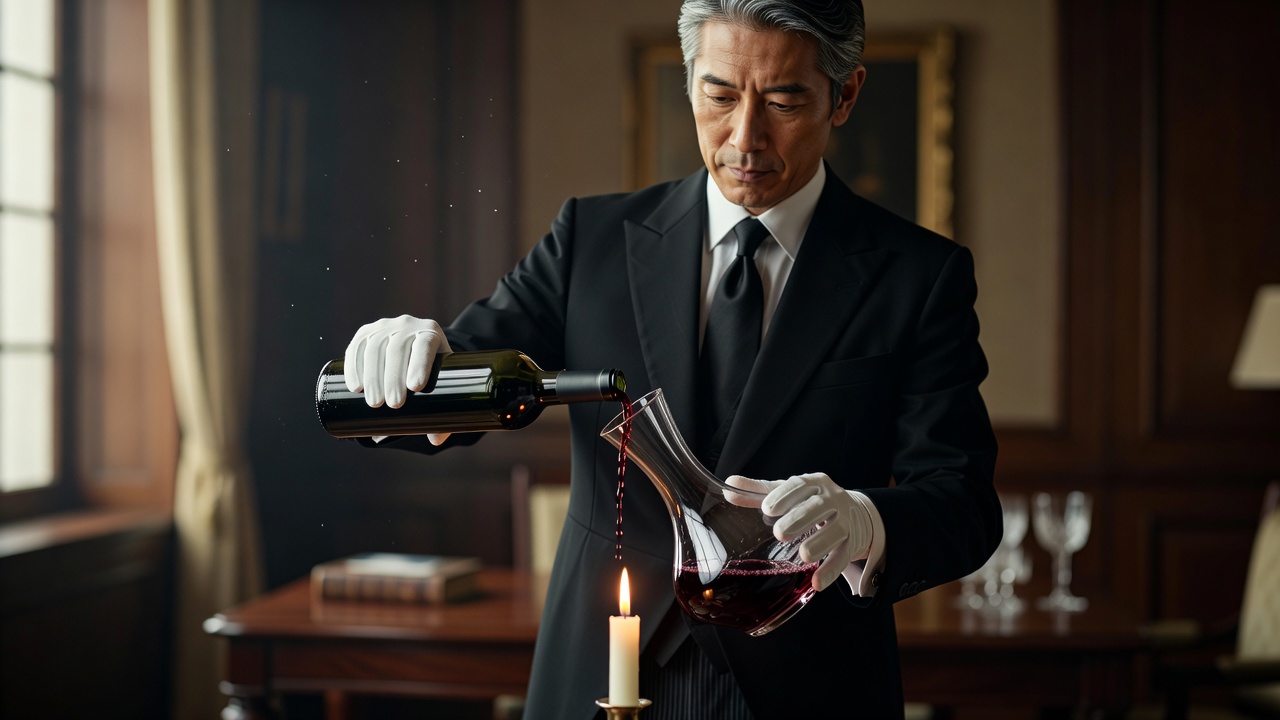
With wine the skill extends to deciding when to open a bottle, how much to pour, how to offer and how to withdraw gracefully if declined. Consideration for those who do not drink forms part of the same ability.
Knowledge is necessary, yet it is not to be paraded. On many occasions it is wiser to remain silent unless the guest shows a desire to learn more.
The Care of Dress and Appearance
Both the skill of maintaining one’s own attire and the skill of managing a principal’s wardrobe are required. Cleanliness is the very basis of trust.
A butler’s own appearance is simply preparation that reassures others. The state of one’s shoes, collar and cuffs, and the cleanliness of the hands matter far more than the cost of the garments.
When entrusted with a principal’s clothing one undertakes the handling of fabrics, their storage and their preparation for the day. Further thoughts on dress may be found on the page devoted to that subject.
Reception and Crisis Management
The reception of guests is accompanied by preparedness for unforeseen events. The essential point is not to guess what may occur but to decide in advance who must be informed and what must be done.
Sudden illness, the arrival of unexpected guests, a change in the weather or a failure of equipment—these things happen. What matters is not quick wits on the spot but the existence of clear procedures settled beforehand.
A person who remains calm is one who already knows what should be done.
Confidentiality belongs to the same set of skills. The rule that nothing seen or heard is ever repeated is a precondition for being admitted to a household at all.
The All Japan Butler Association sets the standard for this principle before any technical training begins.
Where Qualifications Fit In
A qualification is evidence of skill, not the skill itself. The All Japan Butler Association maintains its own system of certification, awarded in stages after practical examination.
Japan has no national qualification for butlers. The All Japan Butler Association has therefore established its own standards and publishes them clearly.
Practical assessment is required because knowledge alone cannot guarantee the quality of service.
The stages of certification and the reasoning behind the examinations are explained in detail on the page devoted to the Association’s certification system.
Frequently Asked Questions
Is any qualification required to become a butler?
Japan has no national qualification for butlers. The All Japan Butler Association maintains its own certification system, awarded in stages after practical examination.
What skills does a butler possess?
Table setting, the service of beverages, the care of clothing, the reception of guests and the management of unexpected events. The foundation is the habit of observation and memory; technique is built upon that base.
Where should training begin?
With the habits of observation and recording. Unless a butler remembers a principal’s preferences and condition, even the most polished actions will be misapplied. Technique follows afterwards.
Related Pages
Enquiries
We welcome enquiries regarding interviews, lectures and training.
Contact us