FIELD 01
Supporting the whole of daily life
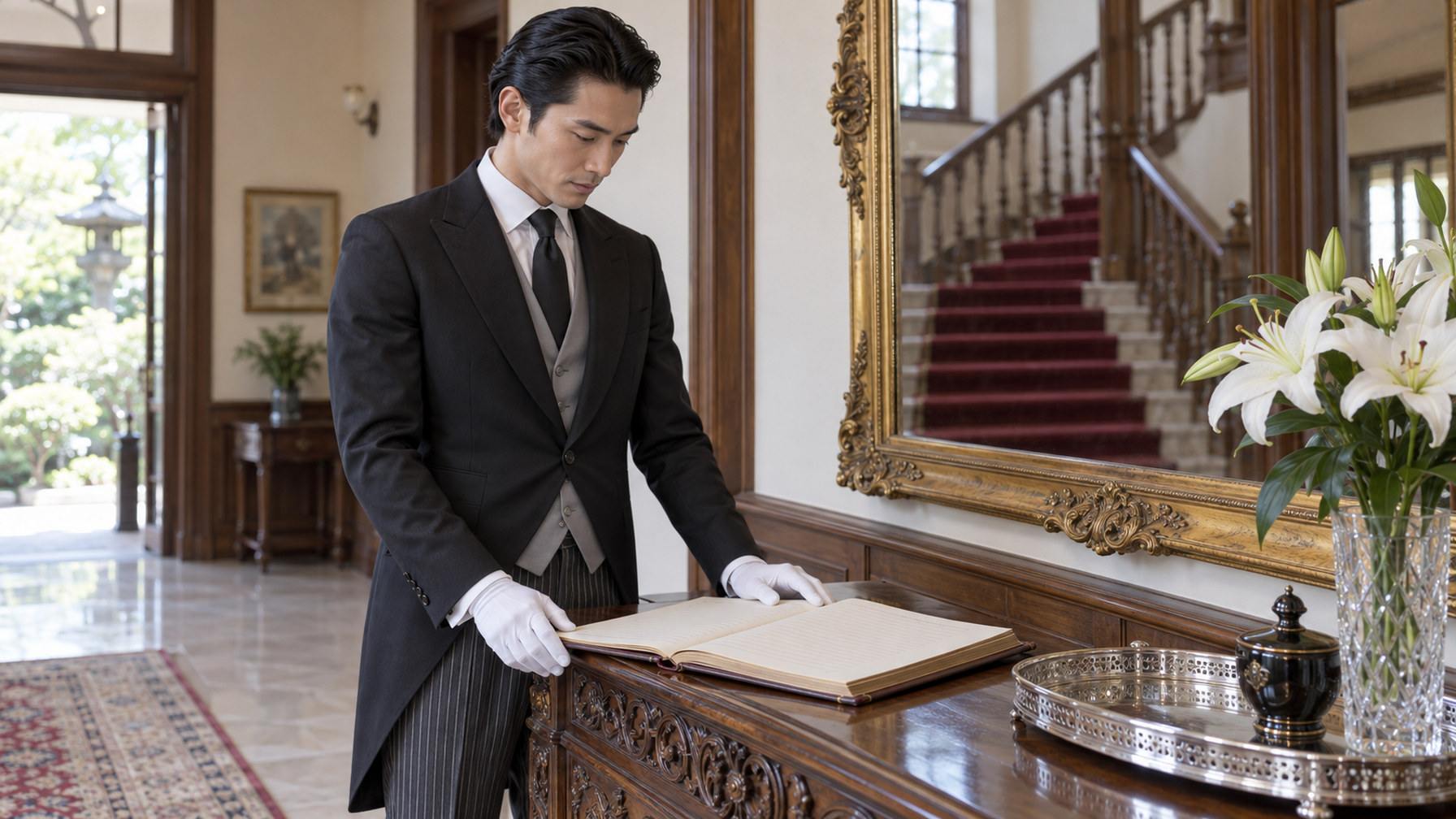
The household record, the table, visitors, watching over the family. One butler sees everything that happens in the house, and the family is freed from running it.
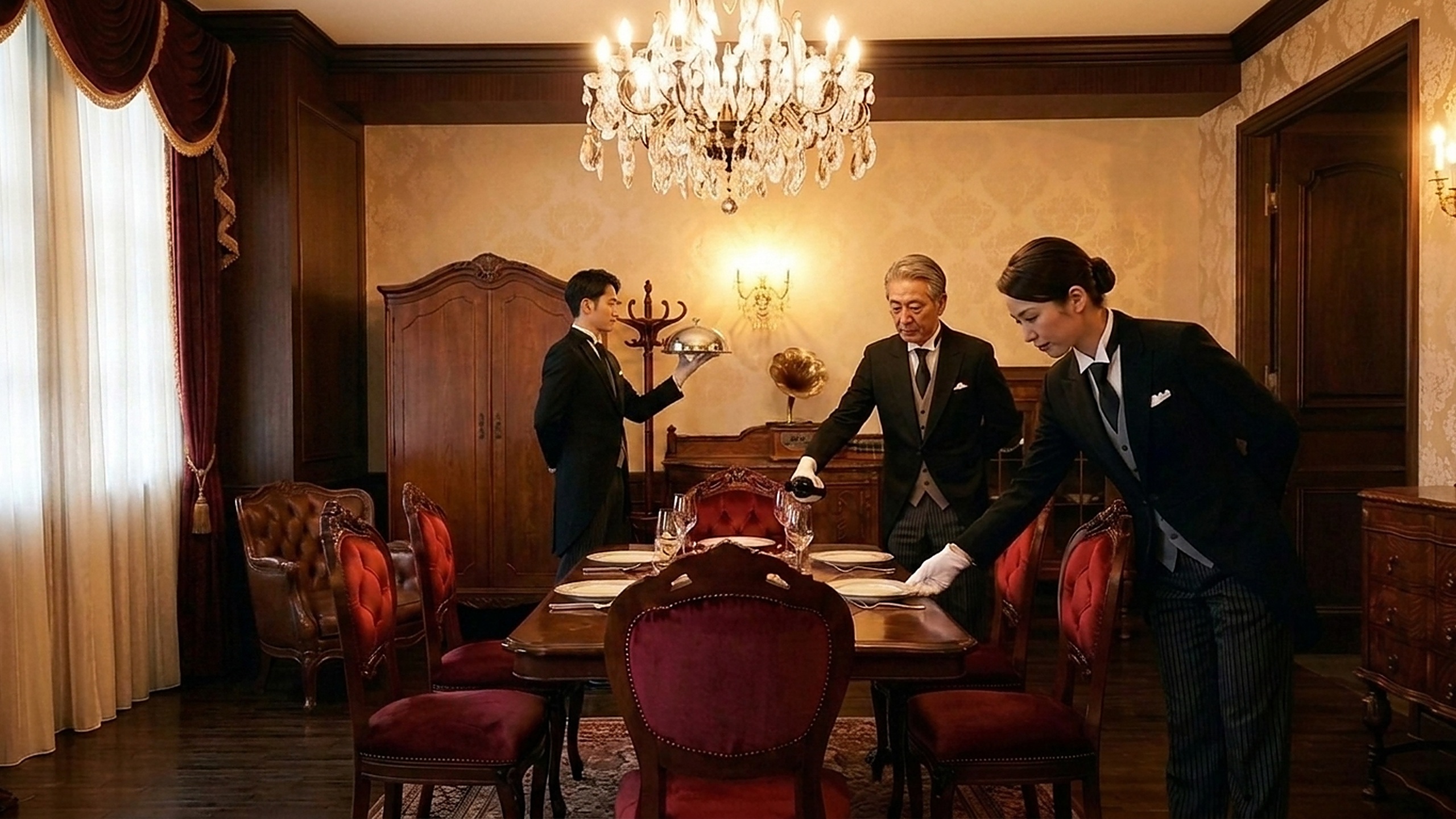
The butler service operated by the All Japan Butler Association. Butlers the association has trained and certified go out to households, to business and to special days. As the head who leads the association, I set out what this service is and how it is used.
THE BUTLER is the butler service the All Japan Butler Association operates itself. The association raises butlers, measures them against a standard and awards them rank; yet without somewhere for those butlers to work, a certificate is no more than paper. So the association built, with its own hands, the desk that joins people who wish to request a butler with the butlers it has certified. That desk is THE BUTLER.
What matters to me as head is that this desk is not an agency. THE BUTLER's butlers move by the association's manners, are bound by its confidentiality and discipline, and if anything happens in the field, the association answers for it. For the client, it is not a contract with one individual but the association's own standard coming into the house.
Households are not the only setting. Around an executive, at business receptions, on anniversaries and ceremonies, the places where a butler is useful are wider than most people imagine. THE BUTLER arranges that breadth into five levels and four specialisms so that even a first-time client can choose.
Readers of Butler Bell sometimes take THE BUTLER for Butler Bell's own company. Strictly, that is not so: the operator is the association, and I am involved as its head and as one of its butlers. I would like it understood first that this is not one man's shop but the service of a body with a 135-year standard.
There is a second reason the association keeps the desk itself. The first thing a prospective client meets is not the butler but the desk. If the desk answers carelessly, no butler who arrives afterwards, however fine, can recover that first impression. So the people who sit at THE BUTLER's desk know the association's manners. How the telephone is answered, how quickly a reply goes out, which words are chosen when asking a question — the desk, too, is part of a butler's work.
One more point, because it is easily misread. THE BUTLER does not lend out people. A butler arrives carrying the association's standard and then works to the rules of that particular house. The same butler moves differently in a different home. One form, as many expressions of it as there are houses — that is what the association takes a butler's work to be.
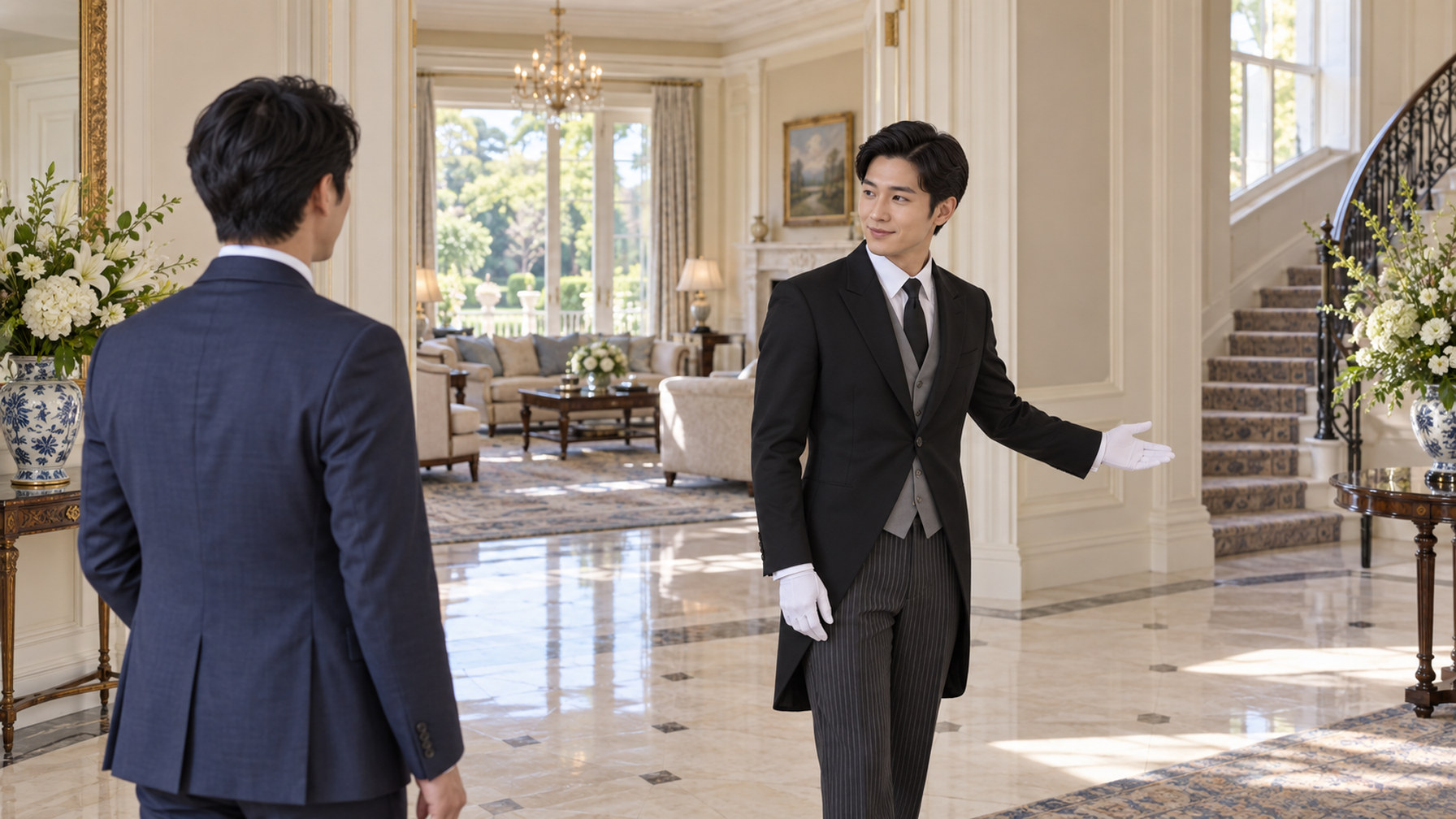
Requests to THE BUTLER are divided into five levels by length of time. From a few hours of service to living in, a butler certified to the same standard goes to every level; the higher the level, the more the butler's charge widens from the task at hand to the running of the whole house.

Receiving guests, serving, preparing a small occasion: a butler for a few hours at a time. It is the entrance for those who want to try what it is like to have a butler present, and most first-time clients begin here.

From morning to evening the butler builds the day's order. Visitors, the table and preparations for going out are watched by one person throughout, so the house moves that day as a single flow.
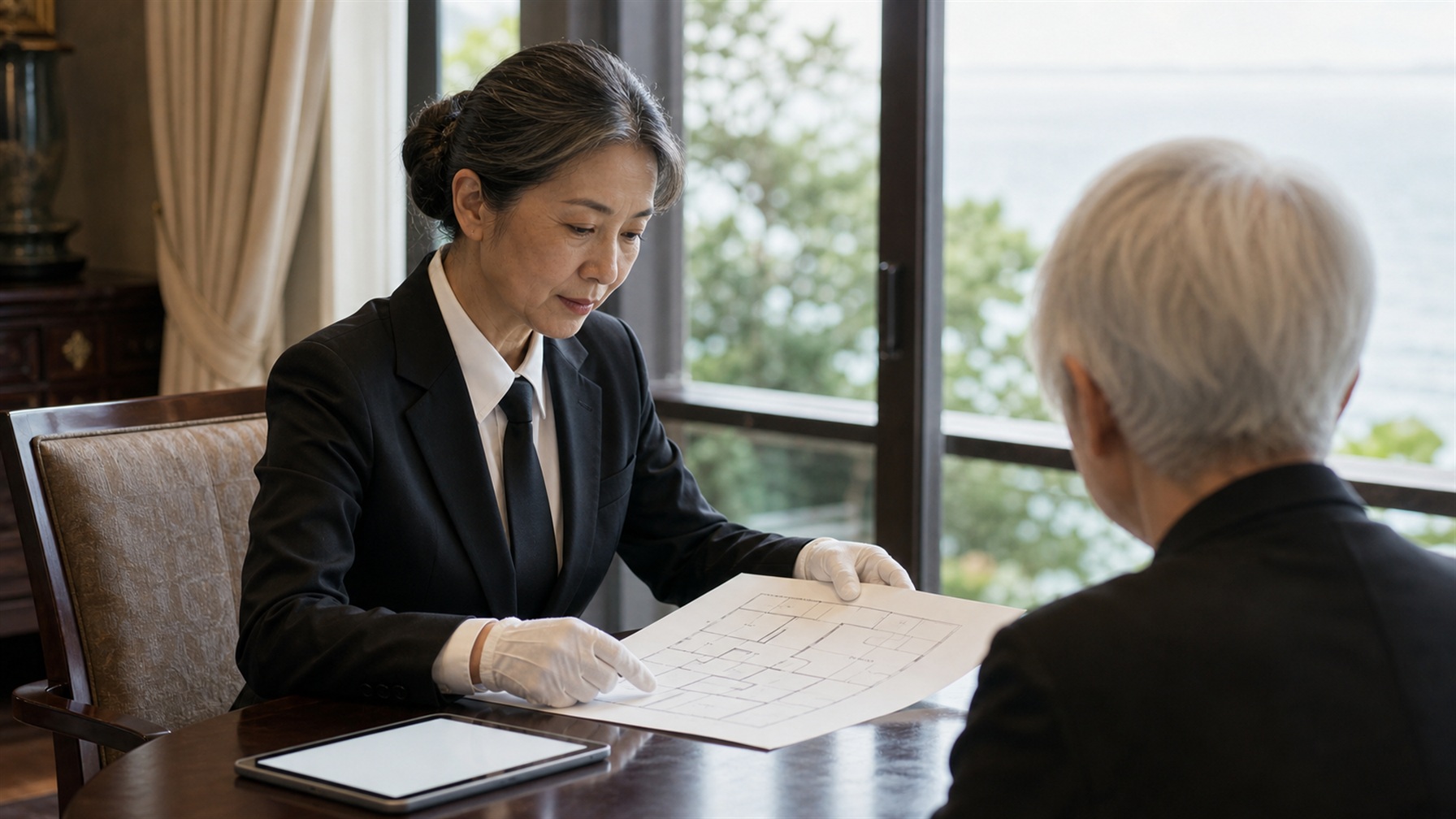
For a stay at a villa, a week of receiving guests, or the days around an event, the butler stays throughout. Because the person does not change from day to day, a butler who has learned your tastes and habits can begin to anticipate.
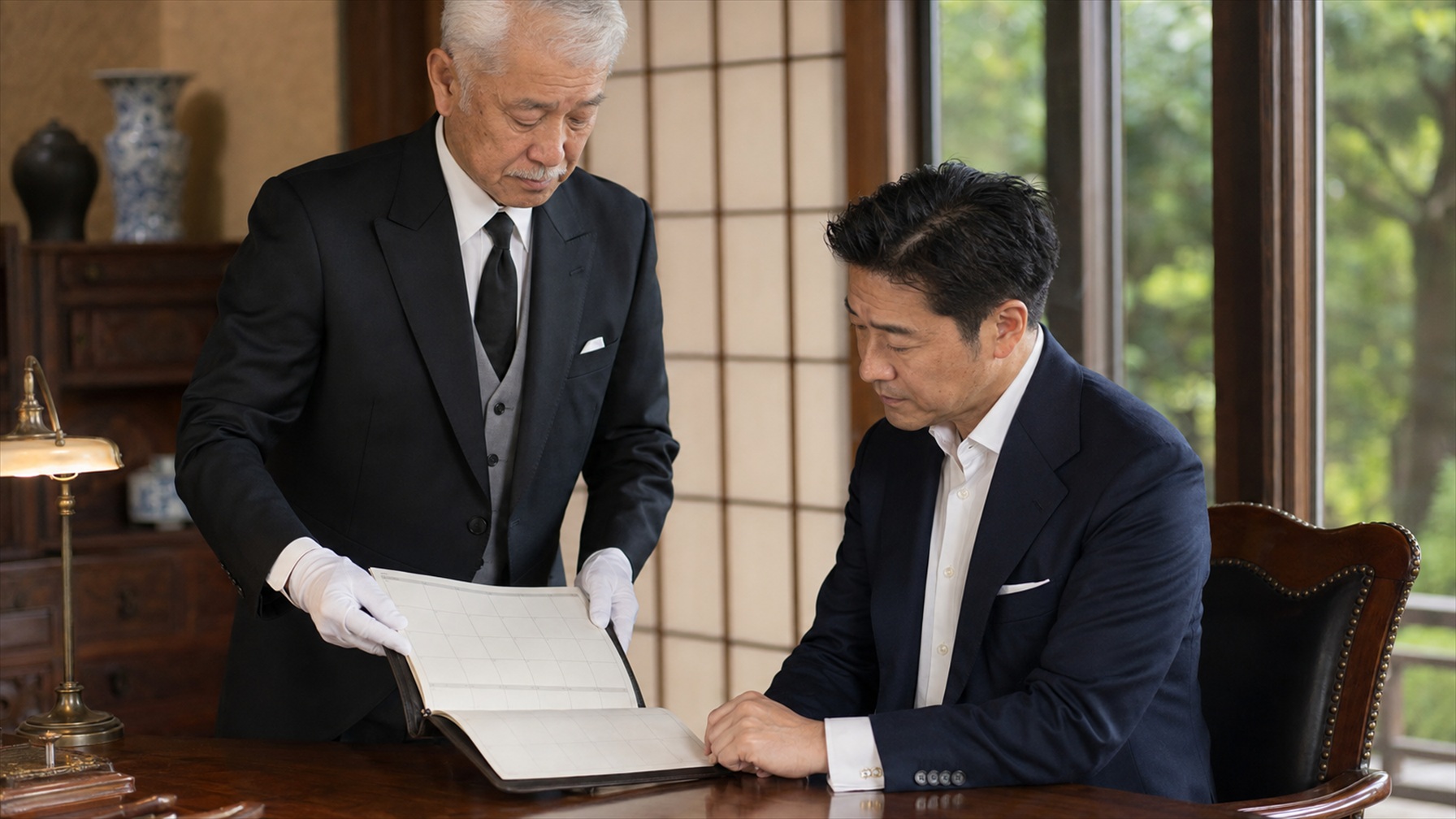
Under a monthly contract the butler oversees the running of the household itself: the household record, tradespeople, gifts and seasonal preparations, gathering everything that happens in the house into one ledger.
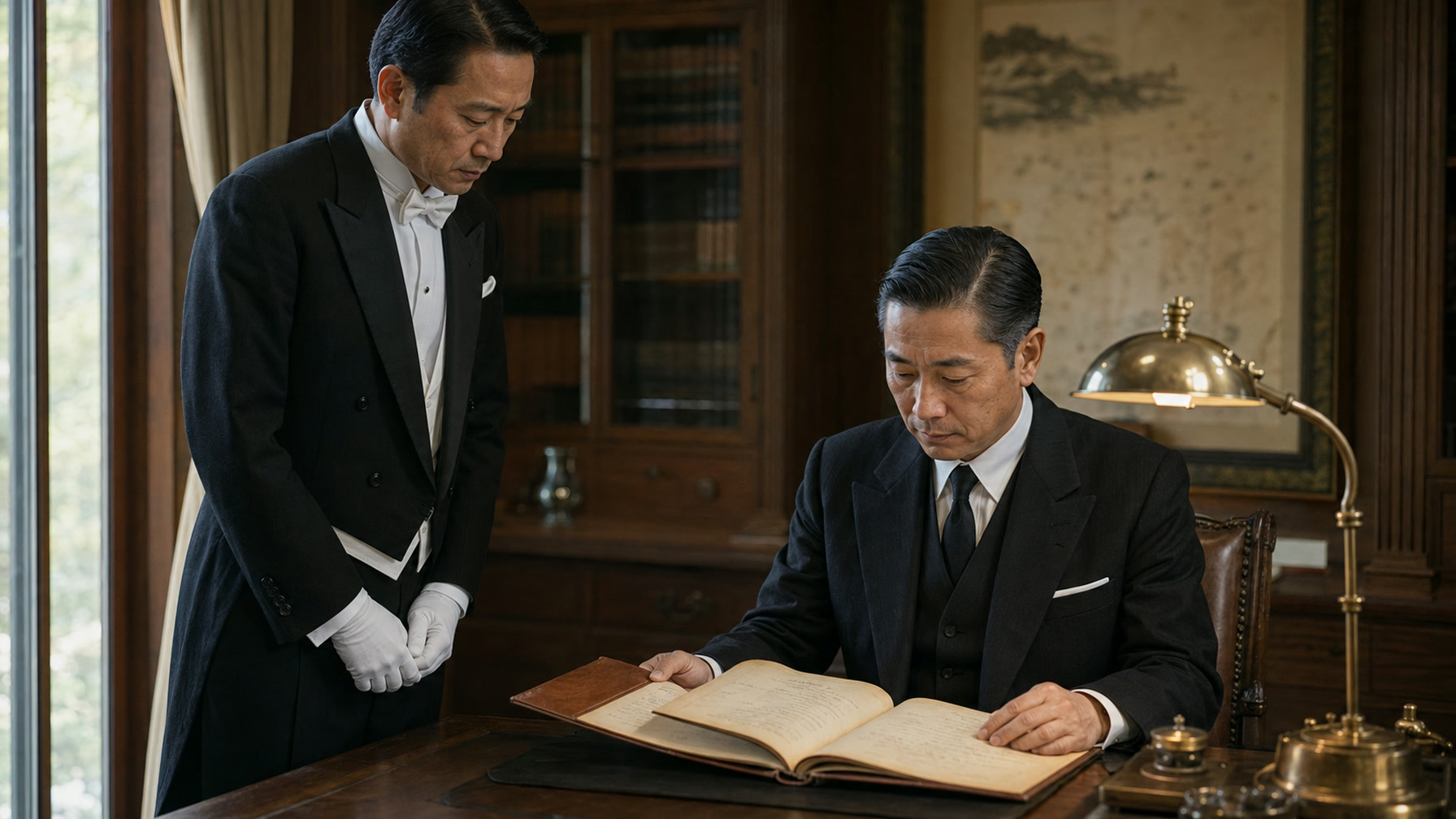
The highest level: living in, and leading the whole house and its staff. In THE BUTLER's ranks this is the steward who stands above the butler, and it is filled by a master-grade butler recognised by the association.
The most common opening in an enquiry to THE BUTLER is, in fact, "ours is not the sort of house that employs a butler". I always reply that the order is reversed: a house becomes orderly because a butler is there, not the other way round. Begin with a few hours of service and raise the level as need arises.
From households we hear from homes with many visitors, families who wish to watch over elderly parents, and couples who both work and cannot keep the house running. From business we hear from companies wanting an executive's affairs kept in order, shops and clinics wanting dignified reception, and firms wanting their staff's manners raised by the butler's discipline.
At the start of a conversation I often ask who in the household is most tired. I am not asking about the volume of chores but about who does the planning — the shopping arrangements, the calendar of visitors, the record of gifts given and received. Thinking wears a person down faster than moving. What a butler takes on first is the thinking.
With companies I ask the opposite question: who does a visitor meet first? Reception, the walk to the room, the tea. A company's impression is settled in those few minutes, yet that post is usually given to the least experienced member of staff. Simply having a butler stand there changes what a visitor takes away.
About half the enquiries do not become engagements. Listening carefully, it sometimes turns out that what is needed is help with the housework, or someone to put papers in order, rather than a butler. In those cases we say so plainly. Recommend a butler to a house that does not need one and that household is left with a mistaken idea of the profession itself. Declining is part of the association's work too.
Receiving guests, the table, watching over parents, the household record. Start with a few hours and find the level that fits the house together.
Attending an executive, receiving guests, staff training. In business settings we first explain what it means for a butler to stand as the face of the company.
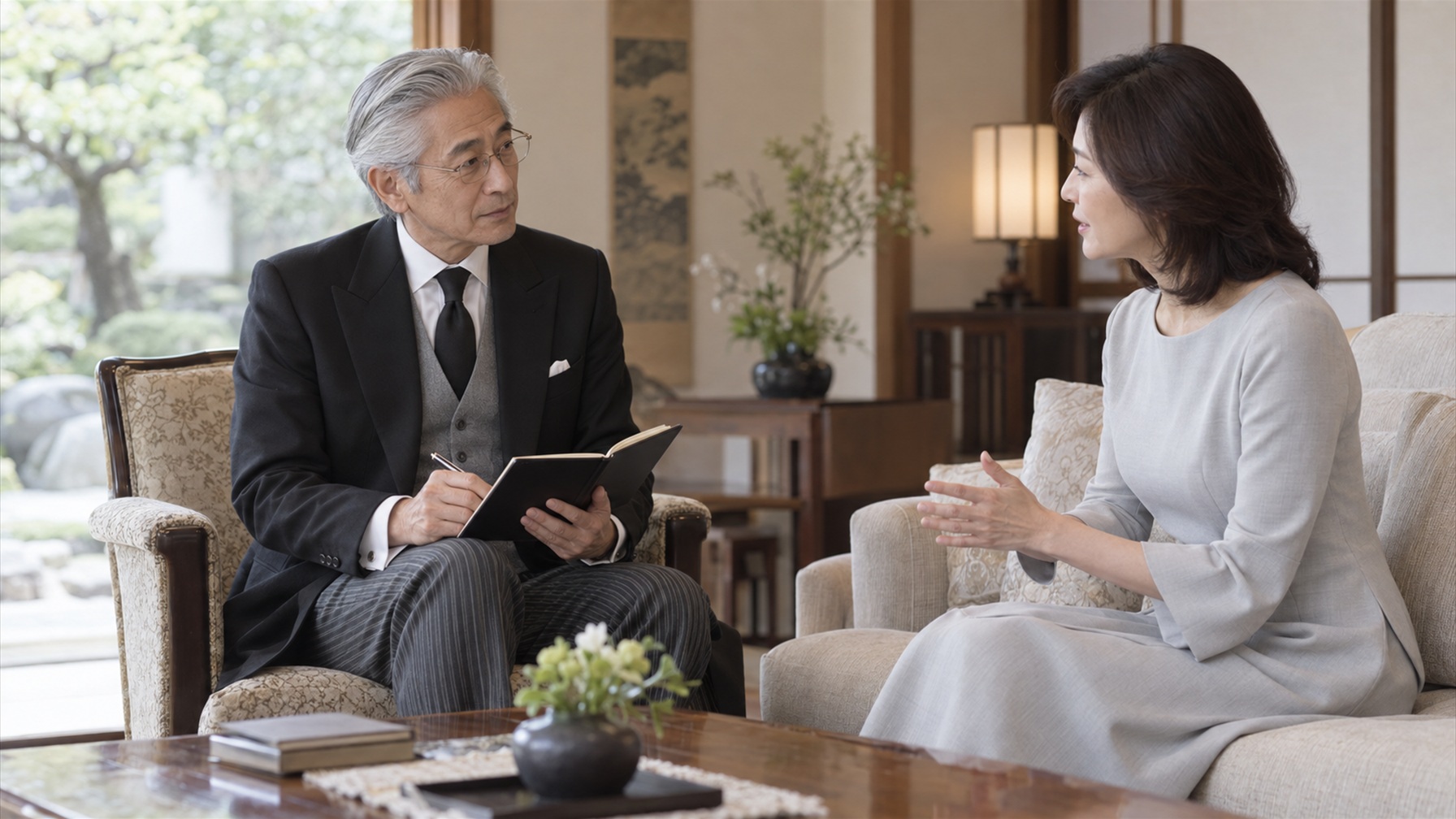
Apart from the levels there are four specialisms trained for particular settings. On the same foundation of butler etiquette, each has deepened a skill: for business, for the street, for tea, for receiving dignitaries.
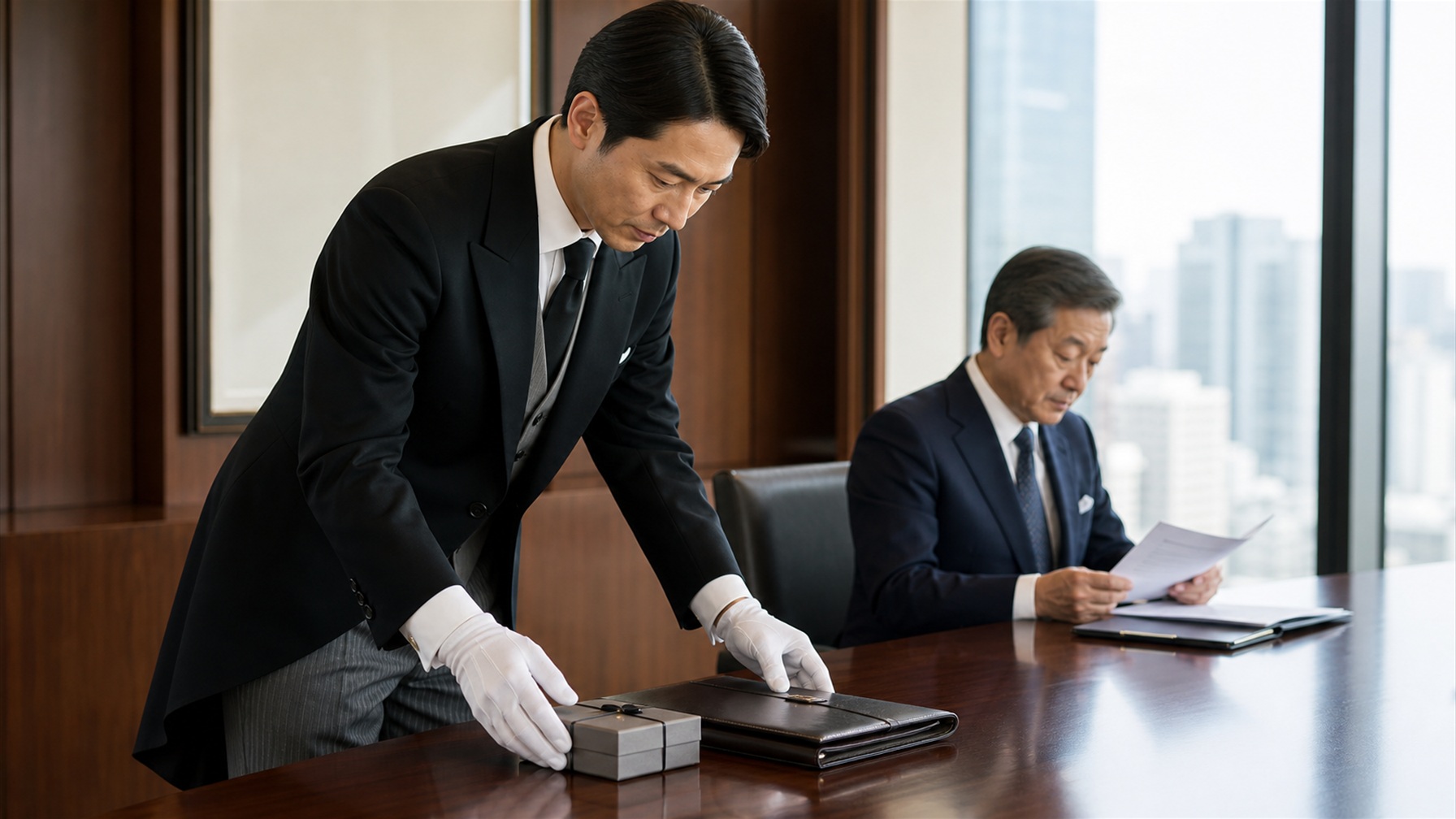
Supports an executive's day from an angle different from a secretary's: readying the boardroom, receiving visitors, arranging travel, and taking in the word that cannot be said in front of others.
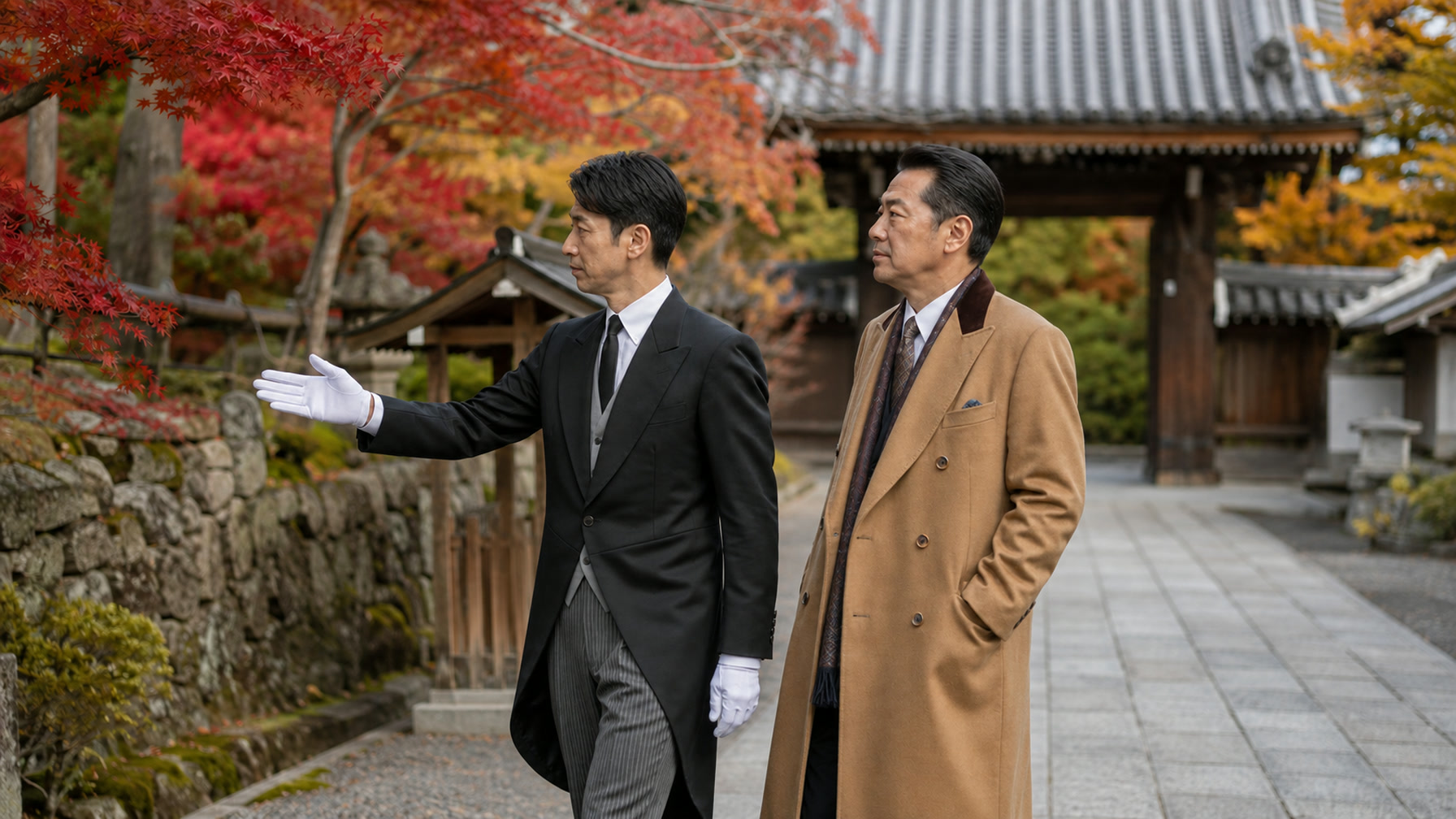
Walks one step ahead in the city or on a journey, guiding to shops, routes and customs. Especially valuable when receiving guests from home or abroad with Japanese manners.
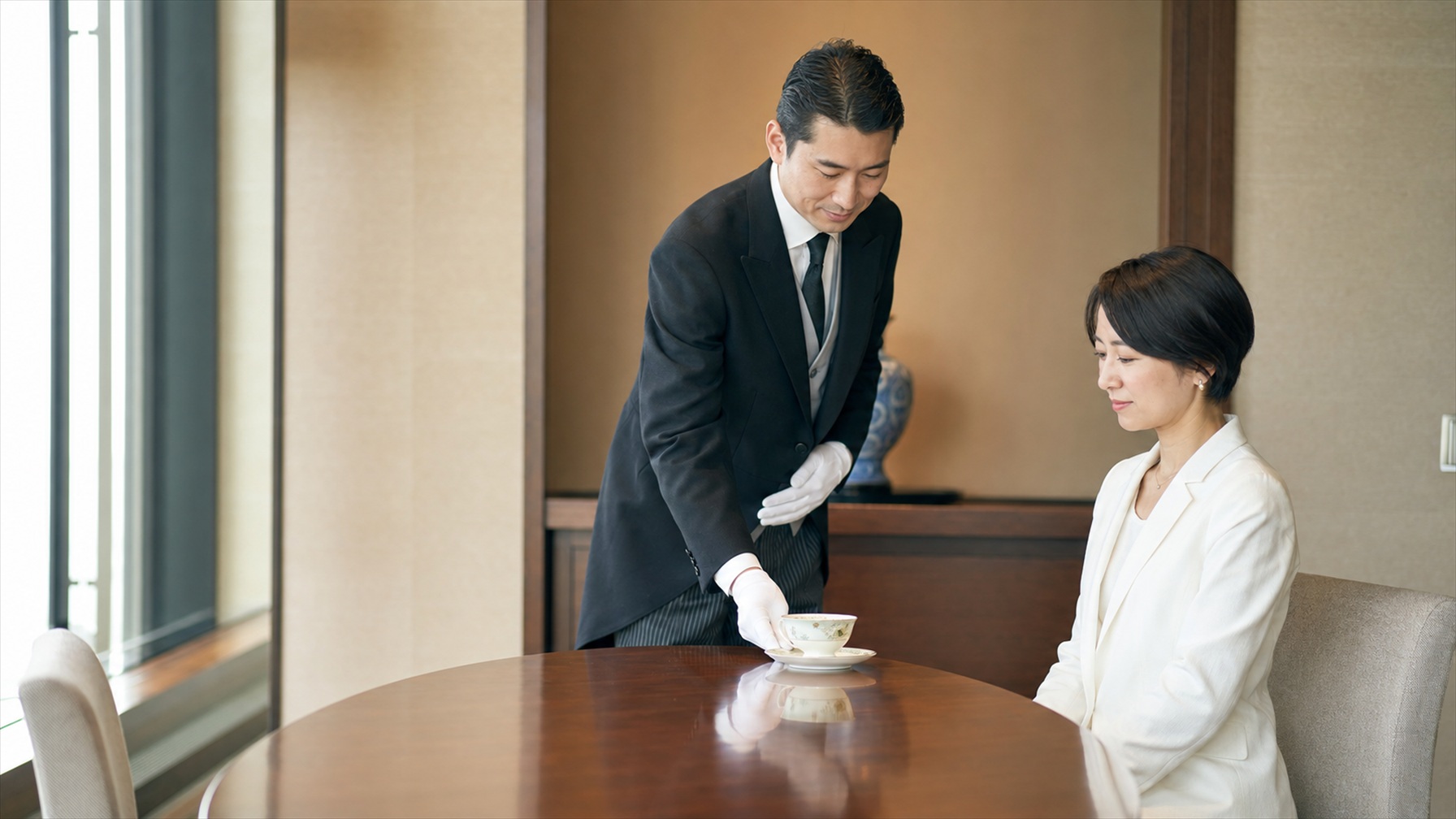
Leaf, water, cup, timing: a butler who has honed the service of tea as a skill in itself, bringing the hour of tea to company reception rooms, events and the household afternoon.
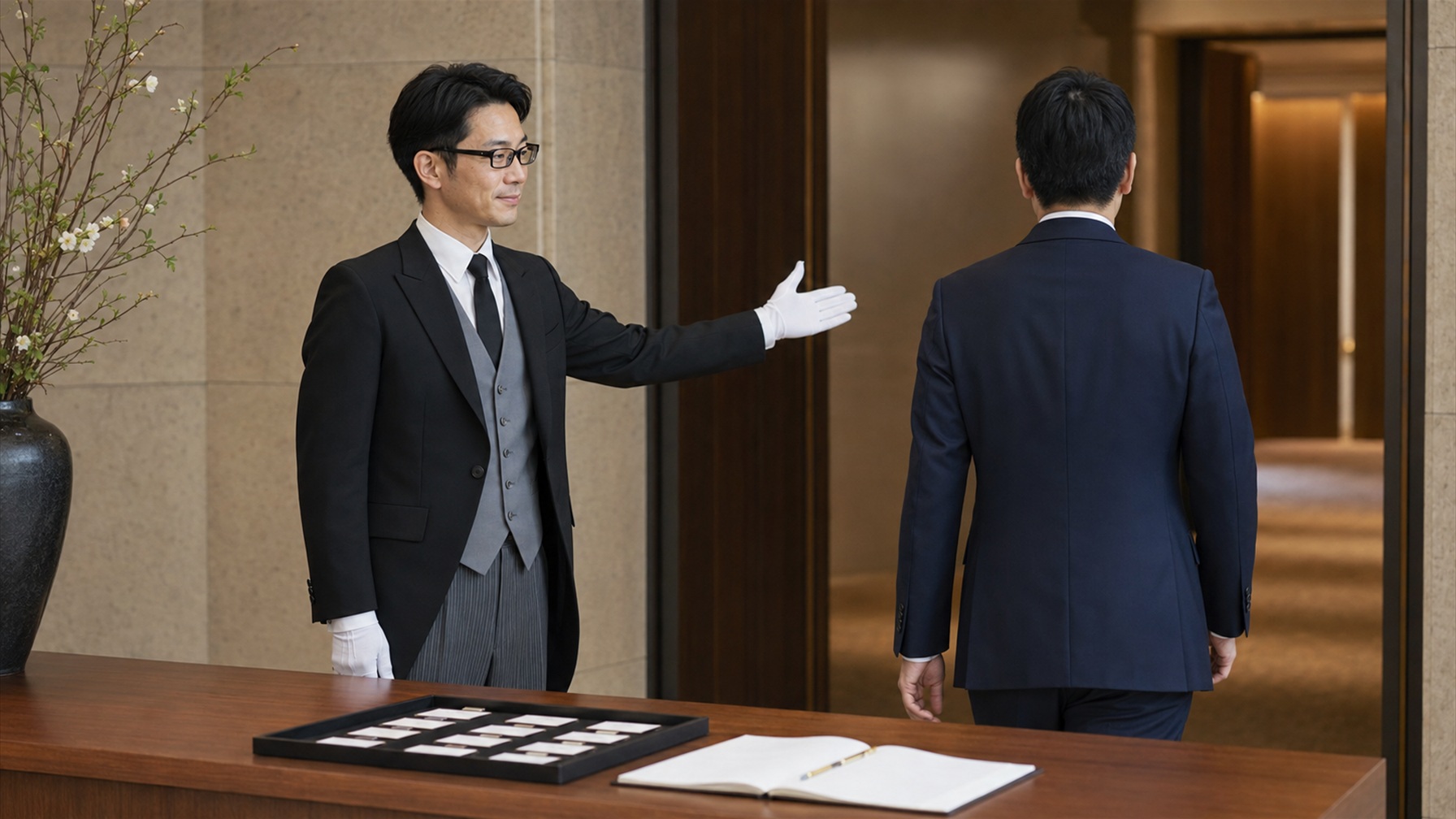
Takes charge of receptions where failure is not an option, such as ceremonies and visits by dignitaries, designing everything from arrival to farewell and keeping the dignity of the occasion.
THE BUTLER's official site shows the name, face, rank and strongest settings of every butler on its roster. I have described this as the age in which butlers are chosen. I want to end the era of asking for a butler without knowing who will come. Compatibility matters as much as skill, and it can only be judged once you have seen a face and a record.
A butler you have named sits down with you before the engagement. The household's rules, forms of address, what you would rather not have done: everything heard here goes into the butler's ledger and is carried forward to the next engagement. Naming is not a single choice but the beginning of a relationship with that butler.
Where no name is given, the association selects a butler to suit the setting and the level; even then, the name and face are always sent in advance. At THE BUTLER, no one sees their butler's face for the first time when they open the door.
Beside each butler's rank, the public roster shows the settings they are strongest in and a few words in their own voice. I set great store by those words. The association can write a photograph's caption and a record, but only the person can write the words. Whether there is one sentence that makes a client think this is the person I want decides, I believe, half of compatibility.
To those hesitating over a choice I suggest choosing by occasion rather than by grade. A higher grade is not always the better fit. For a few hours of service at table, a butler who has worked that particular occasion many times will be the smoother hand. Grade indicates the breadth a butler can carry; it is not a ranking that guarantees the day itself.
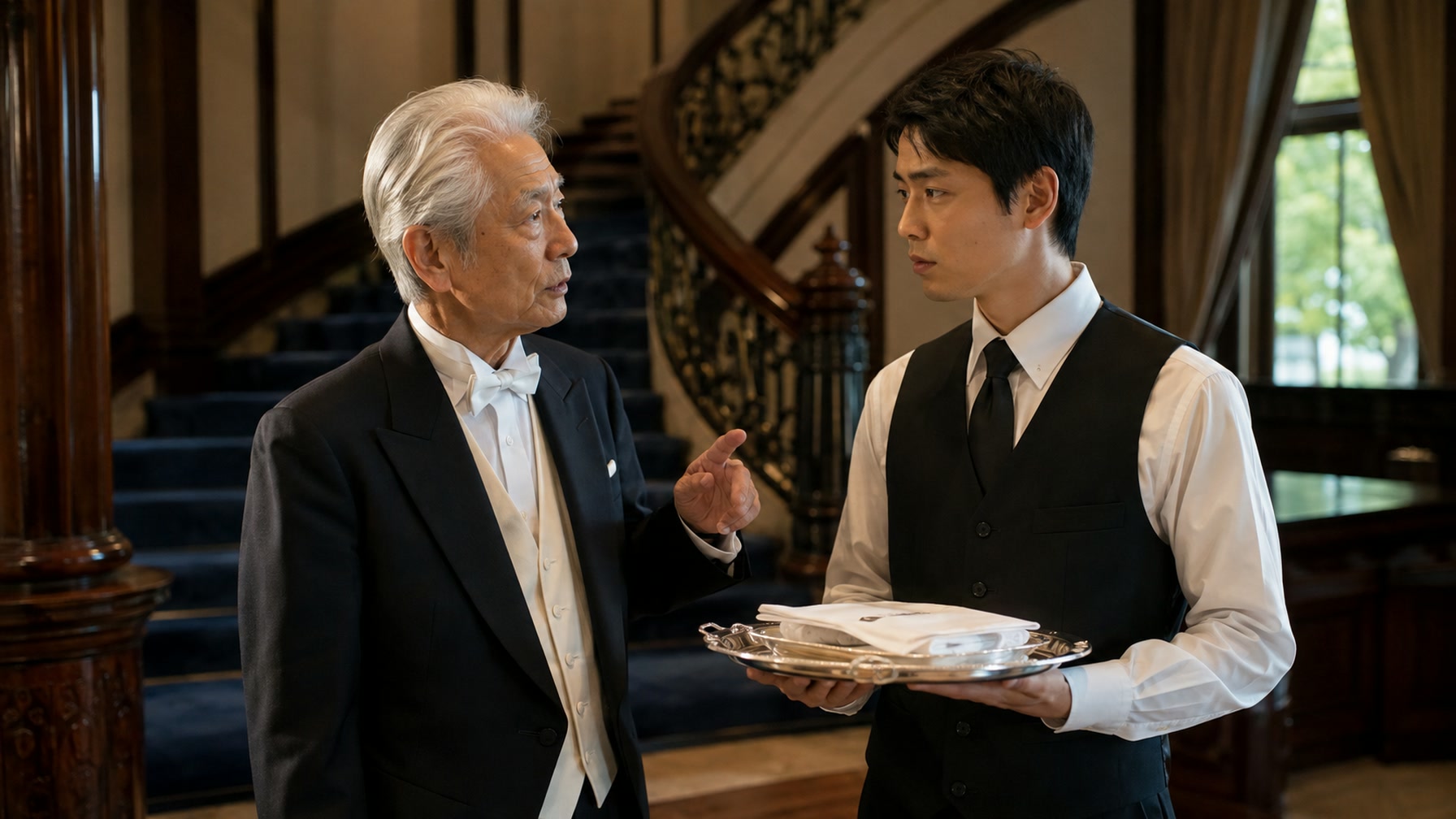
A butler goes inside the house and comes to know where the safe is, how the family stands with one another, and the state of everyone's health. So at THE BUTLER we confirm confidentiality before skill. Anyone whose understanding of confidentiality is in doubt at the association's screening does not go into the field, however beautiful their deportment.
Once in the field the butler is never alone. Daily events are recorded in the manner the association prescribes, and where judgement is uncertain the butler consults the association. From the client's side, the association stands behind the butler; nothing that happens is left as one individual's problem. That is what it means for the association to run the service.
The butler is protected too. Unreasonable demands or instructions that would compromise dignity are declined with the association standing between. Only when both client and butler are protected does the relationship last.
Confidence is not only a matter of what leaves the house. It includes the discipline of not repeating inside the house what was learned inside the house. What one member of the family says is not carried to another. A butler can remain neutral within a household only because that line is held.
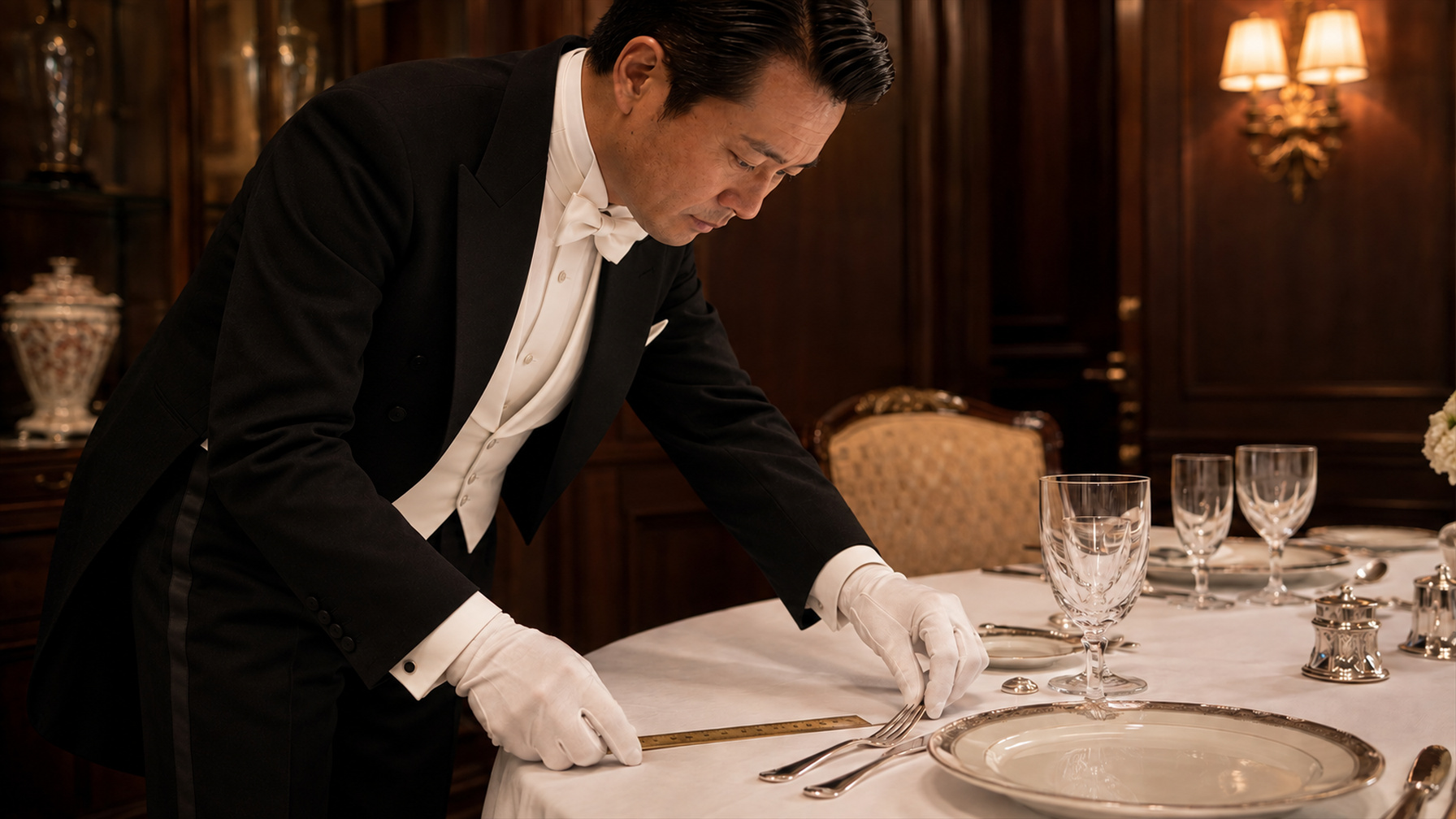
Before any talk of skill, certain things are already settled. Each exists to protect the client, and none may be altered for a butler's convenience.
You will never first see a butler's face when the door opens. Even where no one is named, we tell you beforehand who will come.
A different face each visit means the household recounts its rules from the beginning. Where a handover is required, the one leaving passes it to the one arriving.
We do not press a butler on a house that does not need one, nor take on acts that require a licence. Leaving nothing vague is itself a protection.
The All Japan Butler Association was founded in 1890 and runs the training, certification and corporate seminars for butlers, as well as THE BUTLER itself. That the place of training (the Japan Butler Academy), the place of recognition (the association) and the place of work (THE BUTLER) stand under one roof is the foundation of this service.
Problems seen in the field return to the association and are reflected in the criteria and the school's courses. If a client says a butler talks too much, it does not end as a word to one individual: the way timing is taught is itself reviewed. For the association, THE BUTLER is also a laboratory of butler culture.
I am head of the association and, at the same time, one of THE BUTLER's butlers. Because the same person trains and works, no gap is left between what is taught in the classroom and what the field demands.
That the association holds the working side shows itself in how quickly the textbooks are revised. If the same stumble appears three times in the field, it is not carelessness in one person but a gap in the teaching. I try not to wait for the third before sending it back to the academy's curriculum.
Being an undertaking of the association also shows in the number of butlers we hold. More people would mean more engagements accepted, but there is a limit to how fast numbers can grow while the grades of certification hold. That is why THE BUTLER cannot always take the date a client hopes for. I regard not chasing numbers as a promise rather than an inconvenience.

THE BUTLER sends its butlers into three broad fields: daily life, business, and the special day. The butler's manners are the same in each, but the kind of anticipation asked for differs.
The household record, the table, visitors, watching over the family. One butler sees everything that happens in the house, and the family is freed from running it.
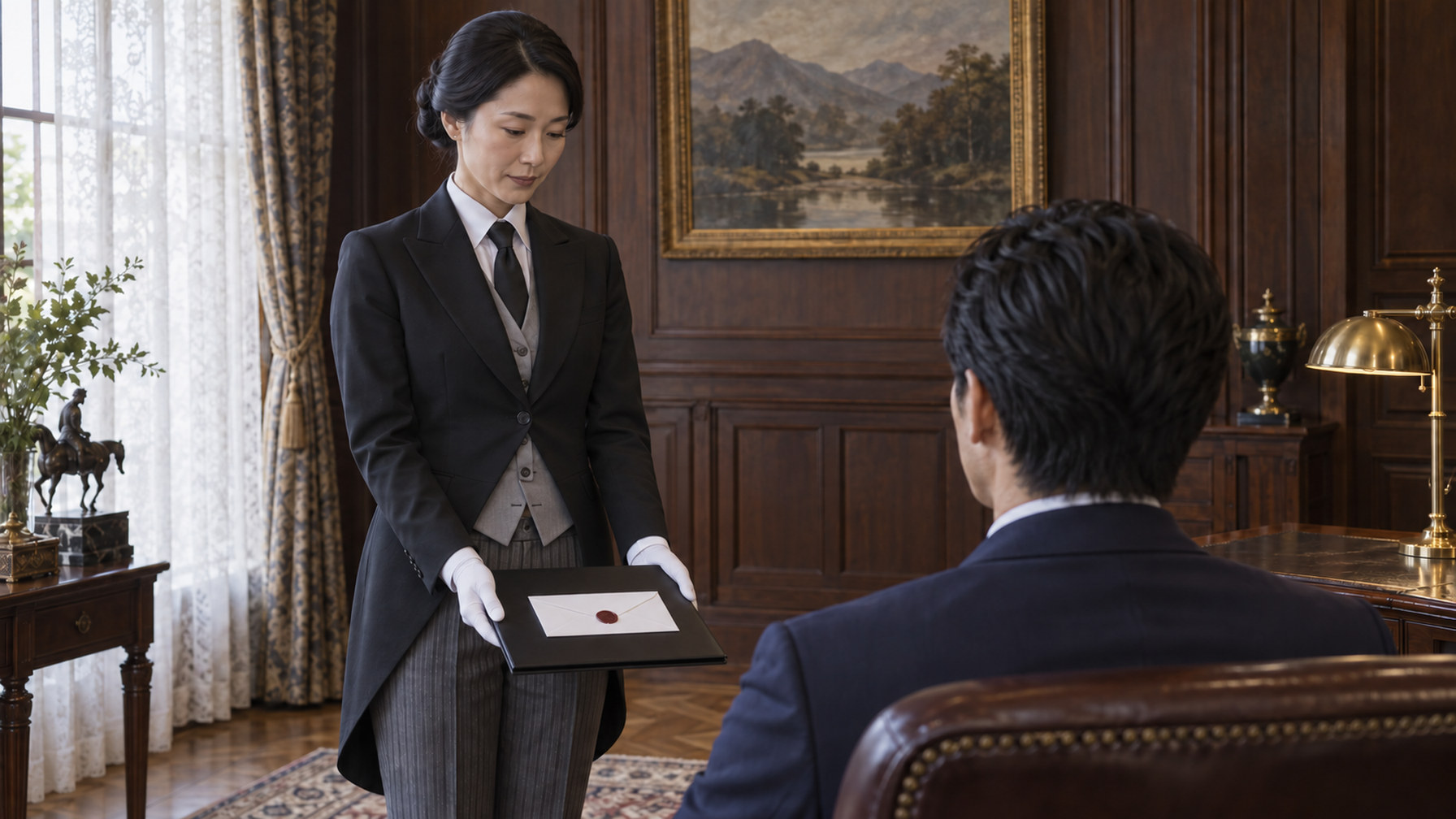
An executive's affairs, the reception of visitors, staff training. When a butler stands as the face of the company, the impression a partner receives itself changes.
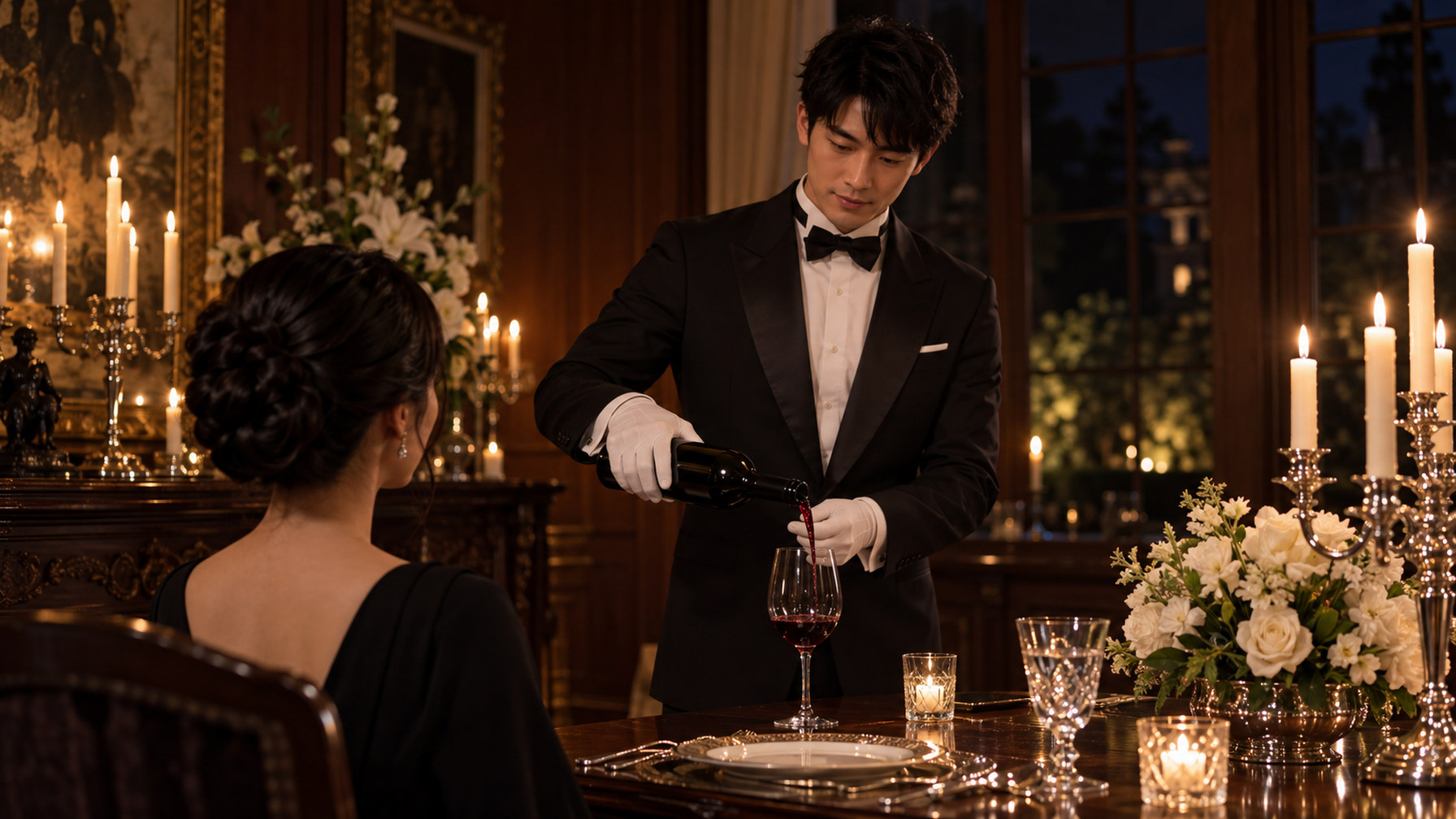
Anniversaries, ceremonies, the visit of a dignitary. With a butler present on a once-only day, the memory changes from a well-run day to the day a butler was there.
Before a butler comes into your house, you should know who runs the service, where it is, and how to enquire. THE BUTLER is an association business, so its standing is the association's own.
Fees and detailed conditions are revised from time to time, so they are not shown on this page; please check the official site for the current terms.
Declaring who we are is not merely listing an address and a corporate name. It means being able to name who carries the responsibility. If something goes wrong at THE BUTLER, the person who calls to apologise is not an account handler but myself, as head of the association. Welcoming a butler means letting someone that far into your home, so we do not leave the question of responsibility vague.
The All Japan Butler Association (founded 1890; incorporated February 2025).
Aomi 2-chome, Koto City, Tokyo (Odaiba), at the association's headquarters.
Households, companies and organisers of events; enquiries from individuals and corporations alike.
Only butlers certified by the association; name, face and rank are published on the official site.
Through the desk on the official site; after a meeting, the level and the butler are settled before the day.
Japanese, with reception of guests from abroad also undertaken; details on the official site.
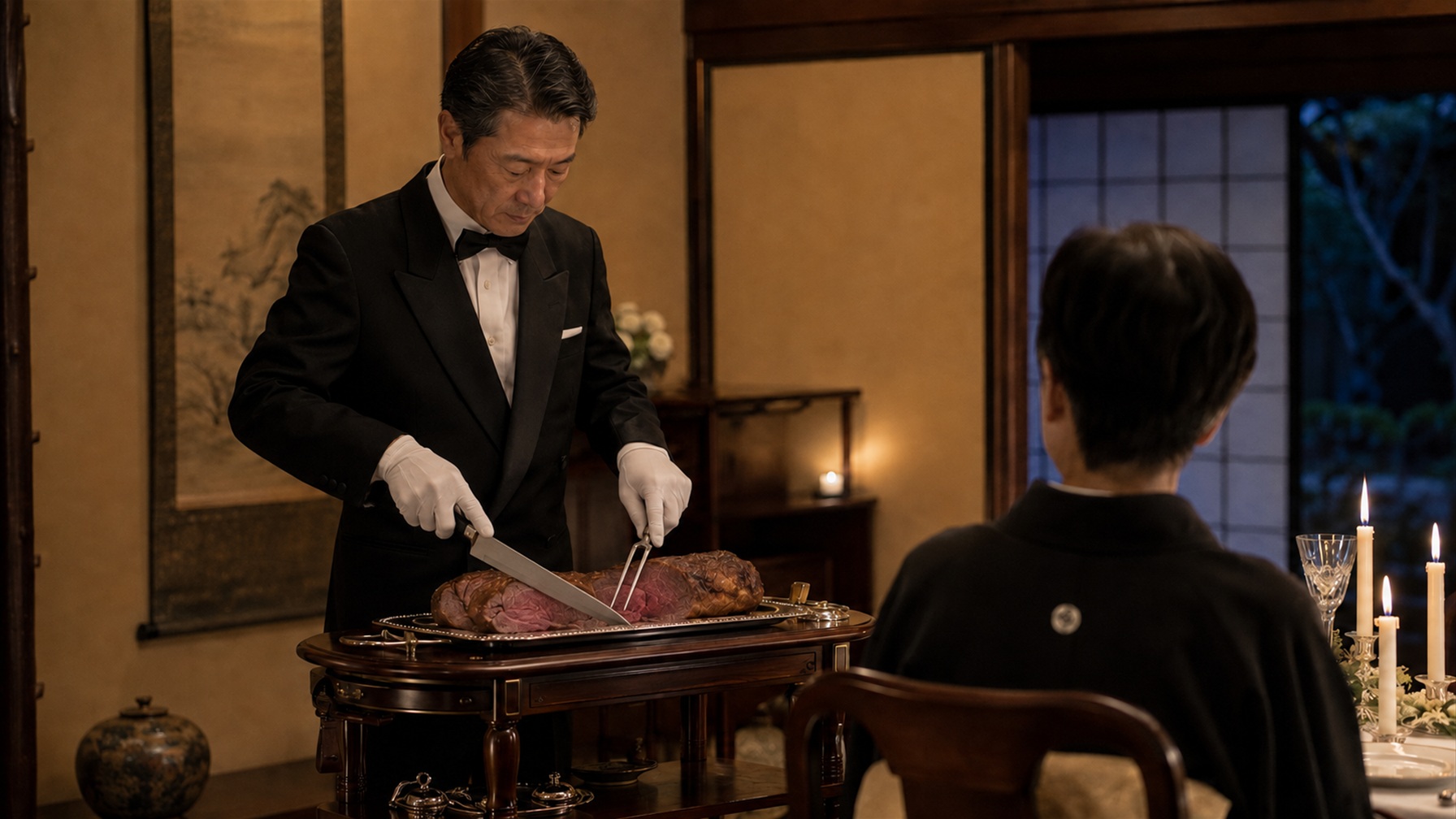
The greatest worry when asking for a butler for the first time is not knowing what to ask for or how. THE BUTLER resolves that with a sequence. First, tell the desk on the official site the setting and the date. No special vocabulary is needed: "three parties of guests on one day, and I would like the serving done" is enough.
Second, the association's coordinator proposes a level and a specialism and shows you candidate butlers. Third, you meet the butler you have named and pass on the household's rules. Fourth, the day itself: the butler arrives before the appointed hour, checks the house, and takes up position at the door.
After the day, the association sends a short enquiry. Telling us not only what went well but what troubled you ensures the next engagement is better than this one.
At any of the four stages you are free to stop. Sometimes, at the planning meeting, a client says they would rather not go ahead after all. I welcome that. Welcoming a butler is a decision the household makes, and stopping once is better than arriving at the day unconvinced. Being easy to decline is part of what makes a desk a good desk.
There is, in truth, almost nothing to prepare for the day. There is no need to clean before the butler arrives. A butler does not come to an ordered house; the house becomes ordered because he comes — so receive him as the house always is. The only two things we ask beforehand are which places should not be touched and which rooms should not be entered.
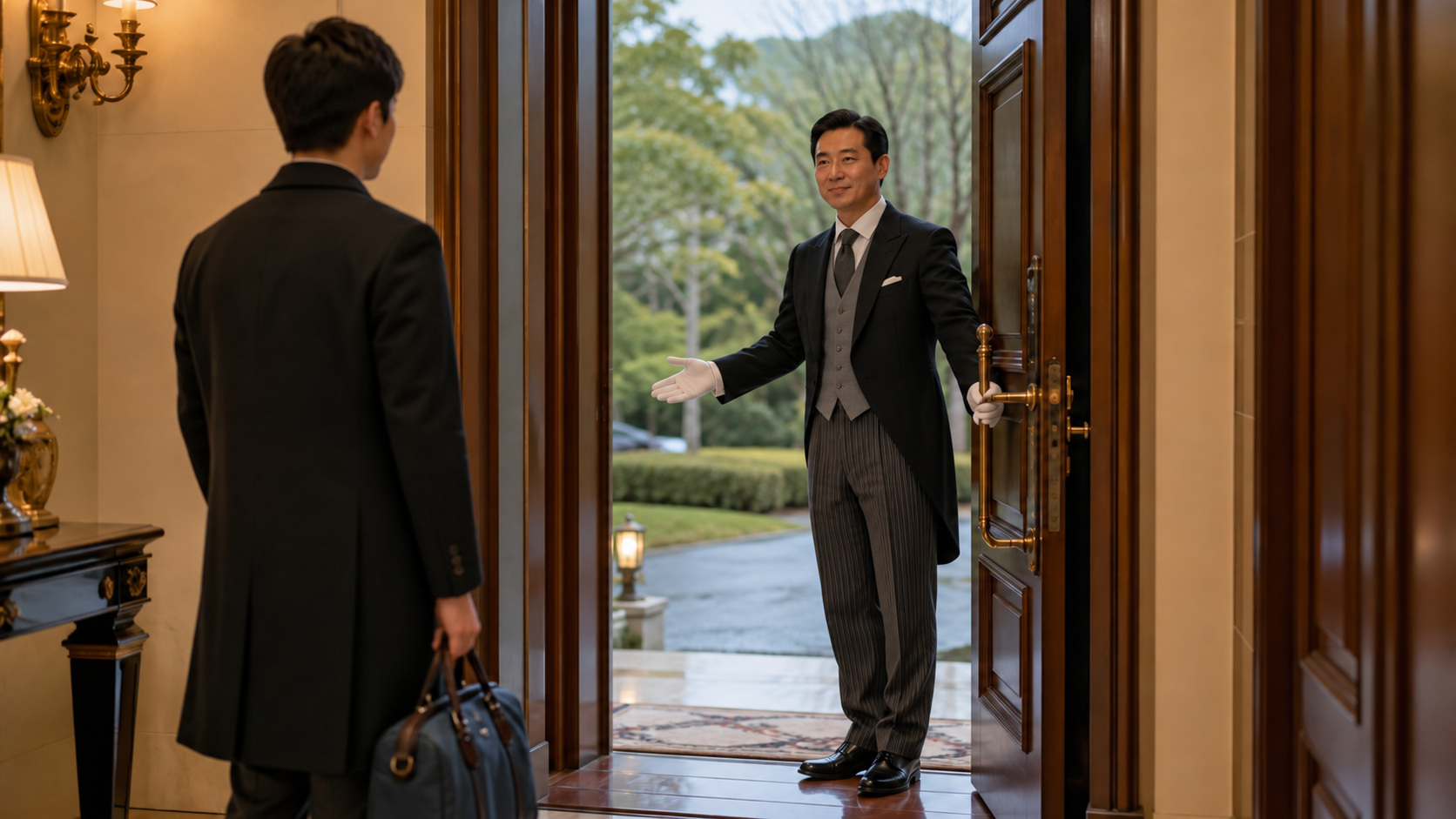
Three scenes from actual engagements in which a butler's presence changed the day, recorded with the association's permission and without identifying anyone.

For a couple's anniversary, the serving and the cake were left to the butler. The host did not leave his seat all evening and said afterwards that, for once, he was the one celebrated rather than the one preparing.

A weekly butler accompanied a family's stay. From unpacking on arrival to locking up on the day of departure, the family finished their holiday without a single conversation about chores.
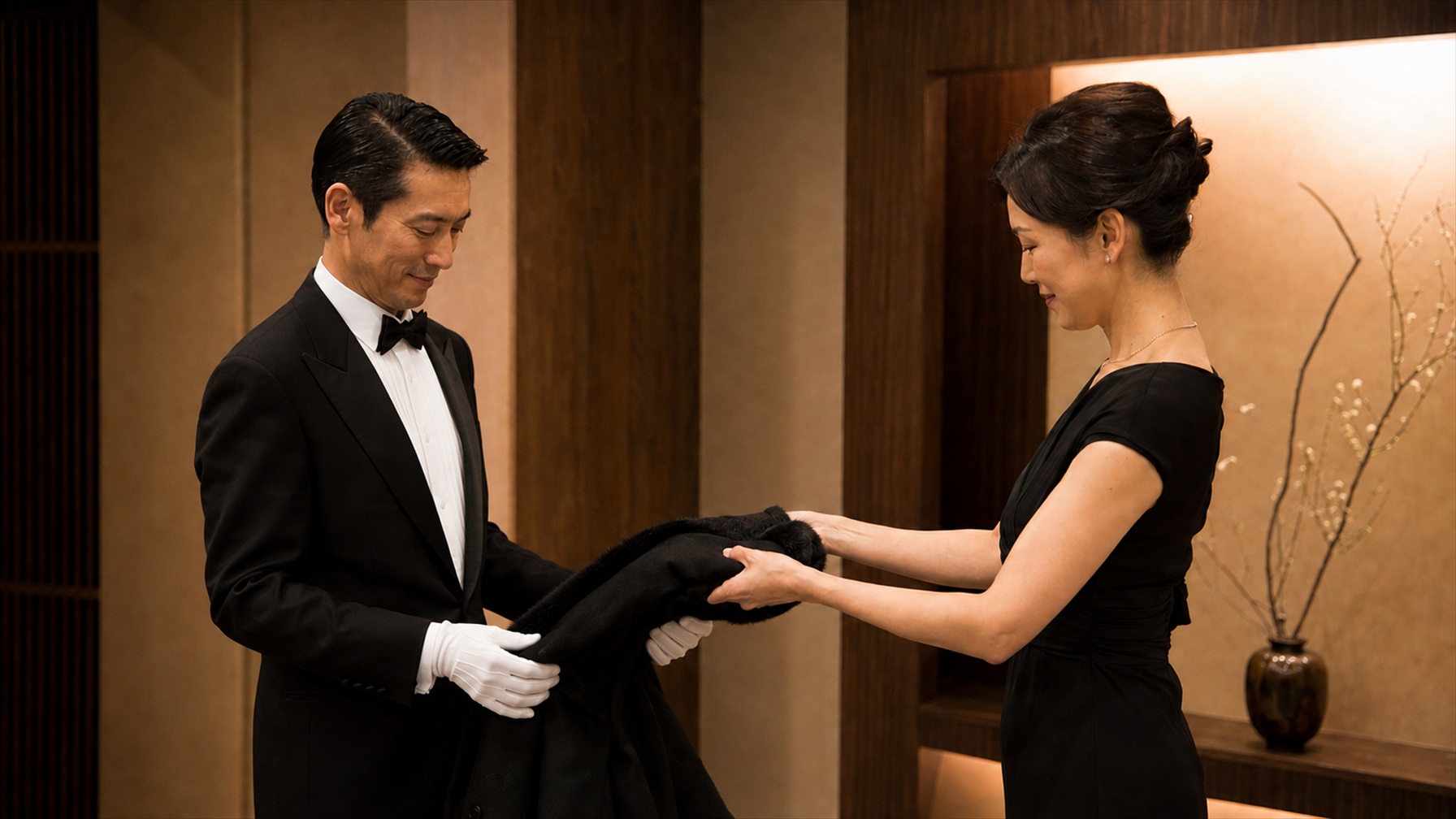
At a company ceremony, a butler concierge took charge of receiving and guiding the guests. With one person seeing everything from the list to the seat, the reception line never once stalled.
Though I hold the title of head, my profession is that of a butler. On days without lectures or interviews I stand in the field myself as one of THE BUTLER's butlers. The moment the head leaves the field, the standard becomes words on a desk. That is what I believe.
What I watch in the field is the client's gaze: not what the butler did, but what the client felt. That accumulation becomes the association's criteria, the academy's textbooks, and the next butler's conduct. For me THE BUTLER is where butler culture begins, and the place I return to.
Keep standing in the field and you notice your own habits before the client does. I once anticipated too much. I thought moving before being asked was the mark of skill. Now I wait half a step. Moving after that wait leaves the other person feeling they are in their own home. Part of why the head of the association still works is to bring back observations of this kind.
What occupies me most now is not the number of butlers but the arrangements that keep them from leaving. The abler the butler, the deeper he goes into a household's circumstances and the less he says about being tired. That is why the association reads the field records, watches the spacing of engagements, and at times tells a butler to rest. If butlers cannot continue for long, neither can their relationships with the households they serve.
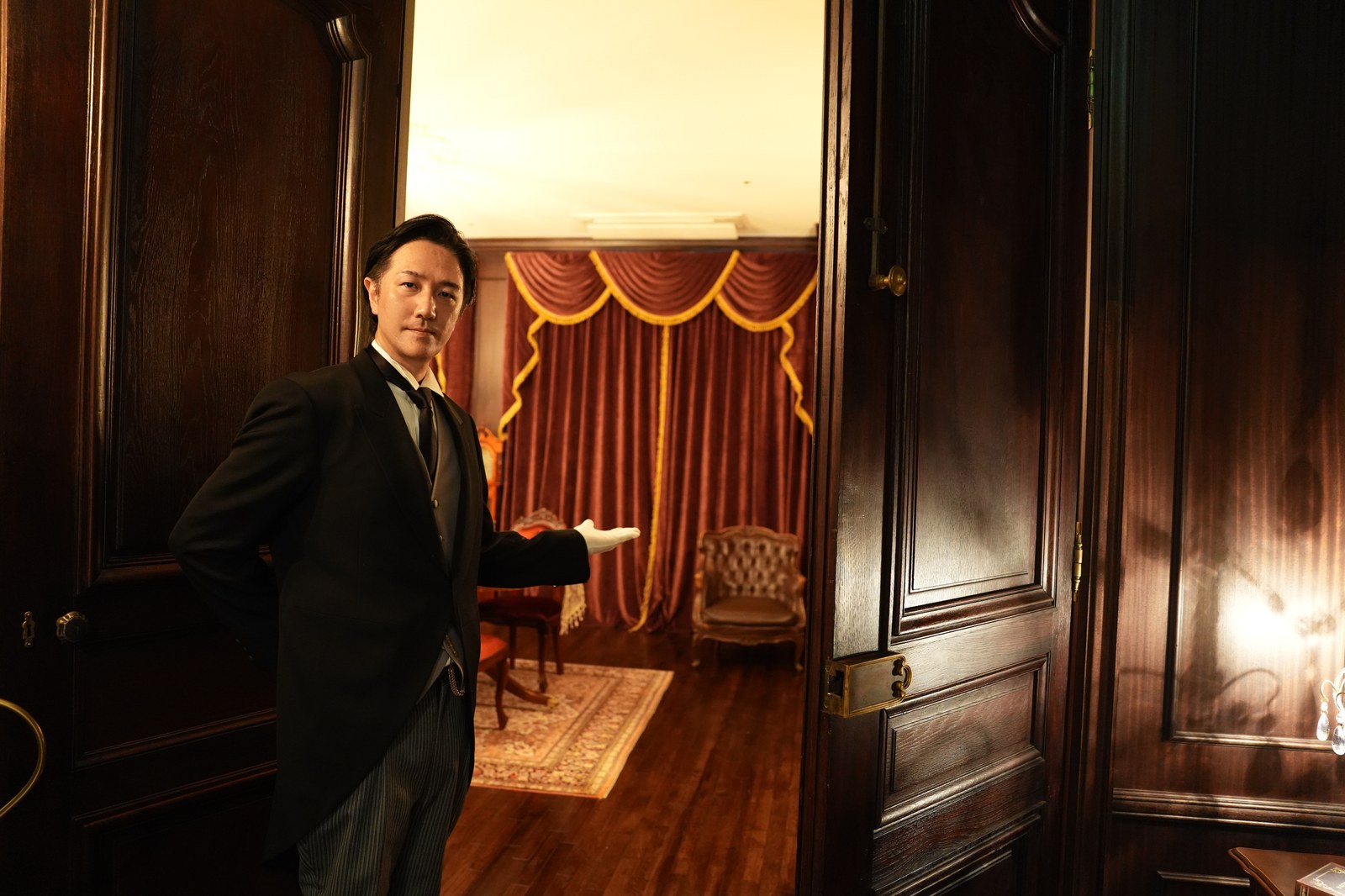
The moment the head leaves the field, the standard becomes words on a desk. What I watch is not what the butler did but what the client felt.
THE BUTLER's butlers dress according to the etiquette the association supervises: a black morning coat with a plain black long tie for day duty, a tailcoat with a white bow tie by night. White gloves are the promise made whenever silver and the table are touched. Attire is not for display; it is the sign by which a client sees at a glance that this person can be trusted.
The same holds for conduct. How a door is opened, how a cup is set down, the interval before speaking: all are taught to the association's standard and pass its examination. Whoever the butler may be, you are received with the same conduct, because that standard exists.
The part of the attire most closely observed is, in fact, the shoes. The cut of a coat cannot be judged from across a room, but the state of a pair of shoes carries in the instant someone draws near. Association butlers check their shoes before leaving because they know the last point of the attire is at the feet.
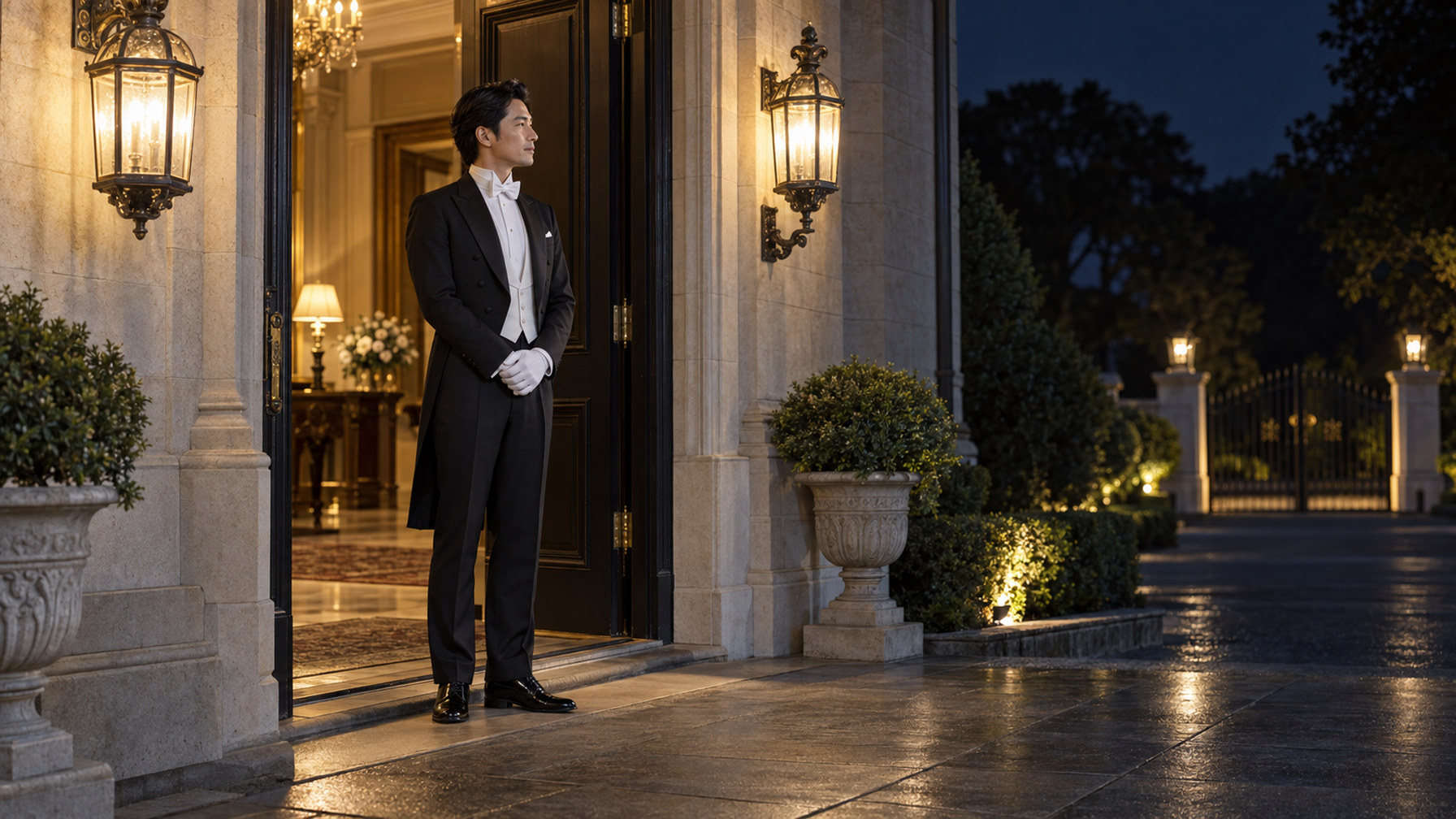
Which butlers are currently in service, what each of the five levels and four specialisms actually covers, what it costs and where to apply are all gathered on THE BUTLER's own site. What stands here is the outline as seen from the side that runs it; the terms themselves belong there.
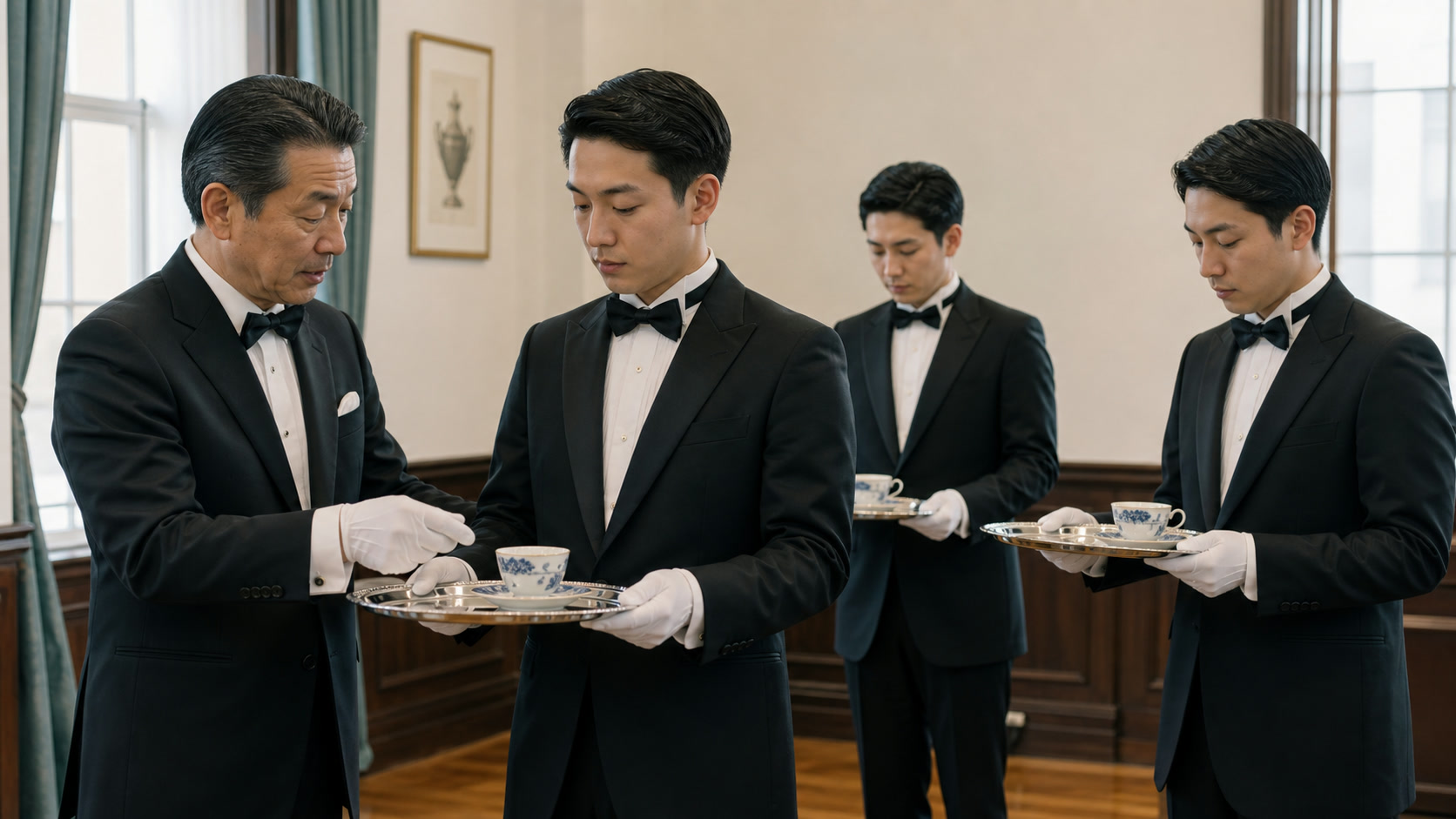
Founded in 1890: the parent body that trains butlers, recognises them by a standard and gives them rank. The academy, the residence in Odaiba and the butler service itself are all run by this one body.
Learn more →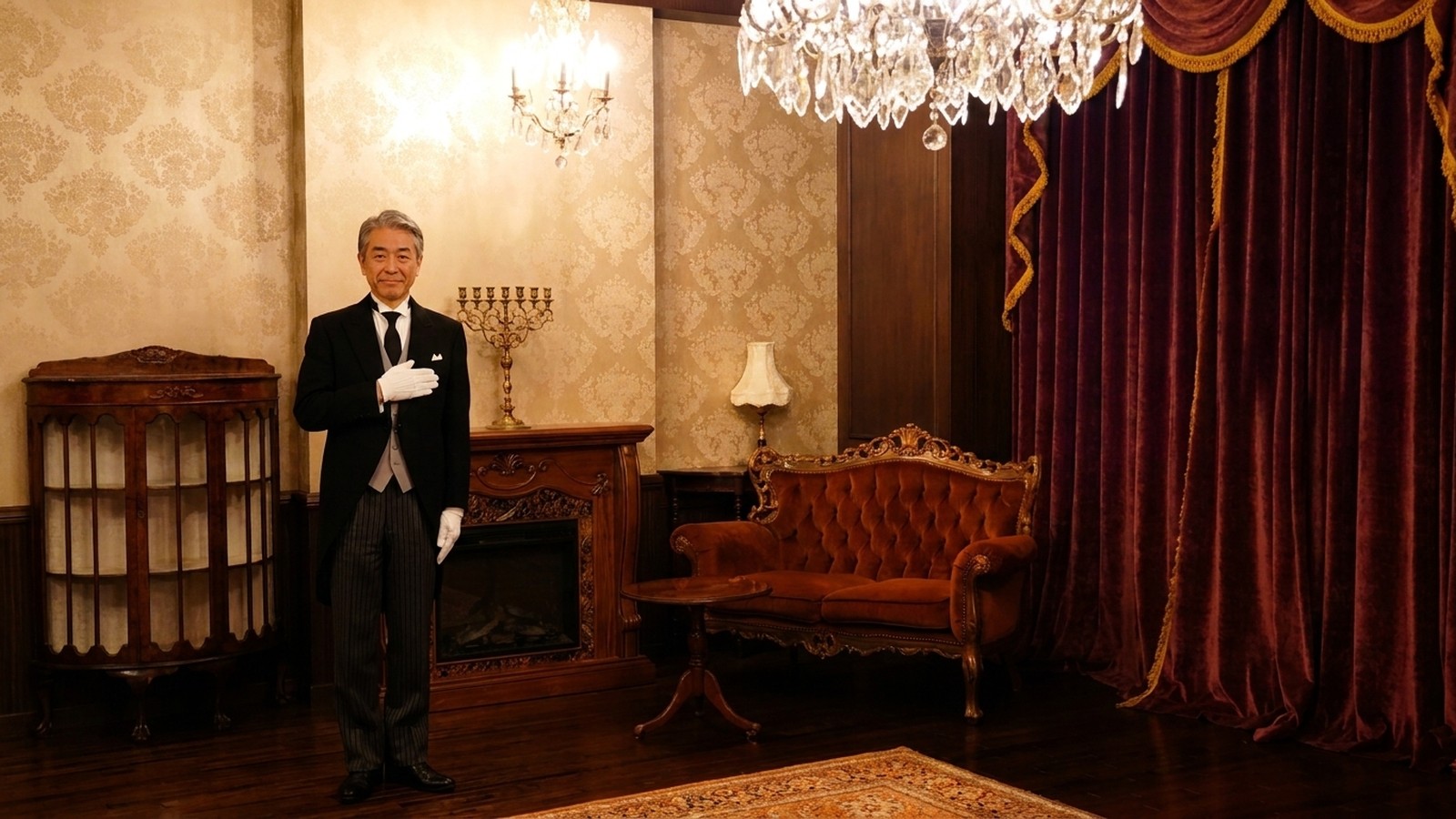
A school for becoming a butler, kept by the All Japan Butler Association. Weekend classes at the Odaiba campus in three courses, with the association's certification for those who pass the practical examination at the end.
Learn more →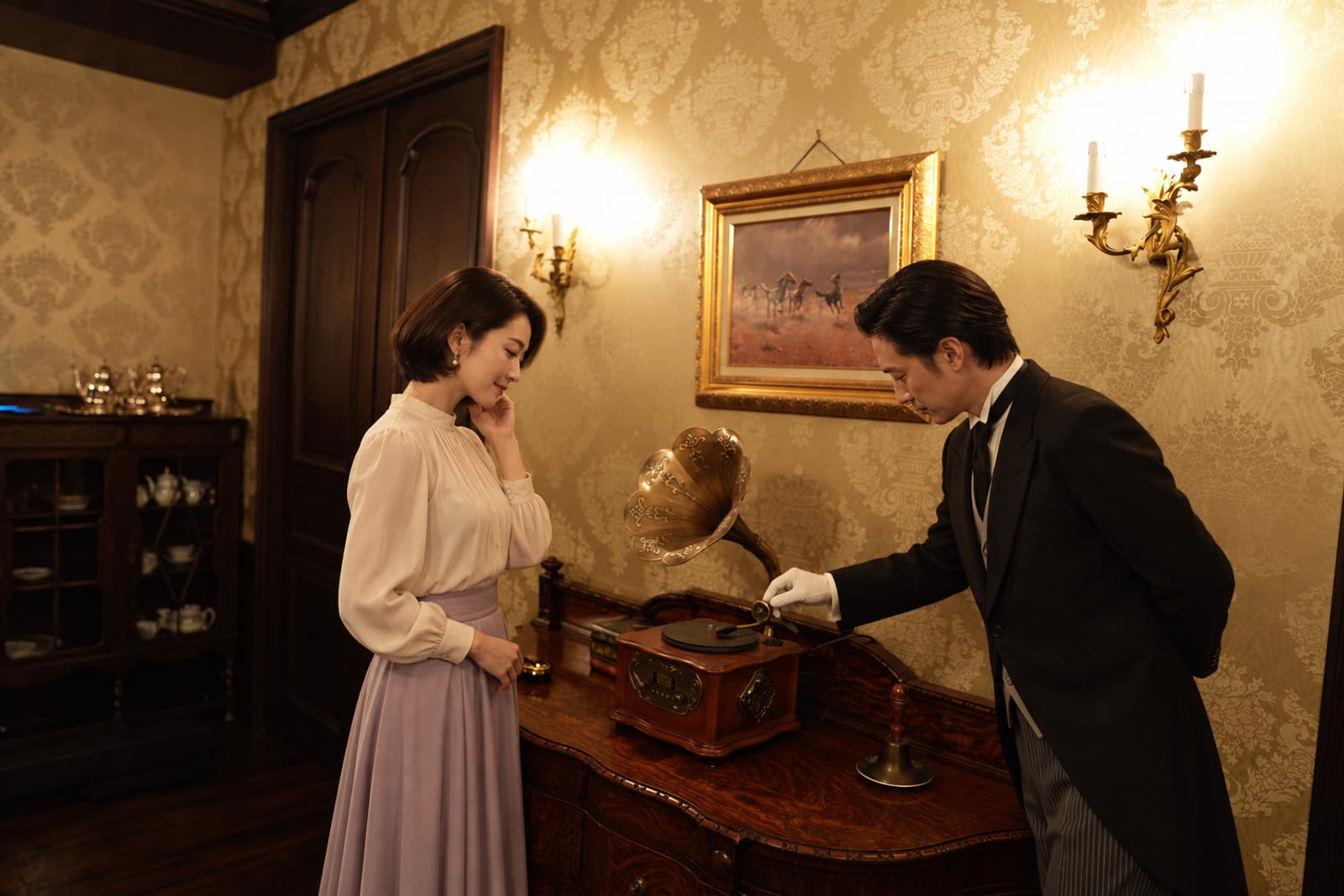
A butler salon that receives women as mistress of the house. One residence in Odaiba with four doors: salon, studio, apprentice experience and online shop, all kept by the All Japan Butler Association.
Learn more →If you are unsure which desk to approach, Butler Bell will point you to the right one.