
RANK 01
Footman
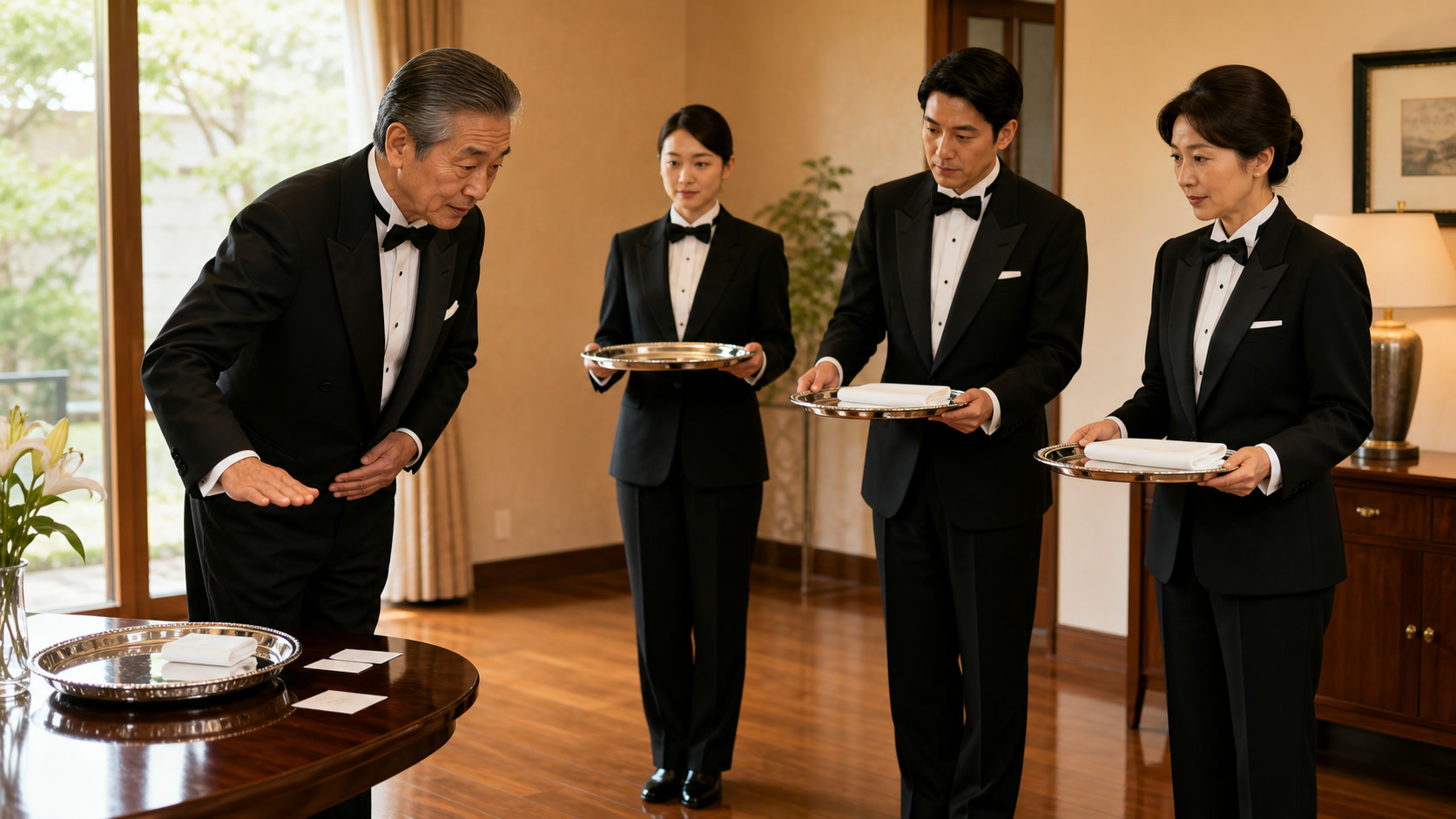
Receives at the door, takes the coat, stands to serve. The first face of the house and the entrance to the butler's path; in a house with many visitors, this role alone can carry a day.
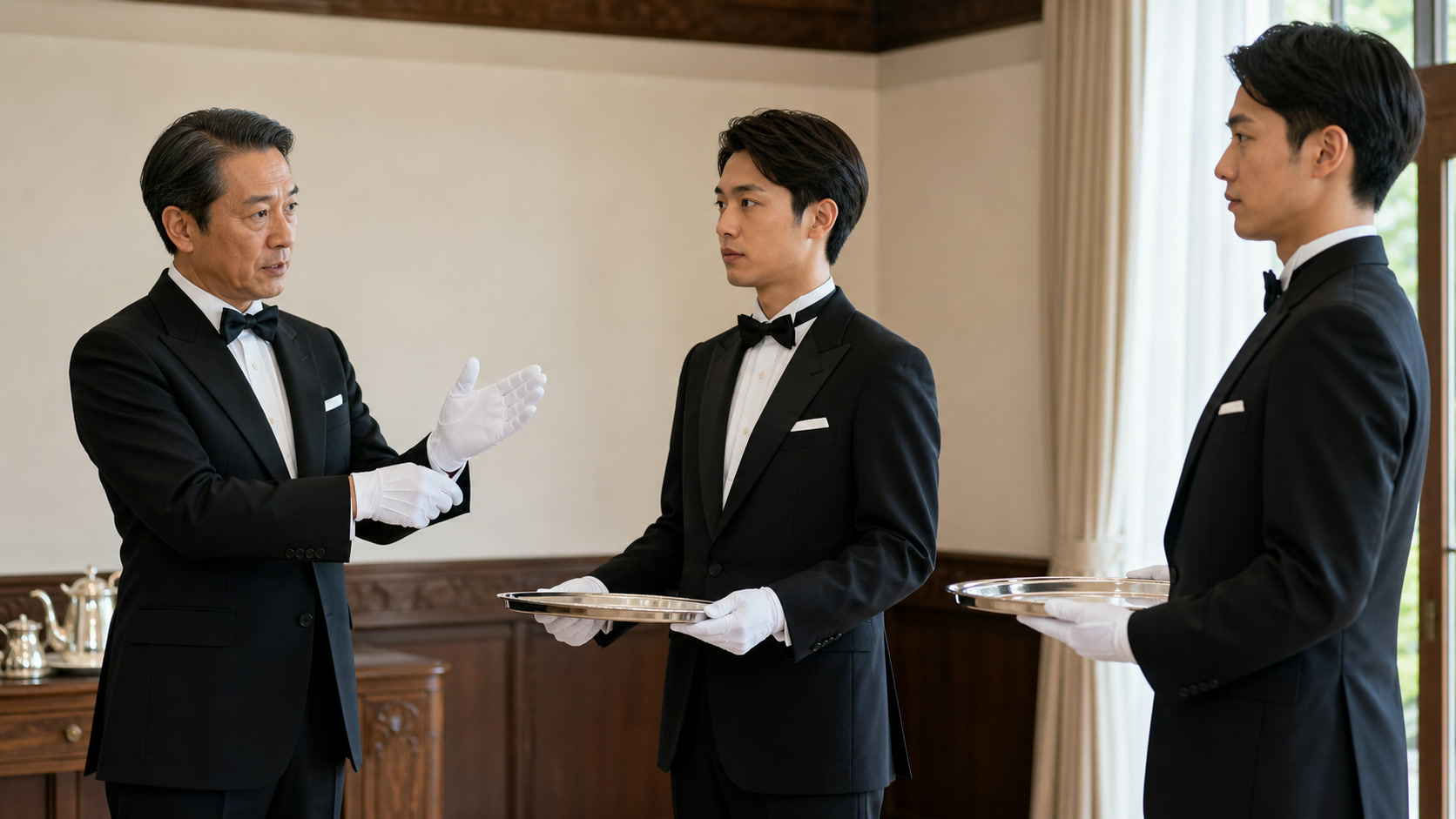
Who may call themselves a butler? This is the body that drew that line and has kept it. I serve as its head. From the founding in 1890, through its three roles, the grades of certification, and why the association runs businesses of its own: told from the standpoint of the one who leads it.
The All Japan Butler Association sets the standard for the butler's profession, recognises people by that standard, and sends those it recognises into the field. The state issues no licence for butlers. Unless someone holds the yardstick, the word butler becomes a title anyone can claim. The association has held that yardstick since 1890.
What I inherited as head was not a building or a membership roll but this yardstick. A yardstick rusts if it is not used. The association trains people at the Japan Butler Academy, sends them into the field through THE BUTLER, and shows the culture at Queen's Butler so that the yardstick stays in use.
This page is not a copy of the association's official site. It is the association as seen by the one who leads it, in my own words. For the clauses of its systems and current notices, please see the official site.
The association's work falls into three parts: training, recognising, sending out. The place of training is the Japan Butler Academy, the place of recognition the association's examination, the place of sending out THE BUTLER. Not dividing these among separate bodies is the core of the association's design. Divide them and responsibility divides; divide responsibility and the standard slackens. Because one body holds all three, the standard stays one line.
An organisation that holds a measure is also obliged to know where the measure does not reach. The association sets the manners of the profession, but it cannot set the rules of each household or the preferences of each client. A standard is the place a butler returns to when a judgement in the field grows uncertain; it is not an order sheet that decides the field in advance.
Asked why the association has lasted, I answer that it is not the institution but the manner of handing over. Had the standard been rewritten each time the head changed, a hundred and thirty-five years would have left nothing behind. Whoever takes over first works the predecessor's articles as they stand, and touches them only when the field makes it necessary. Keeping to that order is the association's own good manners.
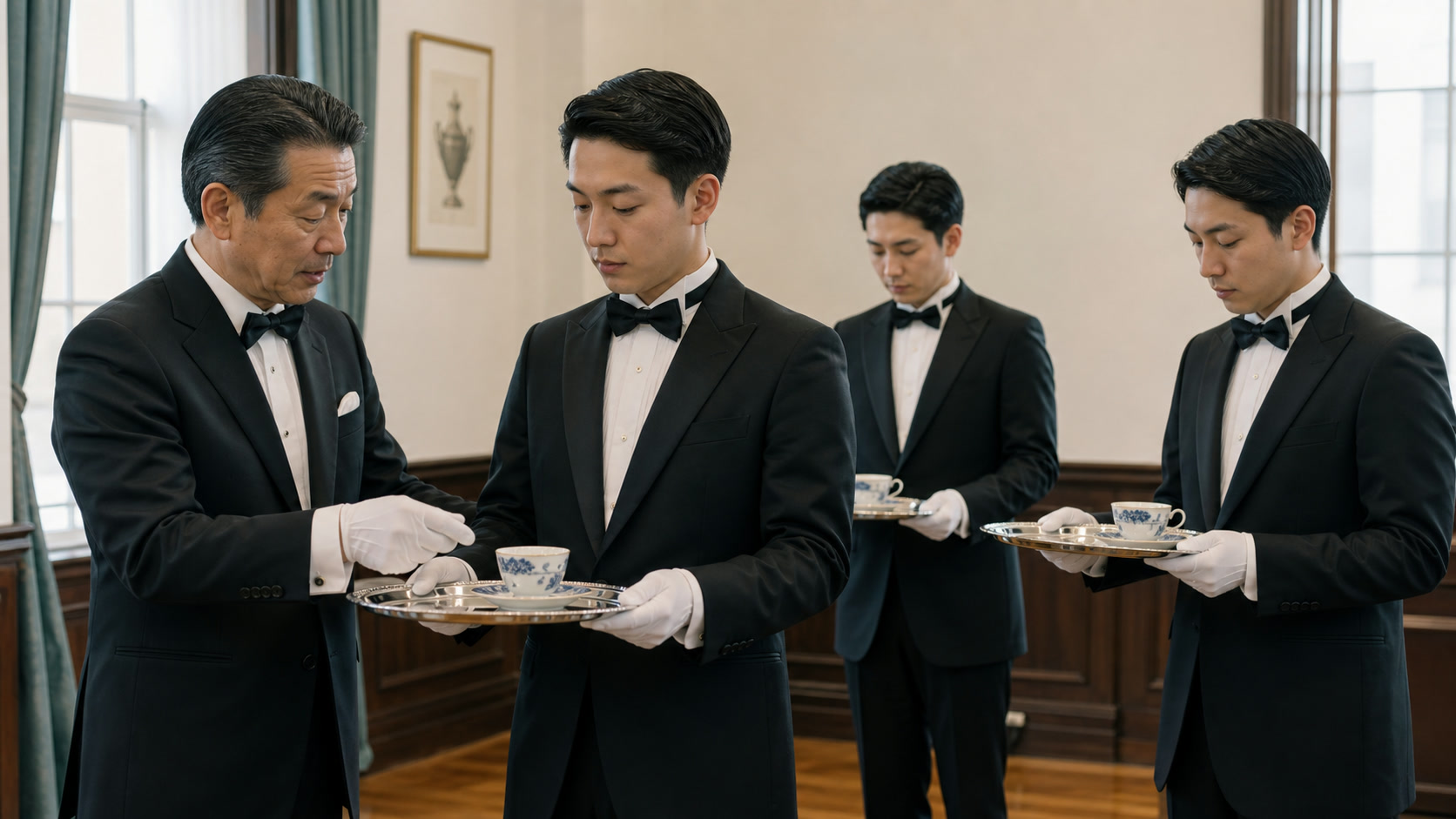
The association's history has not run in one unbroken line. Founding, division and reunion, and incorporation: three turning points, with how I as head understand each.
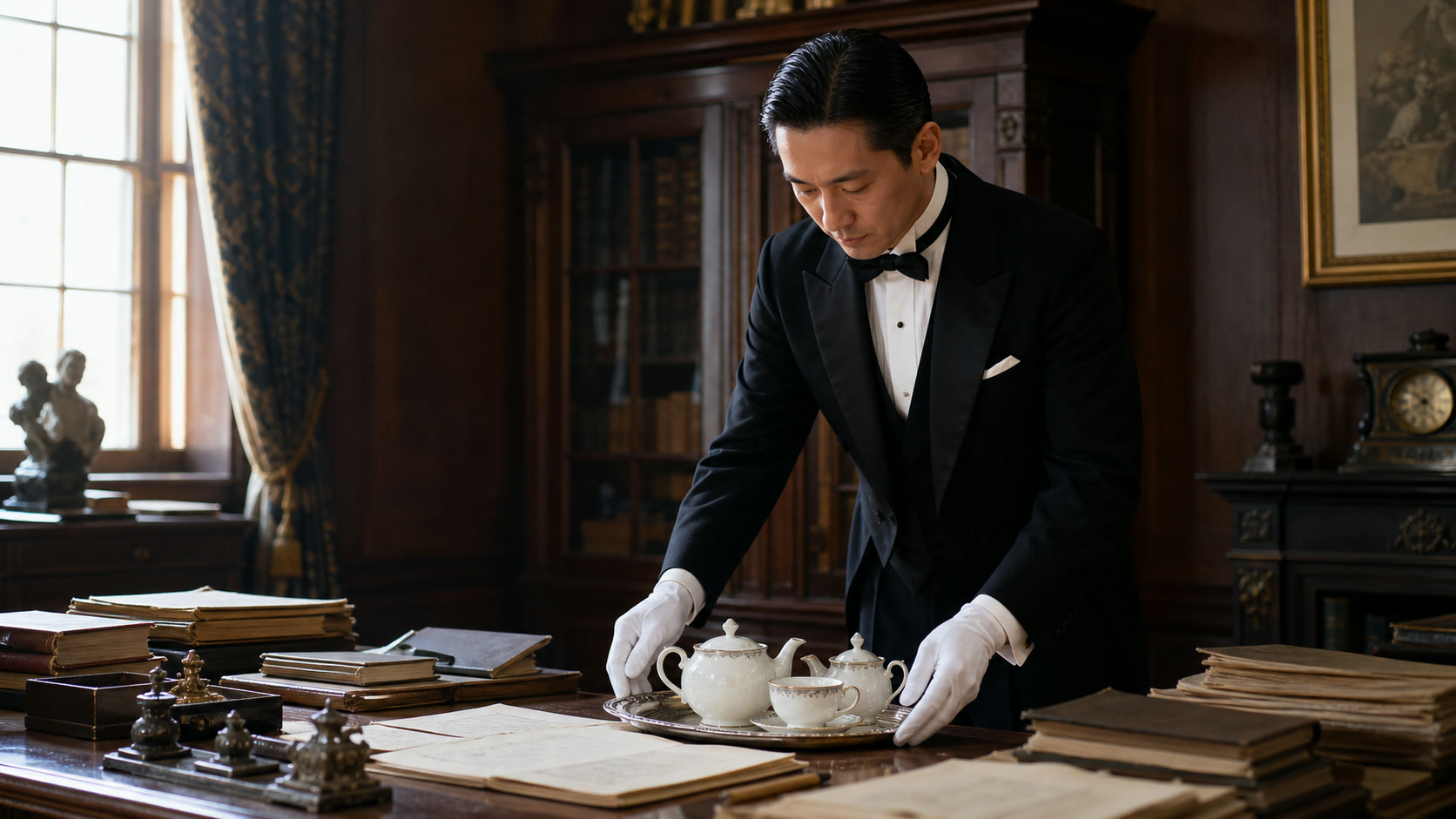
It began, in an age of Western-style residences and increasing foreign guests, as a gathering to train Japanese butlers. What it taught was a conduct that reconciled British-style service with Japanese courtesy.
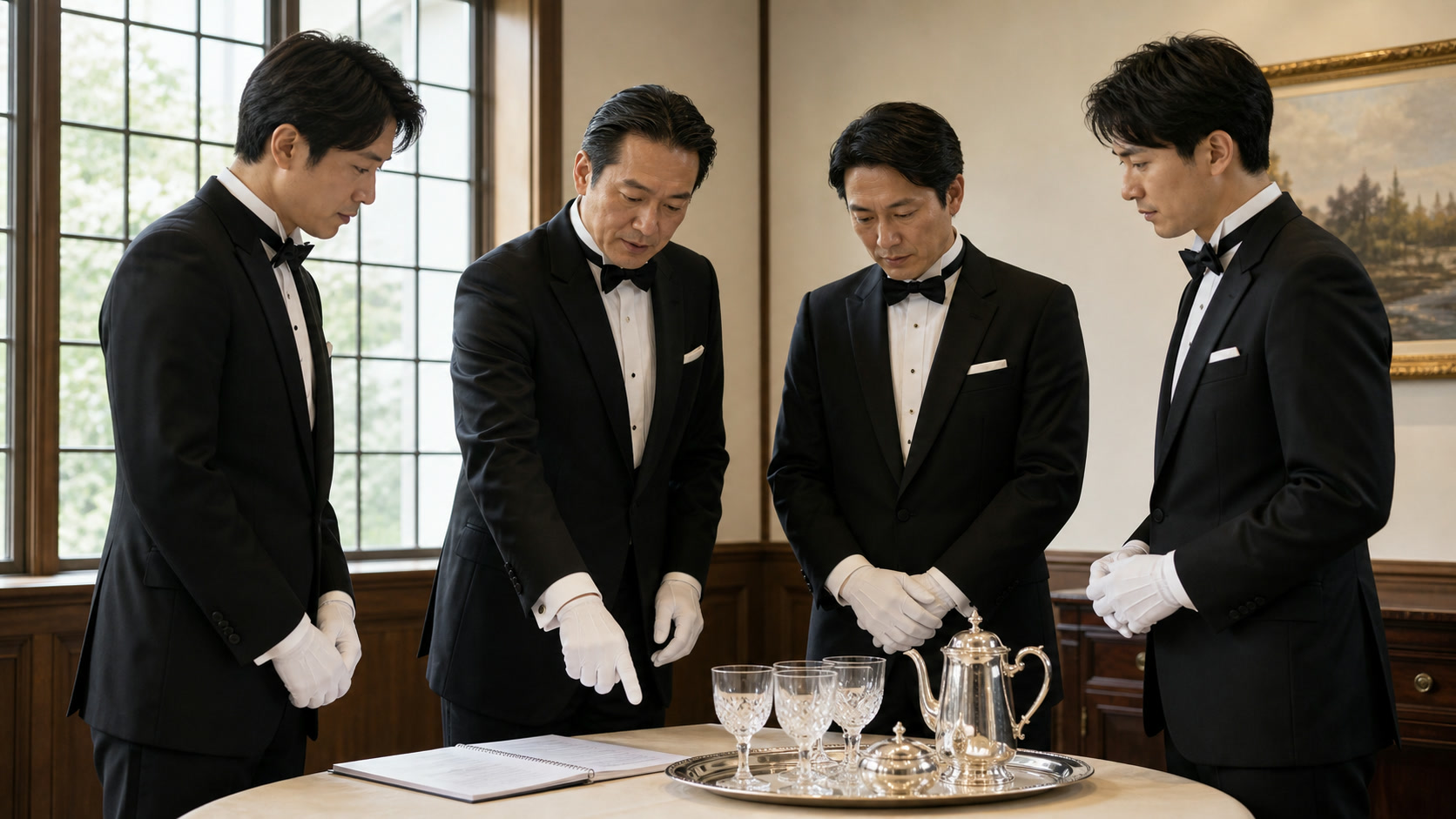
In 1955 the association divided in two and, over differences in the forms of service and the reading of etiquette, walked separate paths. In 2000 they were reunited, and the strengths of both schools were woven into a single standard: the association's etiquette of today.

In 2023 I took over as head, and on 19 February 2025 the association was registered as a general incorporated association. Incorporation was not a formality but the preparation for the association to bear responsibility for its businesses in its own name.
The association's first role is to train butlers. The place of training is a school called the Japan Butler Academy, which the association runs. It was not entrusted to an outside body, so that what is taught and what is certified would never drift apart. What is taught in the classroom is what the examination asks; what the examination recognises is what the field demands. To keep that straight line, the association had to hold the school itself.
The academy has three courses: Essential for the foundation, Advanced a step above, and Master, reaching as far as management. Classes are on weekends and are kept small, because the butler's is not a profession learned from books but one copied from the timing of the instructor standing beside you.
Small classes do not pay, as a matter of business. We keep the limit anyway, because training a butler is governed by how many pairs of hands one instructor can watch. Six is the most. From the seventh, a slipped movement goes unseen — and a movement that goes unseen goes out into the field exactly as it is.
The association's duty to someone who pays to study does not end at certification. It extends to whether there is a place for that person to stand as a butler afterwards. That THE BUTLER exists, and that the Queen's Butler residence stands, is the continuation of that duty.
Every instructor is a butler still working in the field. We do not employ teachers who only teach, because that is how the language of the classroom drifts away from the work. Someone who waited at table last week stands in the classroom with those same hands. What a student copies is not a diagram in a textbook but a way of handling things that was in use the day before.
Each course has textbooks supervised by the association, and every movement carries the reason why. Conduct whose reason is unknown collapses when the setting changes.
The teachers are working butlers certified by the association. Only an instructor who moves between the lectern and the field can teach what today's clients actually want.
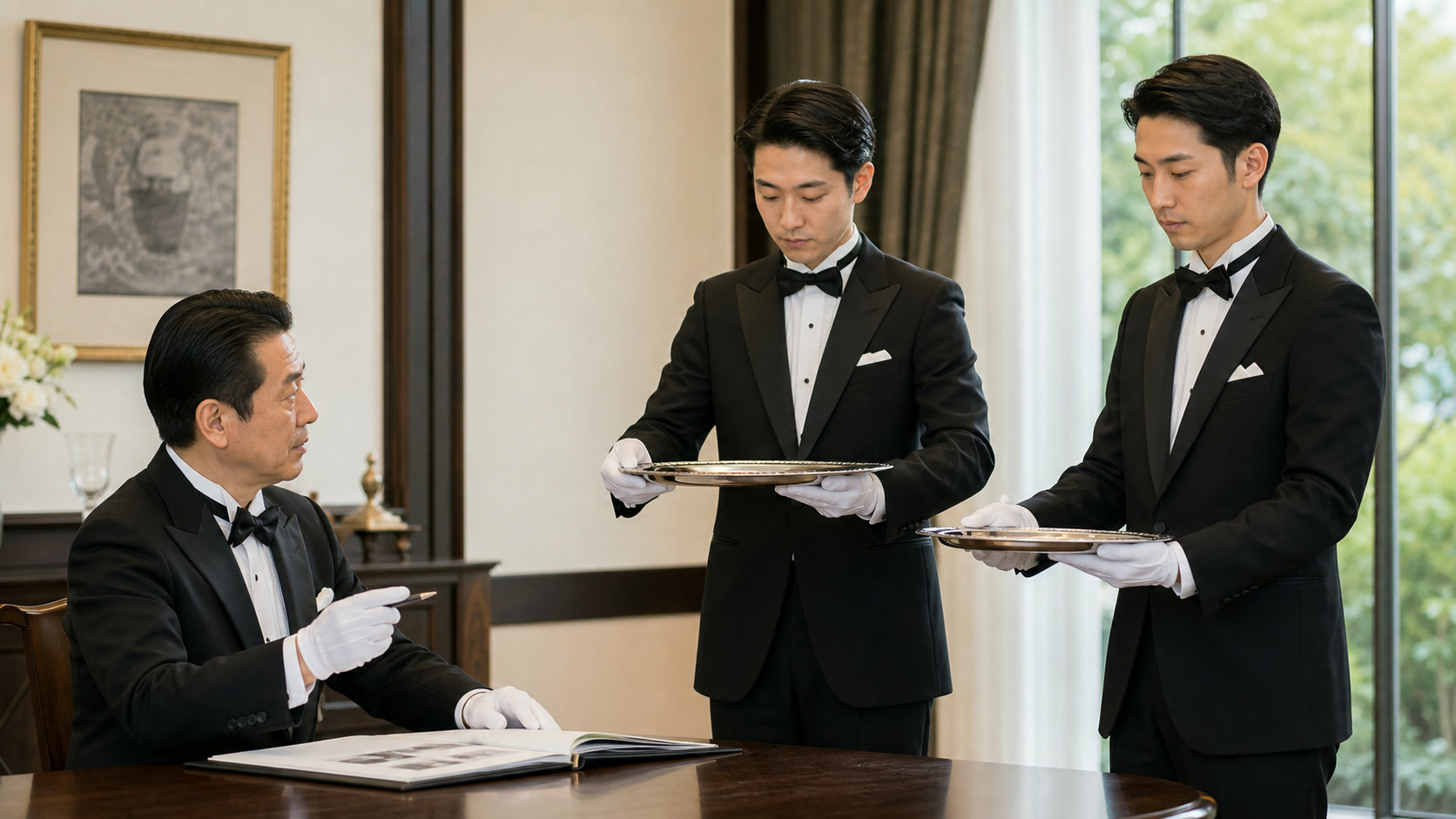
The association's second role is to recognise people. Certification has three grades: Associate, Professional and Master. The grades are divided not for the learner's convenience but because, from the client's side, what can be entrusted differs. Each higher grade contains every condition of the grades below.
Serving tea and the table, receiving guests, stance and bow. Given to those who have acquired the basic forms and shown them in the practical examination: the grade at which a butler can take a few hours' engagement alone.

Wine service, running an occasion, the household record, international etiquette. The grade to which engagements of a day to a week can be entrusted, and at which the butler learns the client's tastes and anticipates them.

Leading staff, judging in a crisis, designing the running of an entire house. Live-in house stewards and the instructors who teach the next generation come from this grade.
The association's third role is to pass the butler's etiquette to people who are not butlers. Hotels, clinics, department stores, company receptions: many will never be butlers yet wish to receive people as a butler would. The association runs corporate training and seminars, teaching reception, stance and the timing of speech in the butler's forms.
The first thing I say in any corporate seminar is that manners exist for the other person, not for oneself. Memorise the angle at which a business card is offered, and it means nothing unless you are looking at the person. The butler's etiquette is training in where the eyes go. When a company tells us afterwards that its staff have started to look at their customers, the association's role has been fulfilled.
Training is by default delivered on site. Unless it is taught at the actual reception desk, along the actual route a visitor walks, forms learned in a classroom collapse in the company corridor. Because the route differs by trade, hotels, clinics, department stores, property, restaurants, the association keeps a training pattern for each and adapts it to every company's premises.
The clearest change after a corporate seminar shows in where the receptionist stands. In most companies the receptionist sits behind the counter. Afterwards, more of them rise when a visitor appears and step half a pace out from behind it. One altered movement changes the impression a company gives.
To measure whether a seminar worked I do not use satisfaction scores. I go back six months later and look at whether the reception and the manner of greeting have held. Behaviour that is orderly only on the day itself proves the form never entered the body. If it has not held, we change how we teach and start again. That is why we ask companies to let us come back and look.
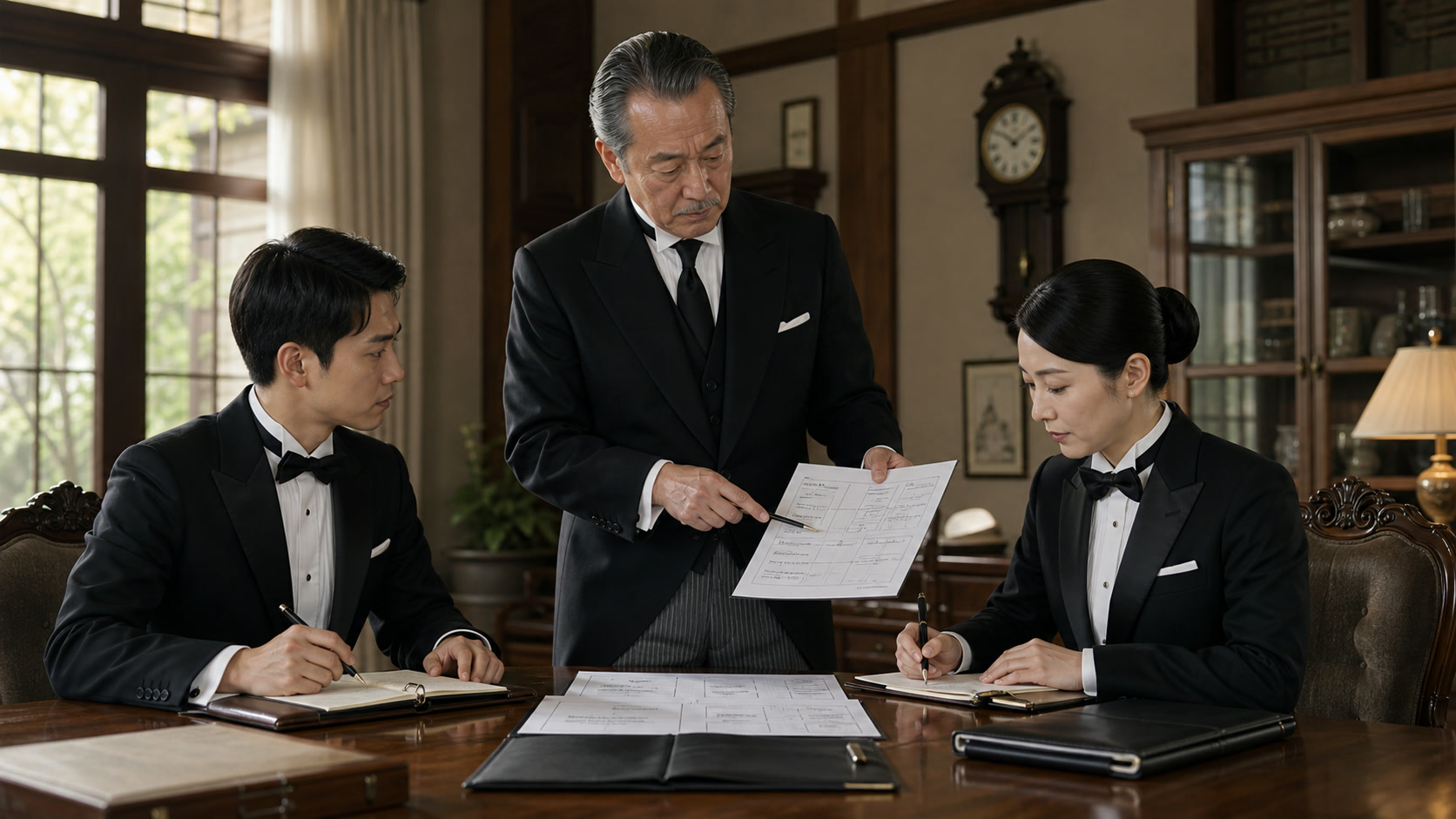
The association holds the butler's standard in writing: attire, conduct, confidentiality, records, crisis response, the handling of information. Each has its clauses, published on the official site. The reason is simple: a standard that cannot be written wavers whenever the examiner changes.
But the clauses are not fixed. They are revised, on the head's responsibility, to match what comes back from the field, what clients point out, and the changing times. In the most recent review the clause on attire was revised and the long tie for day duty was settled as plain black. Keeping the standard and questioning it are the same work inside the association.
A body that publishes its standard must also publish its account when the standard is not met. That is why the association keeps a practice of field records and has problems reported to it. A standard is not a signboard; it becomes a standard only when daily records back it.
Whenever an article is revised, the reason for the revision is recorded beside it. A change with no reason attached becomes, some years later, a rule nobody can keep. I hold that the value of the association's articles lies less in the articles than in the volume of reasoning stacked alongside them.
The hardest judgement in drafting an article is how fine to make it. Too fine and the field cannot keep it; too coarse and assessors read it differently. The association writes finely only where hesitation has actually arisen and leaves the rest coarse. The unevenness in the articles is not negligence but a record of where, in practice, people were unsure.
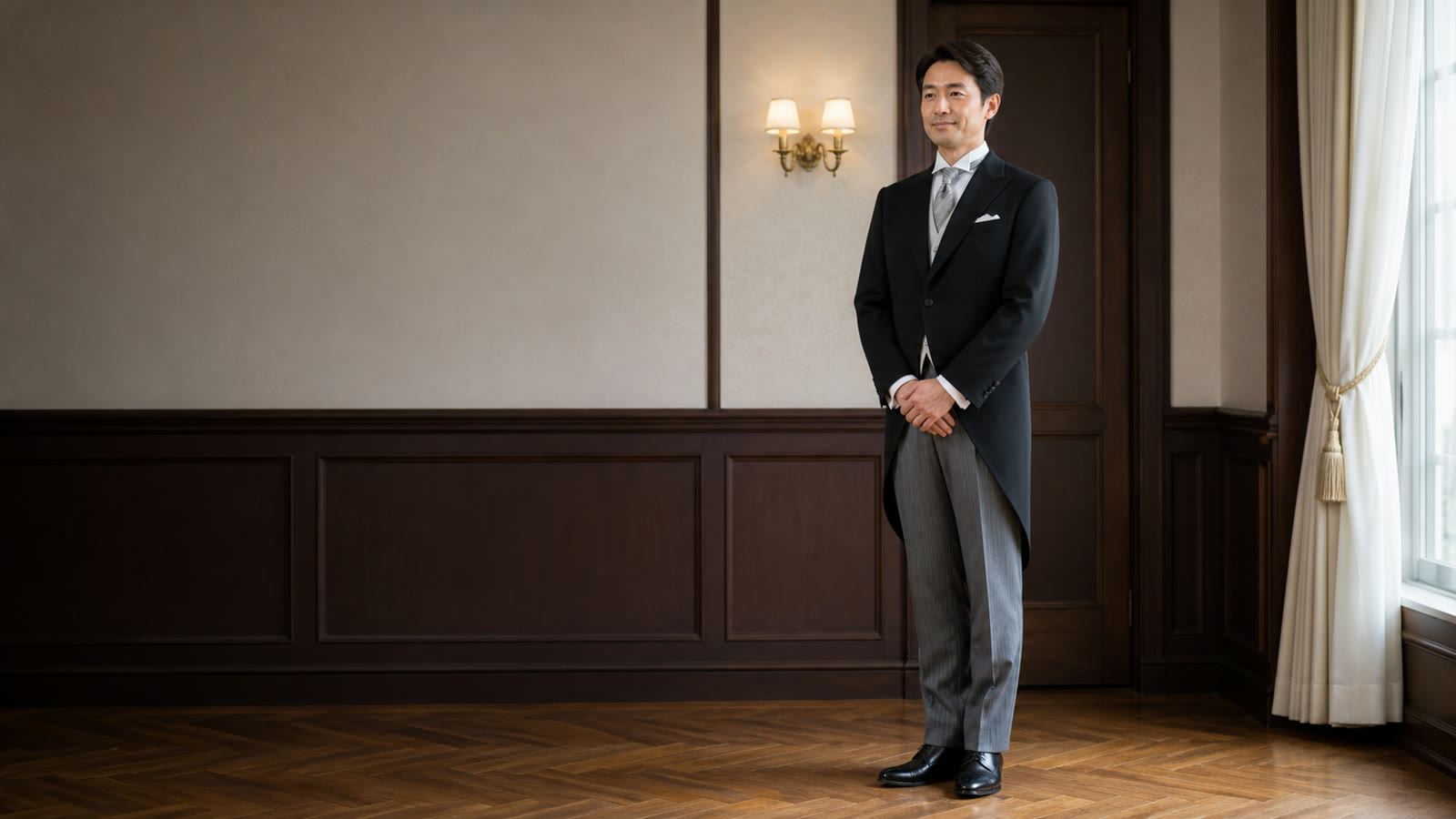
Certification is not decided by impression. So that any assessor draws the same line, only three things are watched and written down.
The temperature of the tea, the handling of vessels, the laying of a table. Learned and repeated, it is the easiest part to judge.
The movement may be faultless, but if the eyes leave the other person, what is being watched is the vessel and not the guest. The assessor notes it without fail.
A condition that stands before technique. It is checked in interview and in moments slipped into the assessment; where it is vague, no grade follows.
Certification ends as paper if there is nowhere to work. The association runs a butler service of its own, THE BUTLER, and sends the butlers it certifies to households and businesses. Because the operator is the association itself, responsibility for what happens in the field rests with the association, and what the field reveals comes back to it.
THE BUTLER's butlers publish their names and faces and may be named by the client. The association can speak of the age in which butlers are chosen because every butler who may be chosen has passed its screening. The same standard whoever you choose, yet each a different person: reconciling the two is THE BUTLER's design.
In a word, the association is the yardstick and THE BUTLER is where the yardstick is used. More is written on THE BUTLER's own page.
Clients' voices reach the association through THE BUTLER's desk. Every month I read them and sort them into what should change a clause, what should change the teaching, and what should be said to an individual. That sorting is the practical substance of the association holding a field of its own.
The most common remark that comes back from the field is not a complaint but a regret: that they should have asked sooner. Is the association itself setting the threshold too high? Each time I hear it, I go back and look again at how the desk words its guidance.
Because the association keeps the desk, clients sometimes approach a butler directly. A request for the same person next time is welcome. A proposal to contract outside the association, however, is declined with thanks. A butler who steps outside is no longer held by the association's standard, nor protected by it.
When I speak of a hundred and thirty-five years, I always include the period of rupture. For forty-five years the association stood in two parts, the manners were read two ways, and which was correct was never settled. At reunification both readings were kept, so that no winner had to be declared. Not tidying an organisation's history to suit itself is, I think, part of the honesty required of anyone who holds a standard.
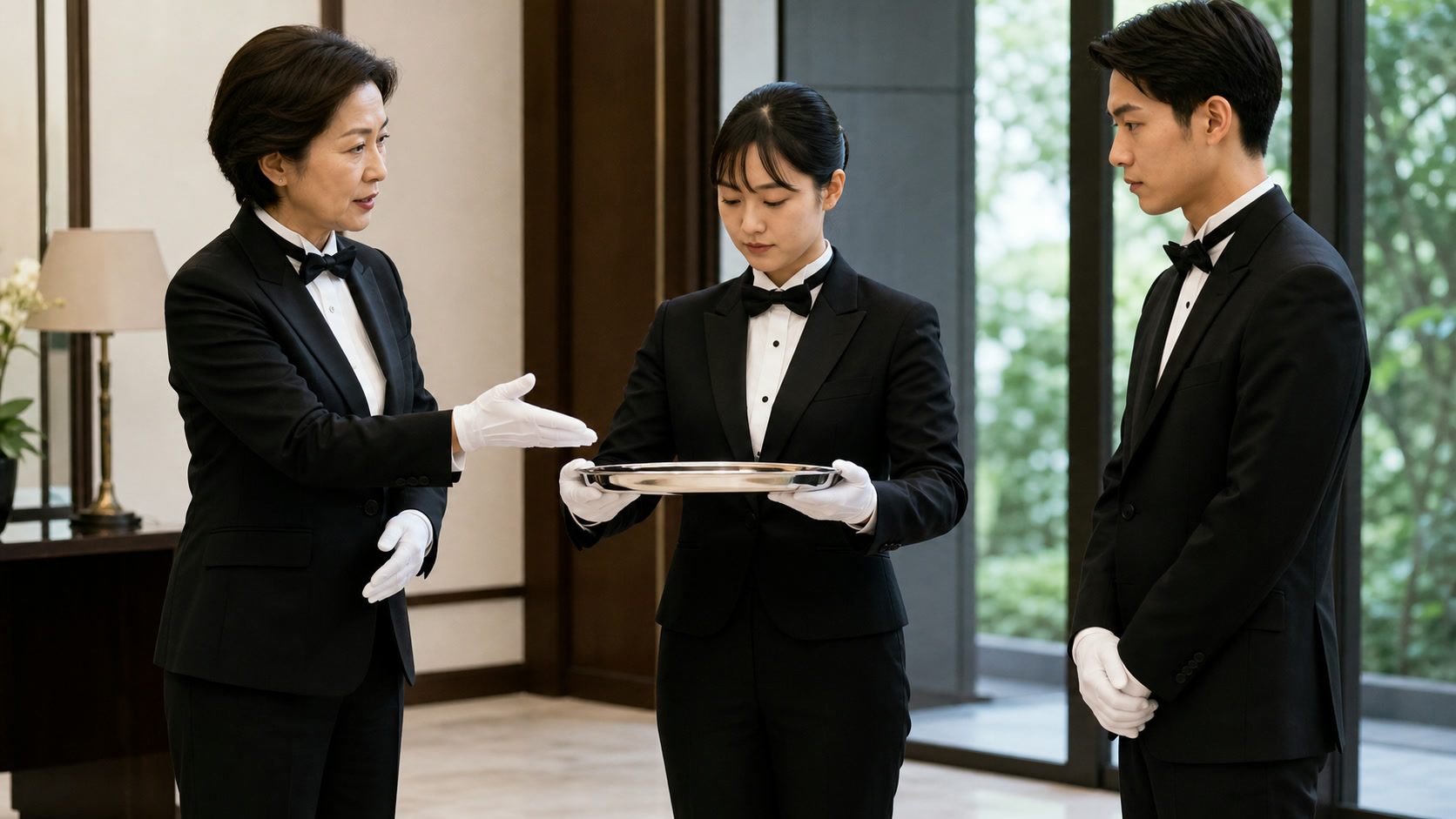
Butlers on the association's roll hold ranks. A rank is less a ladder than the name of a role: who takes charge of what within the house. Three representative ranks follow.
Receives at the door, takes the coat, stands to serve. The first face of the house and the entrance to the butler's path; in a house with many visitors, this role alone can carry a day.
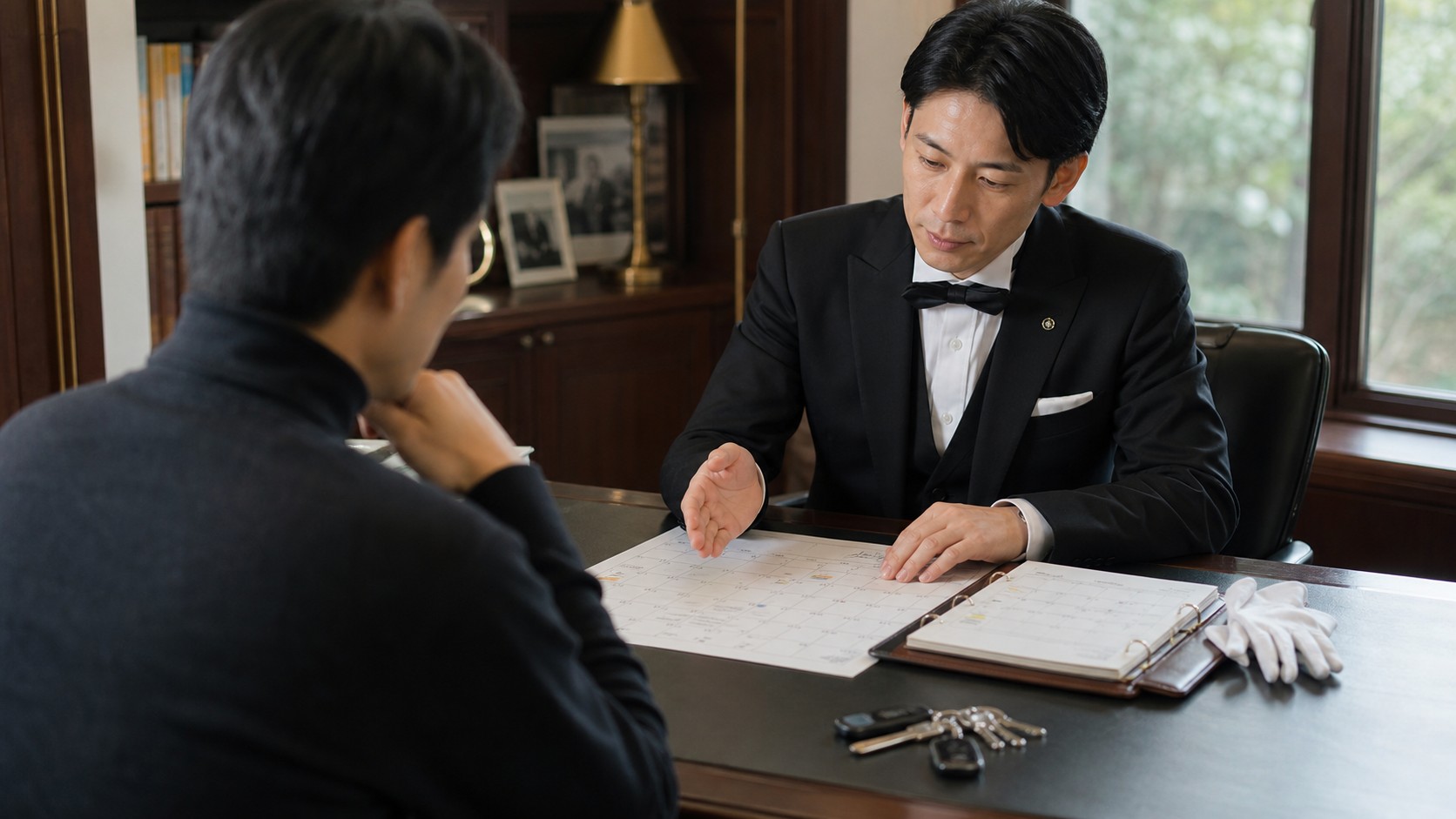
Keeps the schedule and the records and assists the butler: managing the household ledger and arranging tradespeople and visitors. The hinge of the house's running.

The highest rank, leading the whole house and its staff. Also called the steward of the house, designing its running on the master's behalf; held by butlers with Master certification.
Whether you use the association's businesses or aspire to become a butler, you should first know the operator's standing. What follows summarises what the official site records.
The headquarters is in Aomi, Odaiba, Tokyo, where THE BUTLER's desk, the Japan Butler Academy's main campus and the Queen's Butler residence are gathered. Visits are by appointment only.
Gathering everything at one address was not an administrative convenience. Someone who has just taken an enquiry at the desk can walk down the corridor and watch a class, or change floors and watch a butler at work in the residence. Were the undertakings in separate places, the standard would drift apart by degrees. One roof was the simplest way to keep it single.
All Japan Butler Association (general incorporated association)
Founded 1890; incorporated 19 February 2025
2-7-4 Aomi, Koto City, Tokyo
Head and Representative Director: Yuichi Ishii (Butler Bell)
Certification; education and training (Japan Butler Academy); butler service (THE BUTLER); butler salon (Queen's Butler); research
By appointment only, through the desk on the official site.

The association publishes its criteria: what is looked at to pass, and what stops certification. Hiding them might preserve authority, but I do not think so. Hide the criteria and the client can only trust the association in order to trust the butler; open them and the client can measure the butler with their own eyes.
Three things are watched in the examination: precision of procedure, the direction of attention, and understanding of confidentiality and restraint. The third comes before technique, and a candidate vague on it is given no grade. Because the criteria are open, the reason a grade was withheld can be explained to the candidate too.
Publishing the criteria inevitably makes visible those who do not meet them. The association does at times withhold certification. When it does, the person is told, with the reason, and shown the way back to another attempt. Certification is not a punishment but the procedure by which a grade is raised.
Because the criteria are published, other bodies sometimes ask for copies of the articles. The association does not refuse. The spread of proper butler practice takes precedence over the association's own interests. We ask only one thing: take the reasoning stacked beside each article along with it. An article without its reason will, somewhere, become a form with nothing inside.
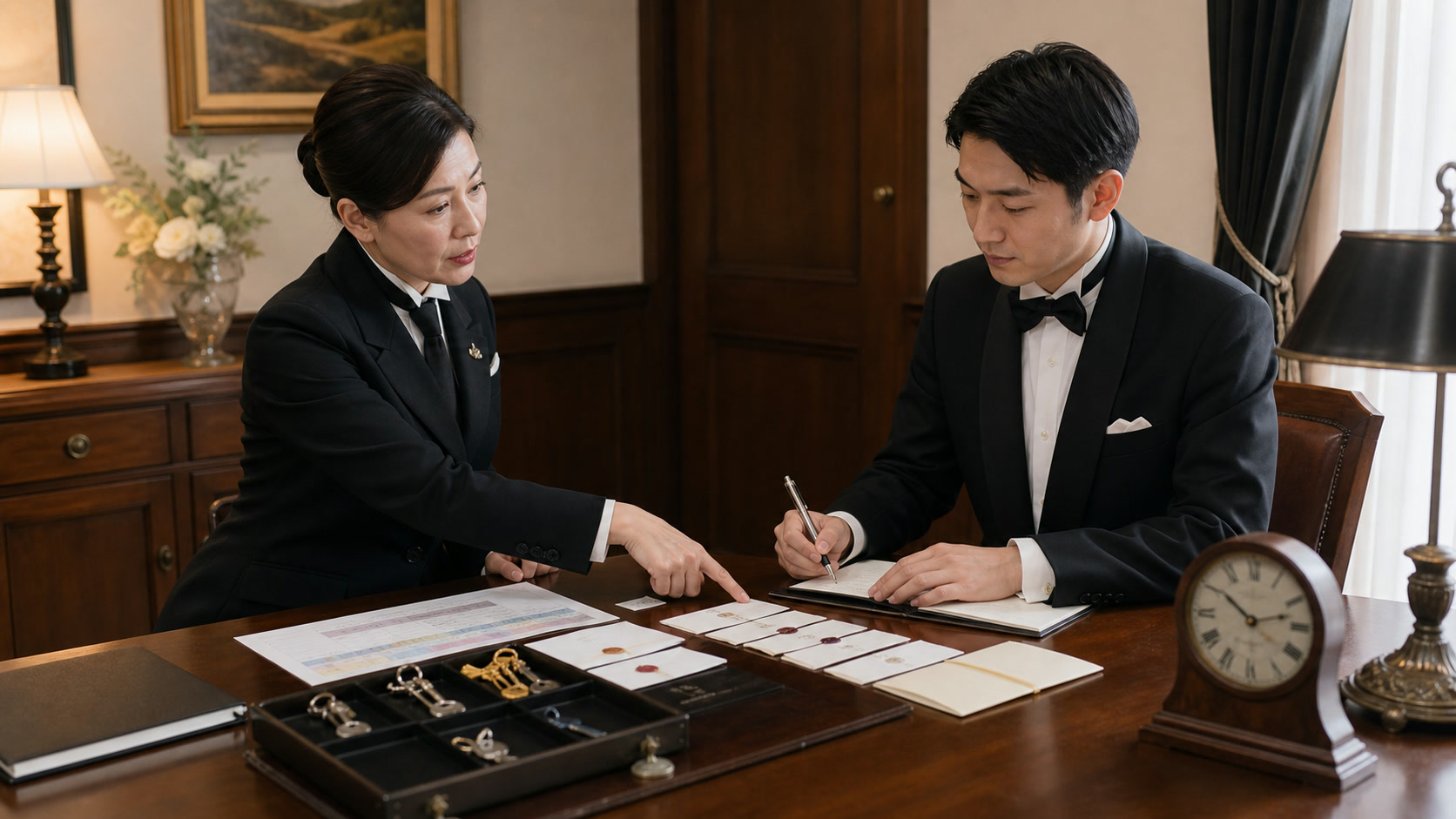
A butler goes inside the house. The association keeps three mechanisms to protect client and butler alike.

A confidentiality pledge is made at certification, and the clause is published on the official site. Not carrying out what was seen and heard is a condition that comes before skill.
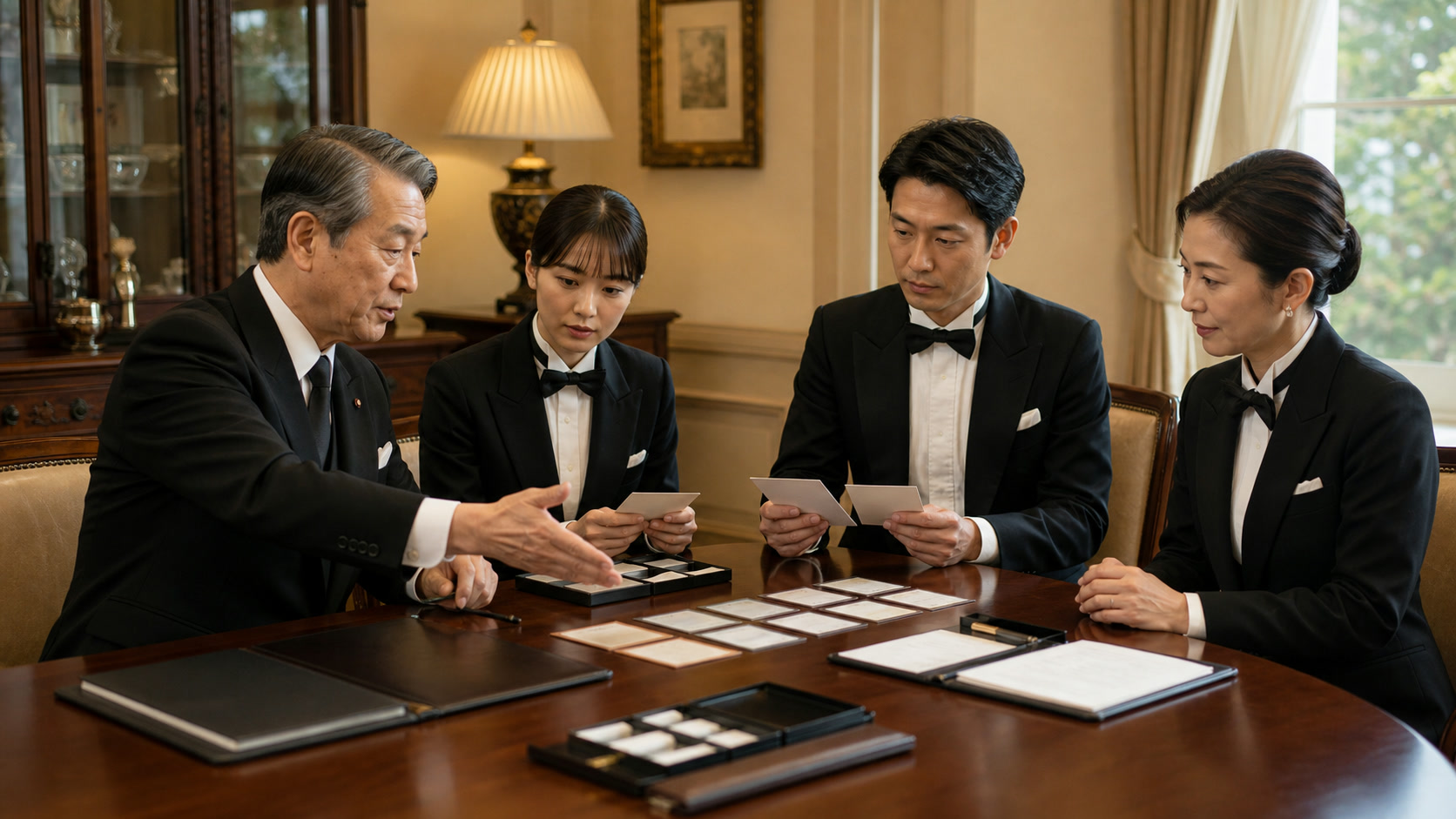
Aptitude is confirmed by interview as well as practical work. However high the skill, any tendency to put oneself before the client stops certification.
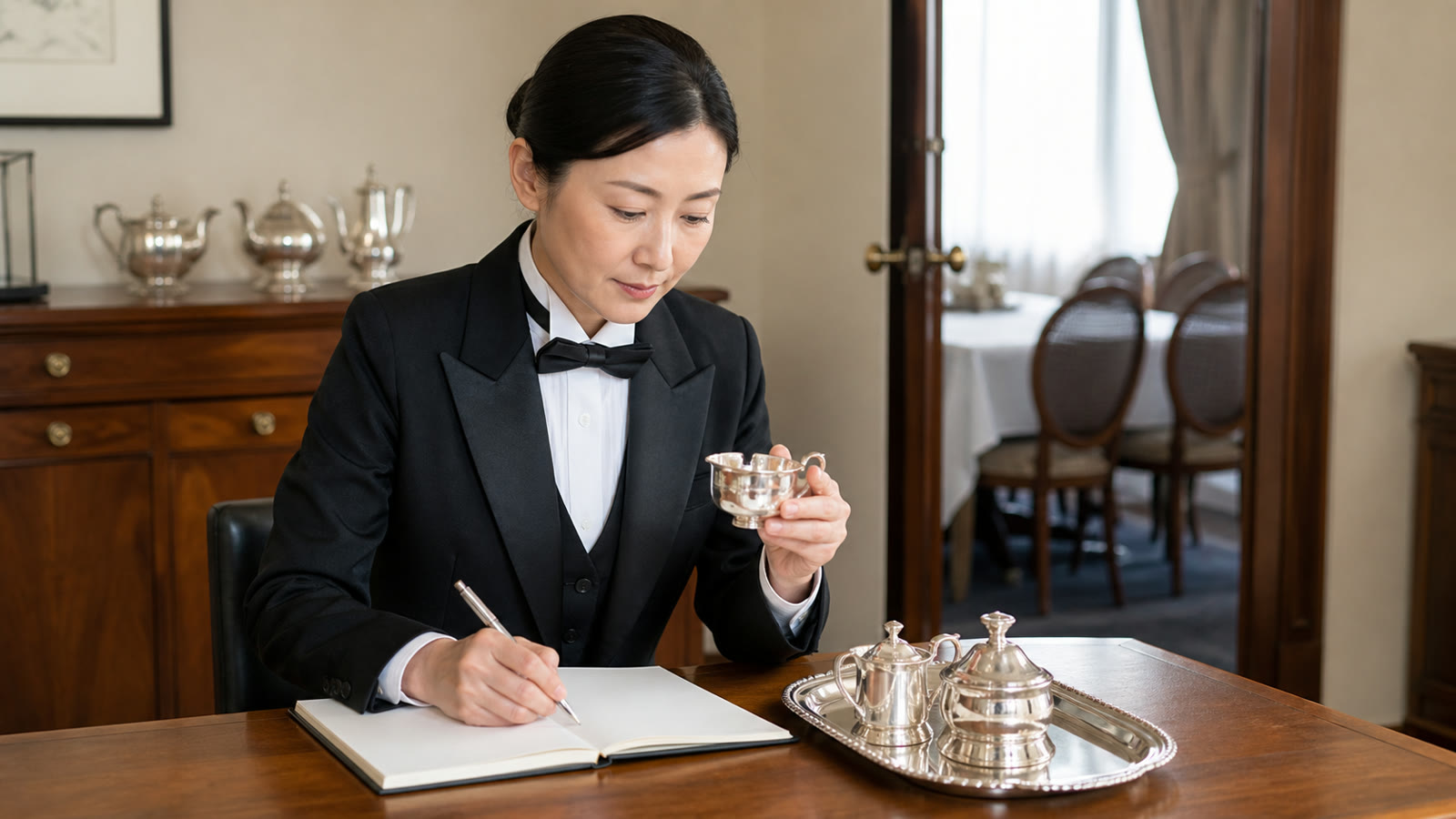
Events in the field are recorded in the association's form, and doubtful judgements are reported to the association. Nothing is left as one butler's problem.
The association has member butlers who hold certification, and supporting members who sustain butler culture. Member butlers receive training occasions and introductions to the field; supporting members receive the association's events and information. To anyone who wishes the butler's profession to remain in Japan, even without becoming a butler, the door is open.
Conditions and procedures for joining are in the membership guide on the official site. Those who would rather begin with a conversation are welcome too.
Some members are on the employing side: clients who join the association and lend their voice to shaping the butler's standard. Having those who serve and those who are served in one association is also a mechanism against writing the standard for one side's convenience.
At members' gatherings I take care not to seat people by grade. A master butler and a footman who has only just joined sit at the same table. The craft passes from person to person rather than from books, so the mere fact of different grades being in one room becomes teaching material for the association.
Supporting members sometimes ask whether they may remain members when they have no plans to engage a butler. Of course they may. Whether the profession survives in Japan is not settled by the number of people who engage one. It rests on how many people in society know that such a profession exists. That depth is the ground the next hundred years will stand on.
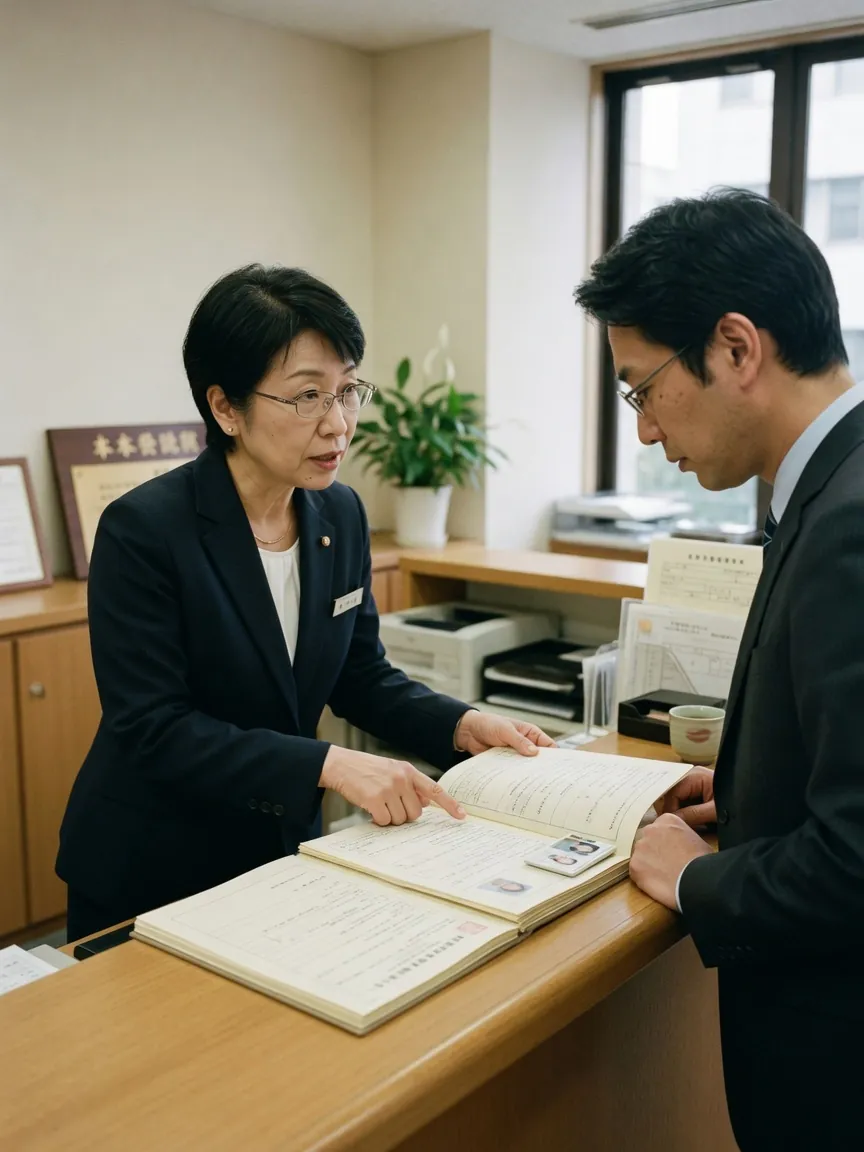
When an article is revised, the reason is kept beside it. The value of our articles lies less in the articles than in the volume of reasoning stacked alongside them.
The butler took shape in Britain, but the Japanese butler is not a copy of the British one. When receiving guests from abroad, the association's butlers lay Japanese courtesy over British-style service. That reconciliation, I believe, is the value a Japanese butler can offer the world.
The association keeps up exchange with butler schools and bodies abroad and communicates Japanese butler culture through books, lectures and the media. In 2026 a book on the butler's etiquette and culture supervised by the head was published by Gakken, and it has been aligned with the association's textbooks as the canon of attire and conduct.
At the centre of that communication are my own lectures and interviews: speaking about the butler's profession not to specialists but to the general public. I regard that as half of the head's work, because butler culture survives only when it is understood not just by those who become clients but by the society that watches.
Speaking with bodies abroad, what strikes me is how highly the Japanese butler's sense of interval is regarded: the length of the silence before speaking, the speed of withdrawal, the angle at which the gaze is turned away. These movements, hard to put into words, are what give the Japanese butler his outline. The association writes its articles on deportment in such detail in order to hand that outline to the next generation.

The clauses of the certification system, the membership guide, applications for corporate training and the association's notices are on the official site of the All Japan Butler Association. This page is an introduction from the head's standpoint; please confirm the exact terms on the official site.
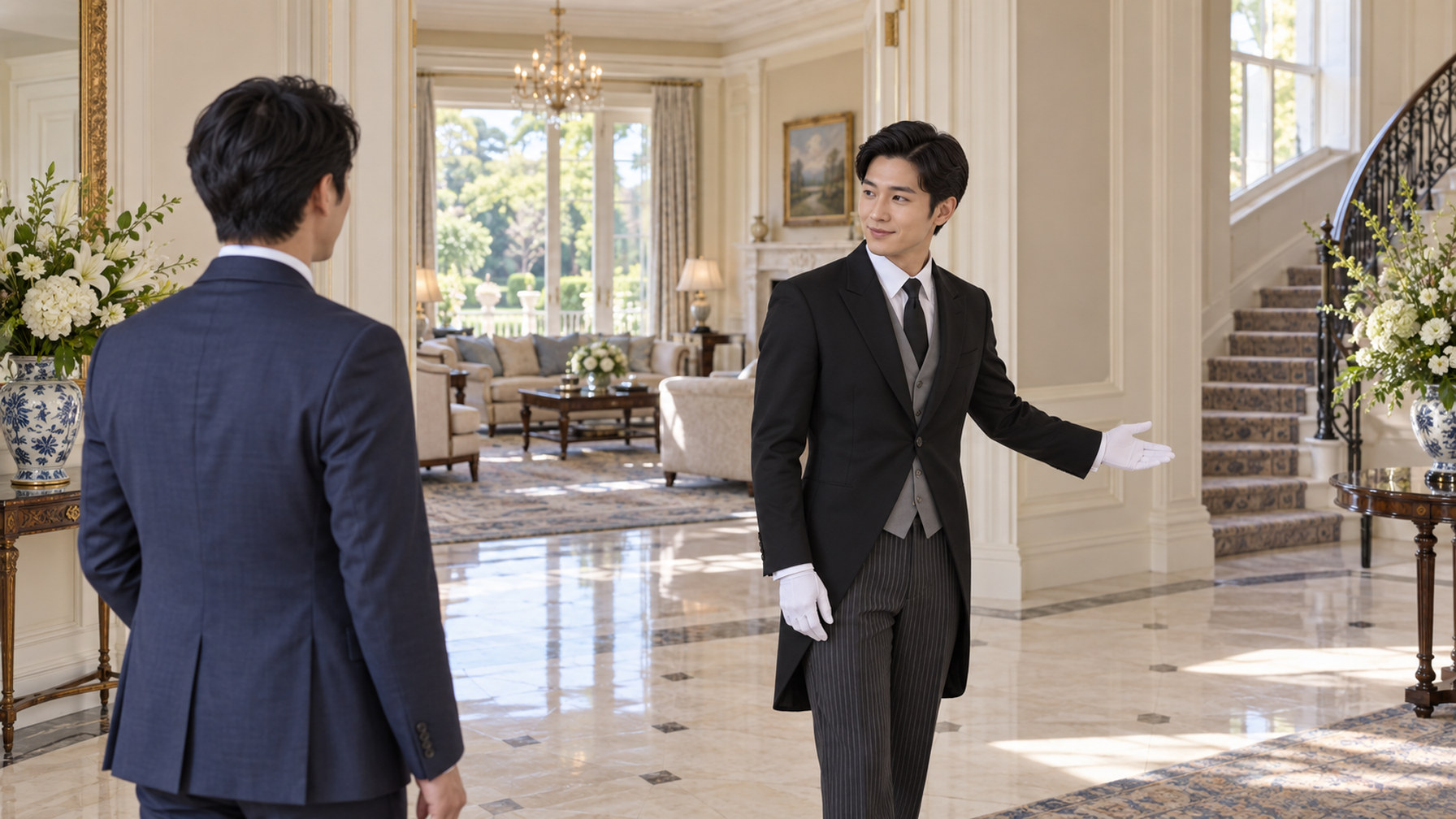
The butler service run by the All Japan Butler Association. Choose, by name and face, the one butler who suits your household or your business.
Learn more →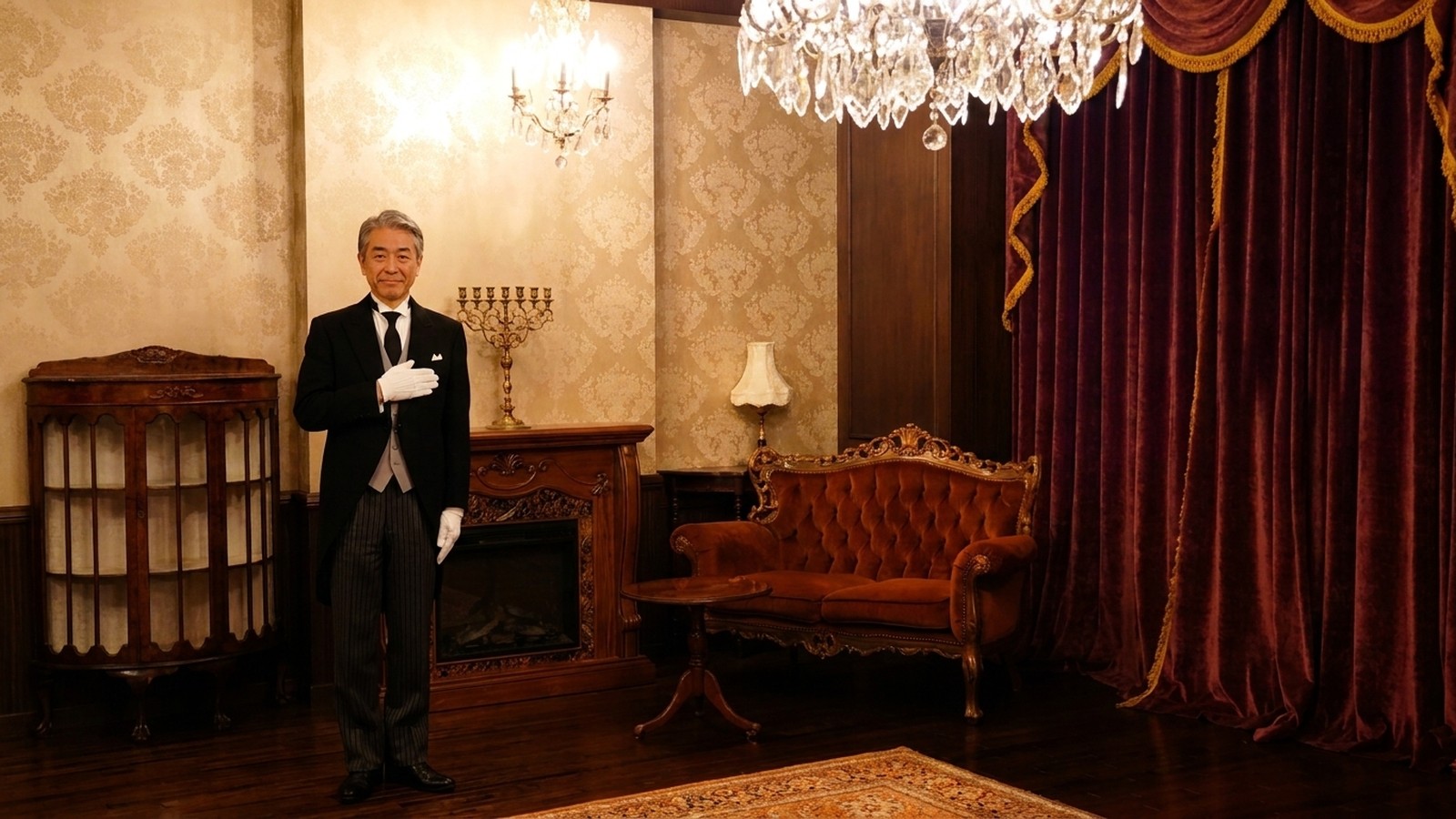
A school for becoming a butler, kept by the All Japan Butler Association. Weekend classes at the Odaiba campus in three courses, with the association's certification for those who pass the practical examination at the end.
Learn more →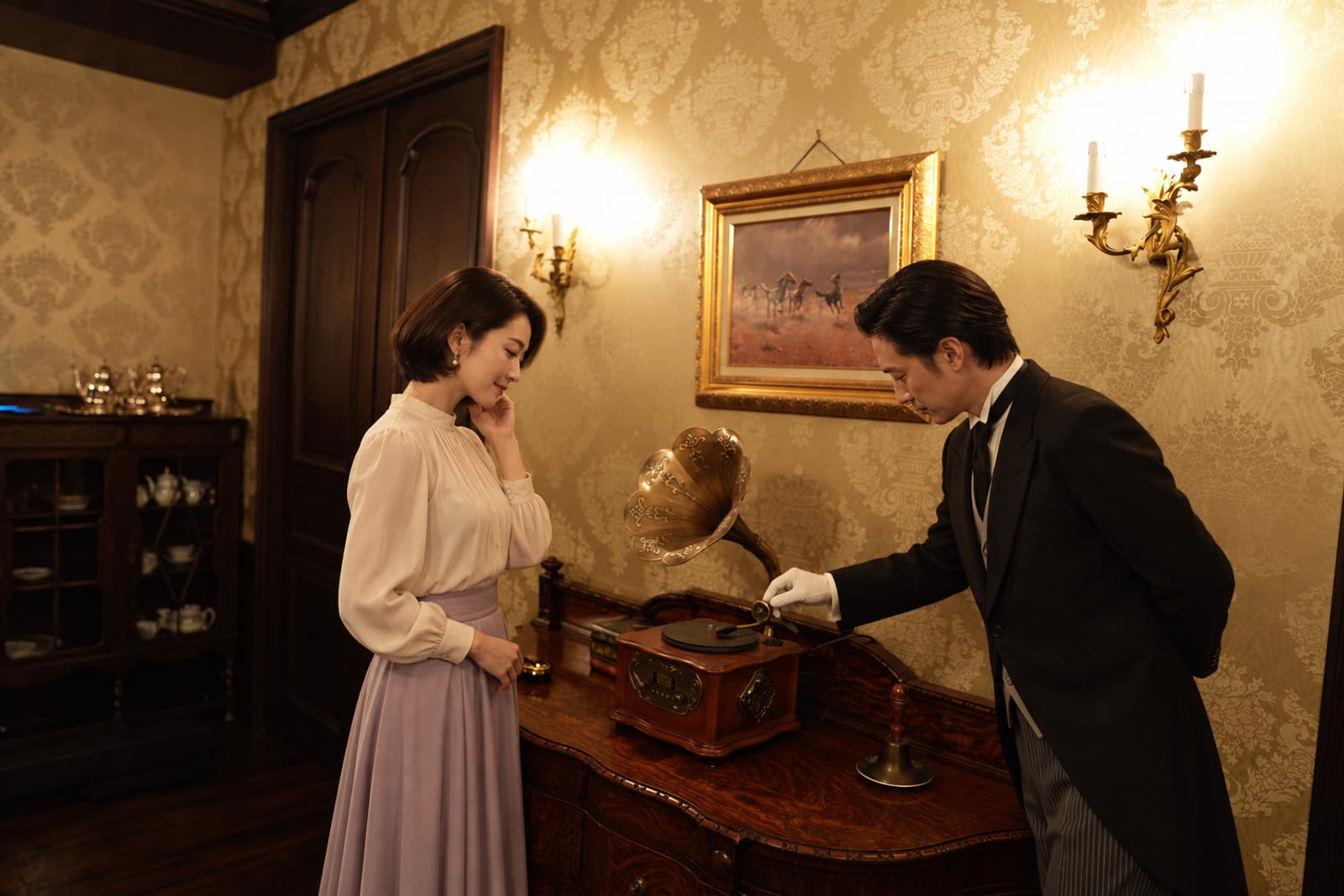
A butler salon that receives women as mistress of the house. One residence in Odaiba with four doors: salon, studio, apprentice experience and online shop, all kept by the All Japan Butler Association.
Learn more →If you are unsure which desk to approach, Butler Bell will point you to the right one.