
The first thing anyone who has decided to qualify as a butler wants to know is what must be passed, and in what order. The answer: take a course at the Japan Butler Academy and come through the practical examination held at its close.
Writing as the academy's principal and from the student's side, I set out how to choose a course, what happens on examination day, where candidates most often stumble, and what follows the certificate. The criteria of certification themselves belong to the association's page on the certification system.
First, decide which course to enter
Choose one of Essential, Advanced or Master. A higher course includes the lower ones, so the single course matching the level you aim at is enough.
The road to the qualification starts with choosing a course. To settle the basic forms, Essential, 48 hours across a single month; to build on experience in service and go a step higher, Advanced, 72 hours across two months; with management or independence in view, Master, 96 hours across three months. Advanced and Master contain the lower courses, so you can enter them without experience. If unsure, work backwards from the level you want to reach.
Saturdays and Sundays, six hours a day
Every class is on a weekend, six hours a day. Preparation and review are done with on-demand video, and the contact hours go to practice and questions. The timetable assumes you keep working, so there is no need to leave your job.
Essential
Advance
Master

What happens on examination day
On the final day of each course there is a practical examination. Making tea, laying the table, receiving a guest: the sequence is watched by an instructor at the candidate's side.
The examination is not written work at a desk; it is performed with the body in the classroom. For Essential the tasks are basic forms such as serving tea and coffee, table setting and receiving guests. For Master it takes the shape of a graduation dinner, in which several roles must be run at once. Situations that do not go to plan are slipped in on purpose, so memorised procedure alone will not carry you through.
Where you look is what is watched
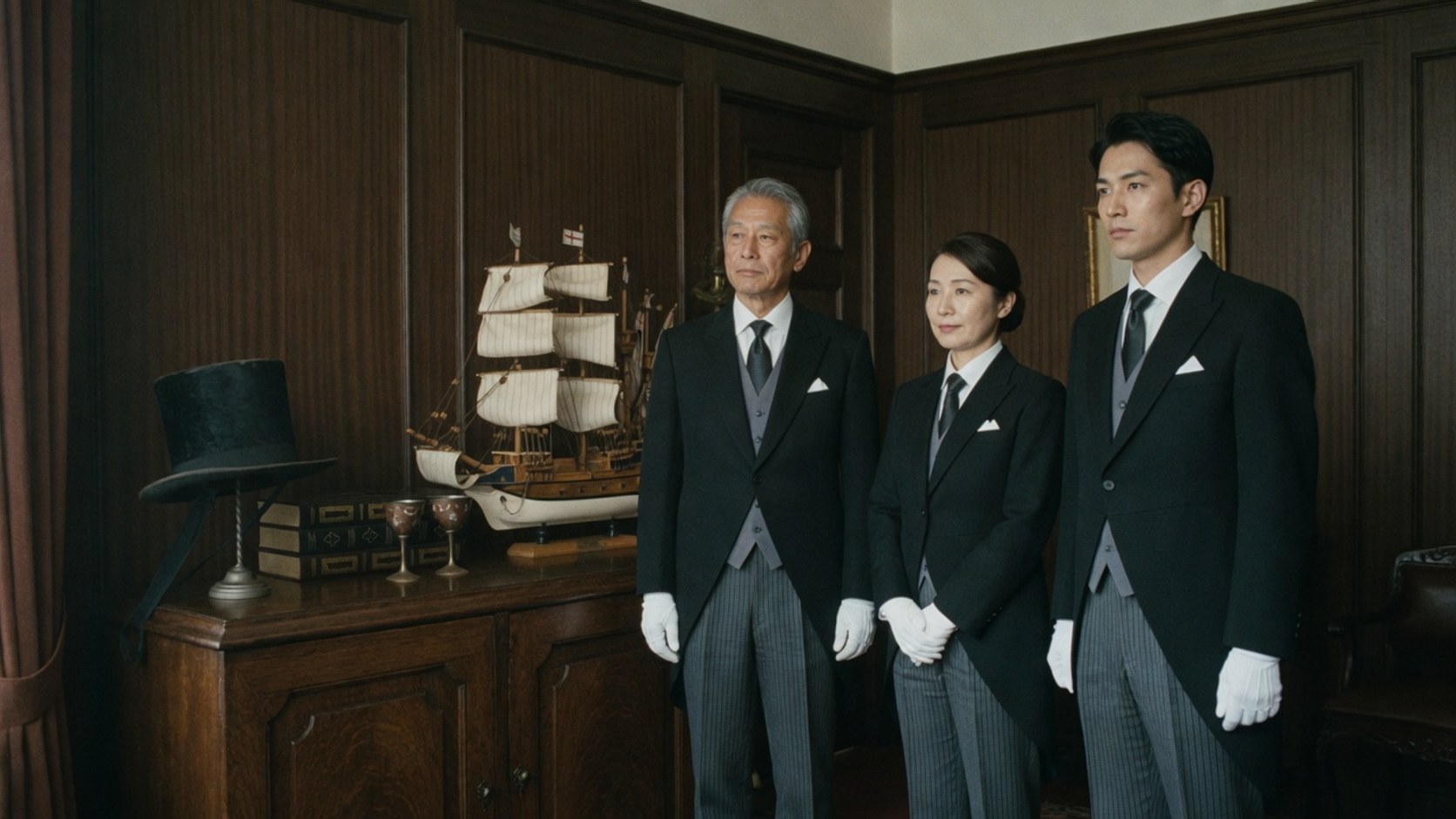
What surprises candidates is that the instructor watches not only their hands but where their eyes are. Put a cup down without looking at the person, and however precise the movement, marks are lost. Before beauty of motion, the test looks at whether you are watching the other person.
Where people stumble is not technique
Most failures are not of procedure but of timing: too early, too close, too much talk. These three are corrected before the examination.
The words an instructor says most often during a course are "wait". The cup is moved before the hand reaches for it; speech begins before it is invited. Technique can be memorised, but timing is learned only in the body, which is why it is repeated in a small classroom.
Understanding of confidence is checked too
One more thing is always checked before the examination: whether confidentiality has been understood. Not repeating outside what was seen and heard in training; not carrying away a client's information. This is a condition that comes before technique, and it is returned to again and again in the lectures.

What you receive on passing
According to the course completed, one of three butler titles is conferred: Certified Associate, Certified Professional or Certified Master. The qualification is a private one, granted by the association itself.
Complete Essential and pass, and you are an Associate; Advanced, a Professional; Master, a Master. It is not a state qualification. But because the school that teaches and the association that certifies are one body, what you learn in class and what the examination asks do not drift apart. For a student, that is a great reassurance.
An entry ticket, not a destination
I tell students that the certificate is not a summit but a ticket into the field. What is asked of a butler after certification is written on the association's page about the certification system.
The reality after the certificate
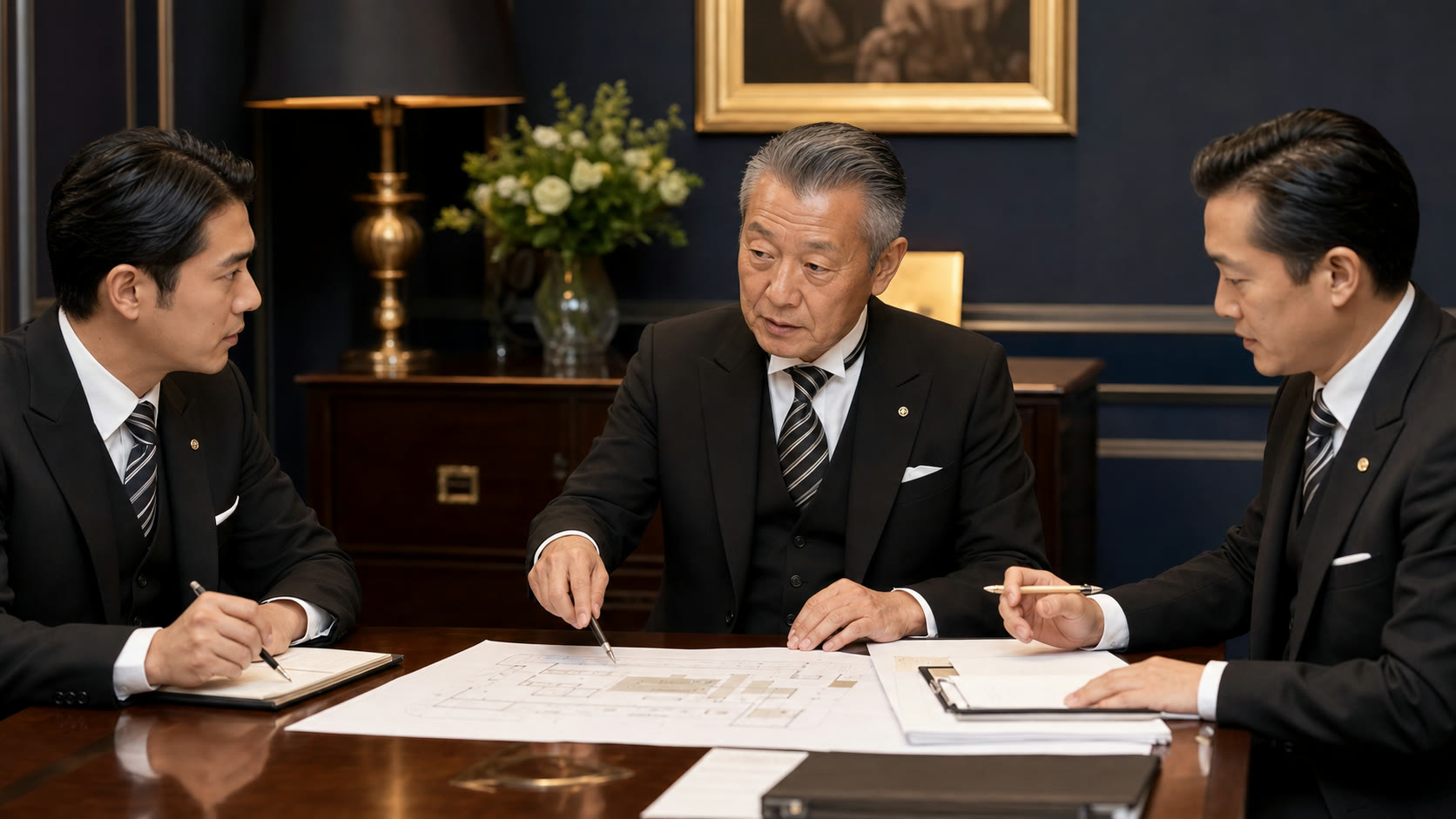
Most newly certified butlers go on to THE BUTLER, the association's own butler service. Career support for graduates is being prepared by the association.
Where a butler goes after qualifying is the field of THE BUTLER, which the association operates as its own service. The school that trains and the desk that sends out belong to the same association, so the road does not break. A scheme to pass butler-related vacancies to graduates is also being prepared.
The previous trade is not asked
Age and previous occupation are no bar. The judgement of those who have worked in service, in offices or in medicine carries straight over into a butler's work. Brochures cost nothing, and a one-to-one consultation is free as well, online if you prefer; conditions and dates are listed on the official site.

What to do the night before
Not learn anything new. All that can usefully be done is to check the tools and run the next day's route through once in the head.
Students sometimes write the night before an examination, usually asking to go over a form they are unsure of. My answer is always the same: do nothing new tonight. A form learned the evening before is the first thing to desert you under pressure.
Three things for the night before
Three things belong to that evening: checking your own equipment for the morning, changing your gloves, and running the route through once in your head — entering the room, where to stand, which vessel to reach for first, whom to address. With the route in mind, the hands take care of themselves on the day.
Sleeping well is preparation too
Sleeping well is part of the preparation. Intervals always shorten with fatigue: the movements quicken and the voice comes out ahead of them. Most of those who fail lose marks not on technique but on that quickening.
What happens after failing
There is no need to retake the whole course. Only the single point judged wanting is worked on, and you sit at the next assessment.
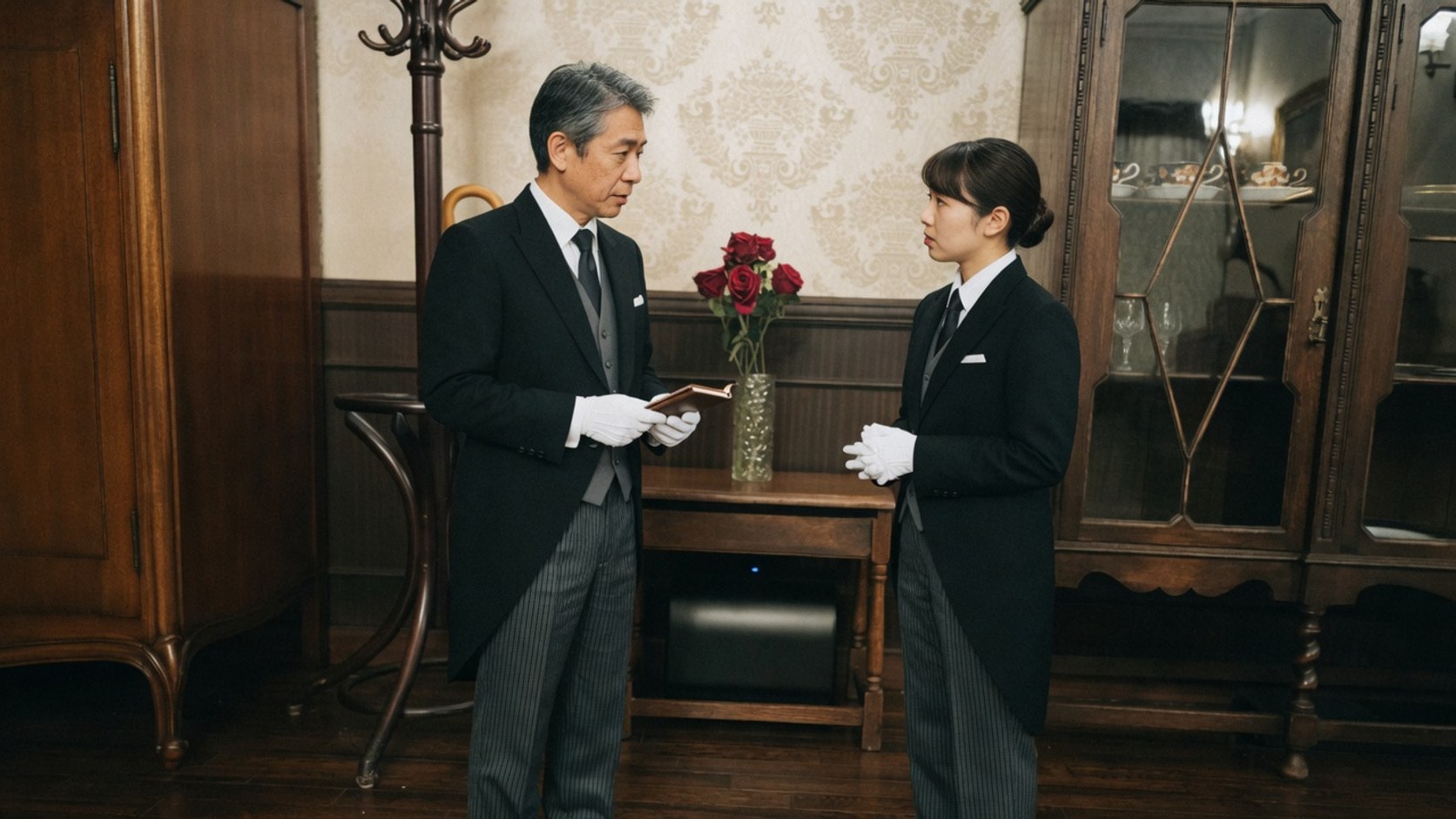
A grade is sometimes not given. When that happens the course is not begun again from the start. The record shows exactly which point was judged wanting, so a practice session is arranged for that point alone.
It is usually the interval
Most often the sticking point is interval: the procedure is exact, yet the hand moves before the other person has been looked at. Only repetition mends it, but with a single target to mend, a few weeks are usually enough.
Not treated as a question of capacity
A failure is not treated as a question of the person's capacity. The cause often lies in the teaching, and where it does the same account goes back to the instructor, so that the next student does not stop at the same place.
Read the record
Work the one point
Sit the next one
The first year after qualifying
There is no need to make a name. A butler's standing shows up six months later, in the remark that nothing has been going wrong.
What I most often say to the newly qualified is that there is no need to stand out in the first year. This is not work that draws applause on the spot. Some six months on, a household notices that nothing has gone wrong. That is how good work shows itself.
A first year of anticipating too much
The common failing of a first year is anticipating too much. Wanting to use everything learned, a new butler prepares what nobody asked for. There is no ill intent, but from the other side it looks unsettled. Learning to wait half a step usually takes about a year.
Meeting the same year's graduates monthly
So that the year is not spent alone, the association keeps a place for continued practice. Even after a grade is given, those who finished in the same year meet once a month. The things that did not go well can only be told to someone who began at the same time.
Frequently Asked Questions
How long does it take to qualify?
It depends on the course: 48 hours in a month for Essential, 72 hours in two months for Advanced, 96 hours in three months for Master, all taught on weekends, with a practical examination on the final day of each.
Is the examination written?
It is practical. Serving tea, laying a table and receiving guests are performed in the classroom with an instructor watching; for Master it takes the form of a graduation dinner.
Can I take it without experience?
Yes. Essential is for beginners, and Advanced and Master include the lower courses, so they too can be entered directly without experience.
What should be done the night before the examination?
Learn nothing new. Check your equipment, change your gloves, run the route through once in your head, and sleep well.
If someone fails, do they retake the course?
They do not. A practice session is arranged for the single point judged wanting, and they sit at the next assessment.
Related Pages
Enquiries Regarding Qualifications
For application requirements and enrolment conditions, please refer to the Japan Butler Academy's own website.
Go to Enquiries