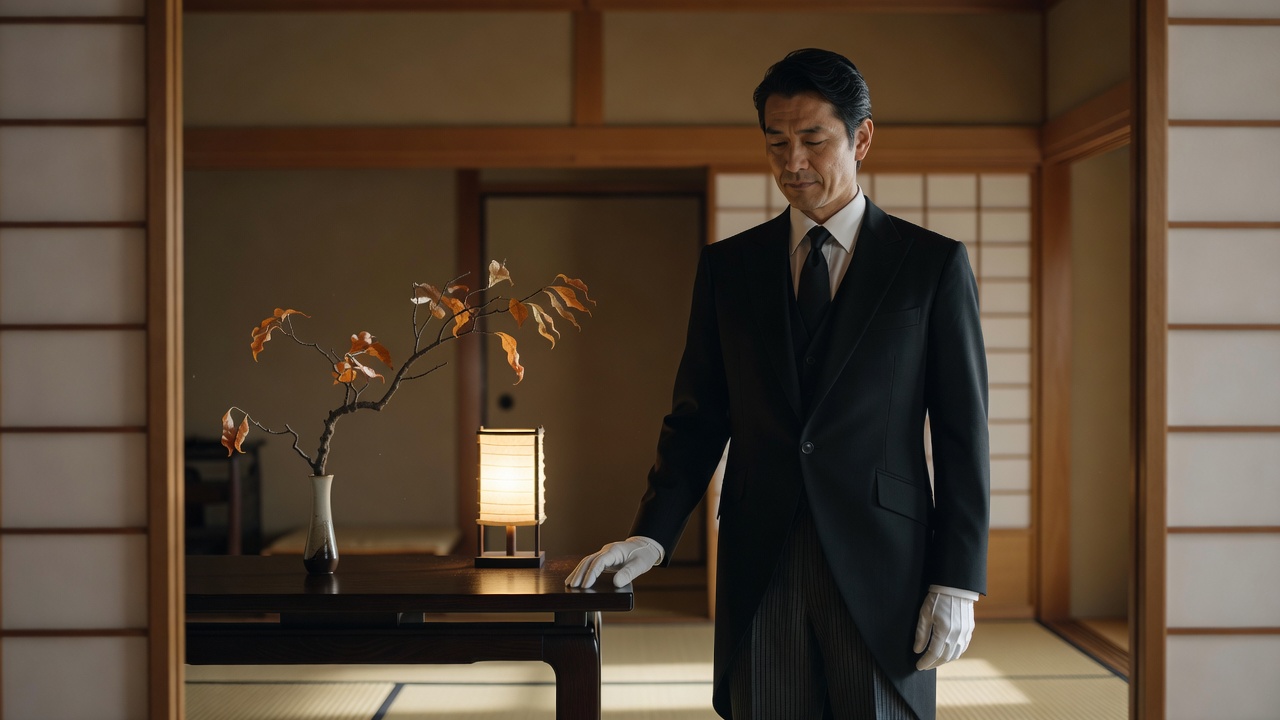
In Japan, hospitality moves with the seasons. Helping a guest sense the time of year is itself part of the welcome.
In the pages that follow I describe the arrangements I make throughout the year: the flowers and vessels I choose for each season, the way I adjust temperature and light, and the greetings I offer, all presented so that anyone may begin without special equipment.
How I Express the Seasons
I rely on flowers, vessels, light, scent and temperature. A single bloom and a change of vessel convey the season more clearly than any elaborate display.
People often imagine that seasonal effects require grand gestures, yet I find that small adjustments are quite enough.
One flower in the entrance hall, a seasonal vessel on the table, a slight shift in the colour of the lamps: these modest changes already alter the atmosphere.
Elaborate displays soon become a burden to maintain. I therefore keep every arrangement within the limits I can sustain, and that very restraint allows the sense of season to remain throughout the year.
Spring and Summer Arrangements
Spring speaks of brightness and lightness; summer speaks of coolness. Simply changing the materials produces a marked difference in feeling.
In spring I select pale flowers and light-coloured vessels. Replacing a heavy rug with a lighter one is often sufficient to refresh the room. I prefer flowers that are not yet fully open, so the pleasure lasts longer.
In summer I turn to glass vessels, linen mats and colours that suggest water. When serving chilled drinks I place a saucer beneath the glass so that condensation does not mark the cloth.
Coolness is created as much by sight and touch as by temperature.
Autumn and Winter Arrangements
Autumn is expressed through depth of colour; winter through warmth. Lowering the lamps and using heavier materials is usually enough to convey the season.
For autumn I choose colours that recall the harvest. I replace lighter vessels with those that have more weight and I avoid lamps that are too white; a warmer colour temperature immediately creates a calmer impression.
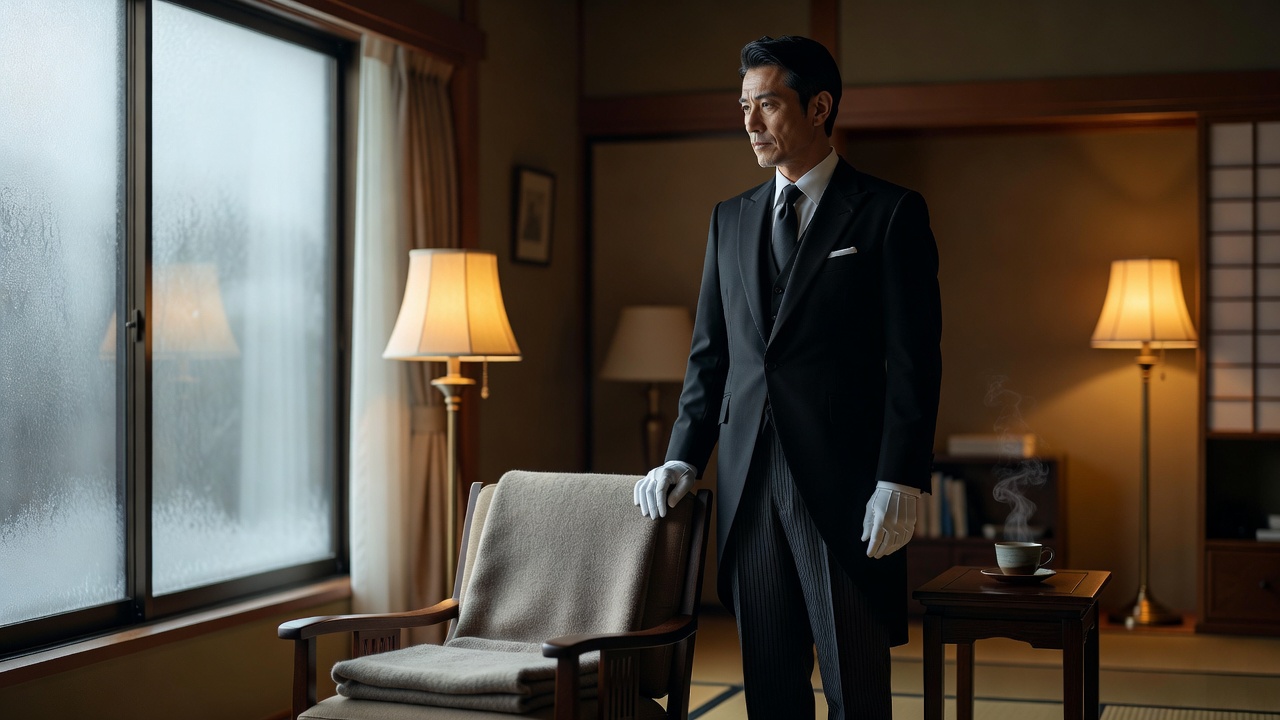
In winter the temperature itself becomes the greatest courtesy. I make certain the room is already warm, and I warm the vessels in advance and keep a lap blanket ready. Heavier fabrics also contribute to the visual sense of warmth.
How I Handle Flowers
I keep the height below eye level and avoid strongly scented blooms on the dining table. I leave a little space so the arrangement looks natural rather than overworked.
Flowers on the table must remain low enough for guests to see one another. Anything taller may be decorative, yet it interferes with conversation and therefore fails as hospitality.
Strongly scented flowers compete with the aroma of the meal; I therefore place them in the entrance hall or along the corridor. I change the water daily and recut the stems so the flowers remain fresh for as long as possible.
Temperature and Lighting
I bring the room to the correct temperature before guests arrive. Lighting that illuminates only the areas that need it feels more restful than a uniform blaze.
The temperature a guest meets at the moment the door opens forms the first impression. In summer I cool the room slightly; in winter I warm it. I make these preparations well in advance rather than at the last minute.
I prefer not to rely solely on ceiling lights. Adding lamps that light the hands or the wall surfaces softens the same level of brightness and makes the room feel calmer.
Seasonal Greetings
I add a single phrase that belongs to the season. Mentioning the weather or an approaching event turns a stock expression into a living remark.
Even a simple observation such as “The heat continues, does it not?” shows that I have noticed the guest’s comfort. When a festival is near, a brief reference to it feels equally natural. A short, genuine remark carries farther than any set phrase.
The same principle applies to written greetings. Rather than inserting a conventional seasonal line, I write what I have actually felt; the recipient remembers the personal note.
Frequently Asked Questions
How do I create a sense of season?
I use flowers, vessels, light, scent and temperature. A single bloom or a change of vessel conveys the season more effectively than elaborate displays and is far easier to maintain.
What should I consider when placing flowers on the dining table?
I keep the height low enough for guests to see one another across the table. Strongly scented flowers compete with the food, so I place them in the entrance hall or corridor instead.
What is most effective in winter hospitality?
Temperature itself. In addition to warming the room I warm the vessels and keep a lap blanket ready; these small attentions are felt at once.
Related Pages
Seasonal Hospitality
I am happy to advise on seasonal arrangements and hospitality.
Contact us