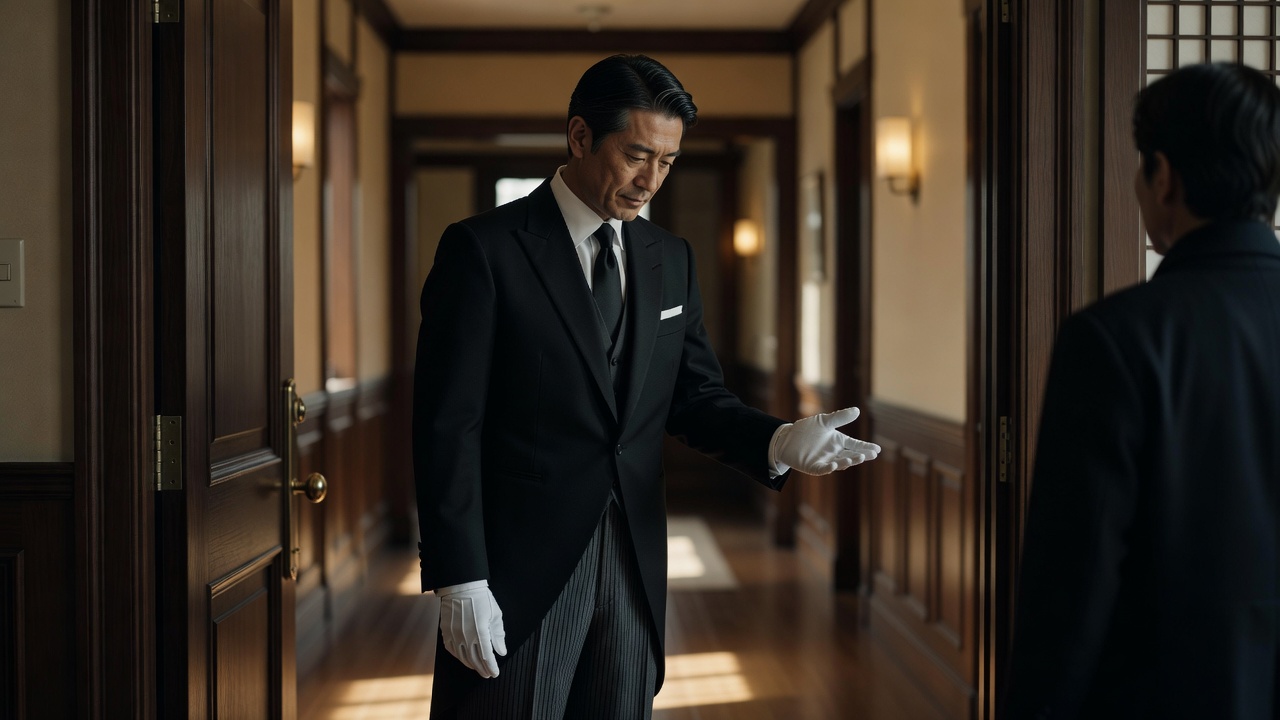
Receiving guests means preparing everything in advance so that visitors may move about without hesitation and feel entirely at ease. More important than any display of politeness is removing the need for them to make decisions at all.
In these pages I explain the complete sequence, from the position I take at the door through to seeing a guest off, in a form that may be used equally in a private home or a place of business.
What Matters Most When Receiving Guests
It is ensuring the guest never has to decide anything. Where to go, where to sit, when to leave – the fewer moments of uncertainty, the more at ease they will feel.
Polite language matters less than a clear path. Never leave a guest standing at the entrance, wondering which room to enter, or searching for a seat; all of these can be settled by preparation beforehand.
That preparation consists of checking the route and clearing away anything unnecessary. Simply keeping the way free of obstacles makes guiding a guest far smoother.
Where I Stand to Welcome a Guest
I stand slightly to one side of the door rather than directly in front of it. Standing square on blocks the guest’s path and creates an unwelcome sense of pressure.
If a person appears directly ahead when the door opens, the guest instinctively pauses. By standing half a step aside and turning my body towards the open side, I create a natural invitation to enter.
I offer my greeting only once the guest has stepped fully inside. Beginning to speak while still holding the door forces the visitor to stop and listen, which is discourteous. Movement and speech should never overlap.
How I Walk When Showing the Way
I walk a little ahead and to the side of the guest, glancing back at each turn to indicate direction. My pace matches theirs.
Walking at a slight angle ahead allows me to show the route while still keeping the guest in view. Walking directly in front hides their reactions; walking level makes it impossible to signal the way.
A small turn of the body before a corner conveys direction without words.
On stairs the guest ascends first; when descending I go ahead so that I am in position to steady them should they slip.
When to Serve Tea
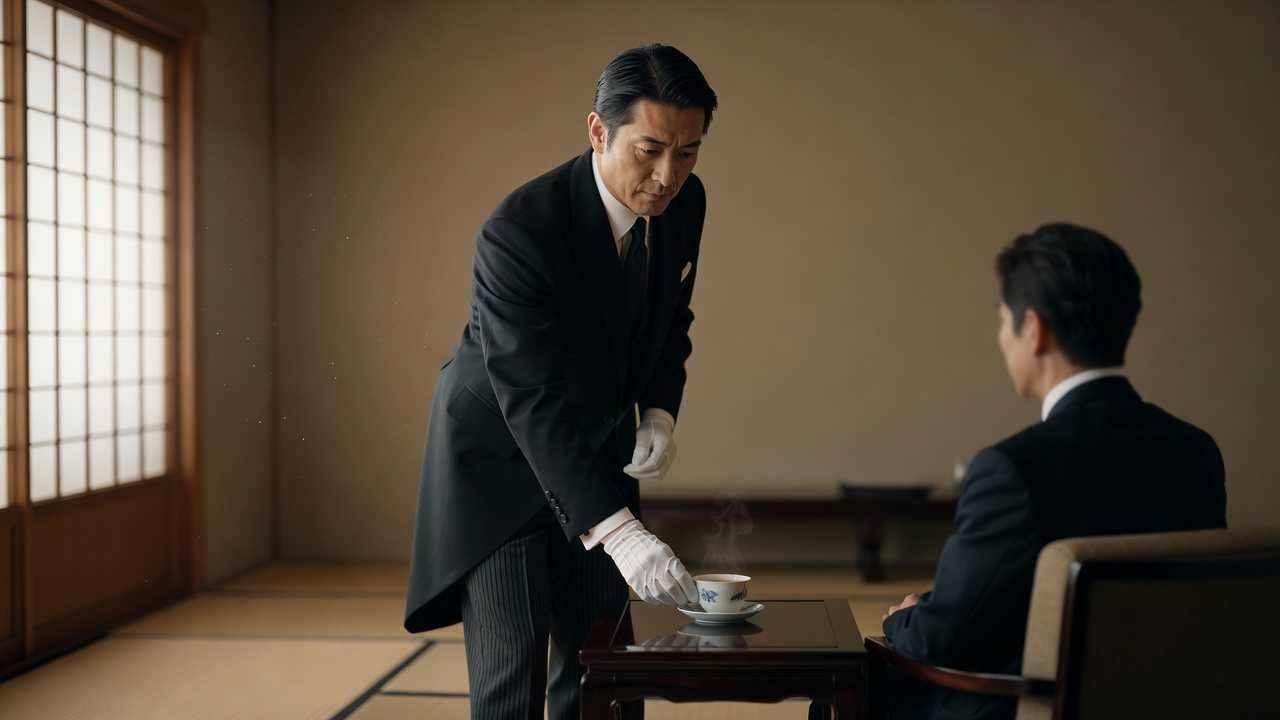
I wait for a natural pause in conversation and place the cup quietly, never interrupting speech and using as few words as possible.
Too early breaks the flow; too late creates an awkward silence. The right moment is a few minutes after the guest has settled, once the conversation has reached a brief lull. Even then, a simple “If I may” is sufficient.
The cup is set to the guest’s right front. If the vessel has a handle, I turn it so it may be grasped comfortably. Above all, the cup must be placed without a sound.
How I Sense a Guest Wishes to Leave
A glance at the clock, a hand reaching for belongings, or a slight shift forward in the chair tells me it is time to bring the visit to a close.
Most guests find it awkward to announce their departure. By noticing these signs and saying, “Thank you for your time today,” I allow them to rise naturally.
Once the intention to leave has been shown, I introduce no new topic. Fresh conversation on the way to the door only obliges the guest to sit down again.
How I Conclude the Farewell
I remain at the door until the guest is completely out of sight. The door is not closed at once; to do so would suggest an abrupt end.
I bow at the threshold and stay a few seconds longer even after the guest has turned away. Only when they have rounded a corner or the car has moved off do I step back.
It is a small detail, yet the final impression lingers. I have always found that the manner of parting stays longer in memory than the welcome itself.
Frequently Asked Questions
What matters most when receiving guests?
It is ensuring the guest never has to decide anything. Where to go, where to sit, when to leave – the fewer moments of uncertainty, the more at ease they will feel.
When is the best moment to serve tea?
A few minutes after the guest has settled, once conversation has reached a brief lull. I never interrupt and keep any remark to the minimum.
Where do I walk when guiding a guest?
A little ahead and to the side, glancing back at each turn. On stairs the guest ascends first; when descending I go ahead.
How far should I see a guest off?
Until they are completely out of sight. I wait until they have rounded a corner or the car has moved off, and I do not close the door at once.
Related Pages
Enquiries
We welcome enquiries regarding interviews, lectures and training.
Contact us