
The quality of a butler rests on the standards we apply when choosing candidates and the process we follow to prepare them for service.
Skills can be developed through training, yet the habit of noticing another person’s state is not something that changes quickly.
Here I explain, from my position overseeing recruitment and training at THE BUTLER, exactly what I look for when selecting people and the stages they must complete before they work independently.
What I look for first during selection
The habit of observation. Before skills or career history, I check whether a person notices the state of the other party. This quality is hard to instil through training alone.
In the interview I watch not only the content of answers but also timing and the way the candidate attends to the other person. Prepared replies can be learned, yet spontaneous reactions cannot.
I do not place great weight on an impressive résumé. Experience gained in other fields often translates directly into sound judgement on the job.
Two interviews, at different hours
The interview is not a single occasion. We meet twice, in a different place and at a different hour. Someone composed in a morning interview can show quite another face in the rush of the early evening. We are not measuring character but watching how a person behaves when tired.
Why I value aptitude before technique
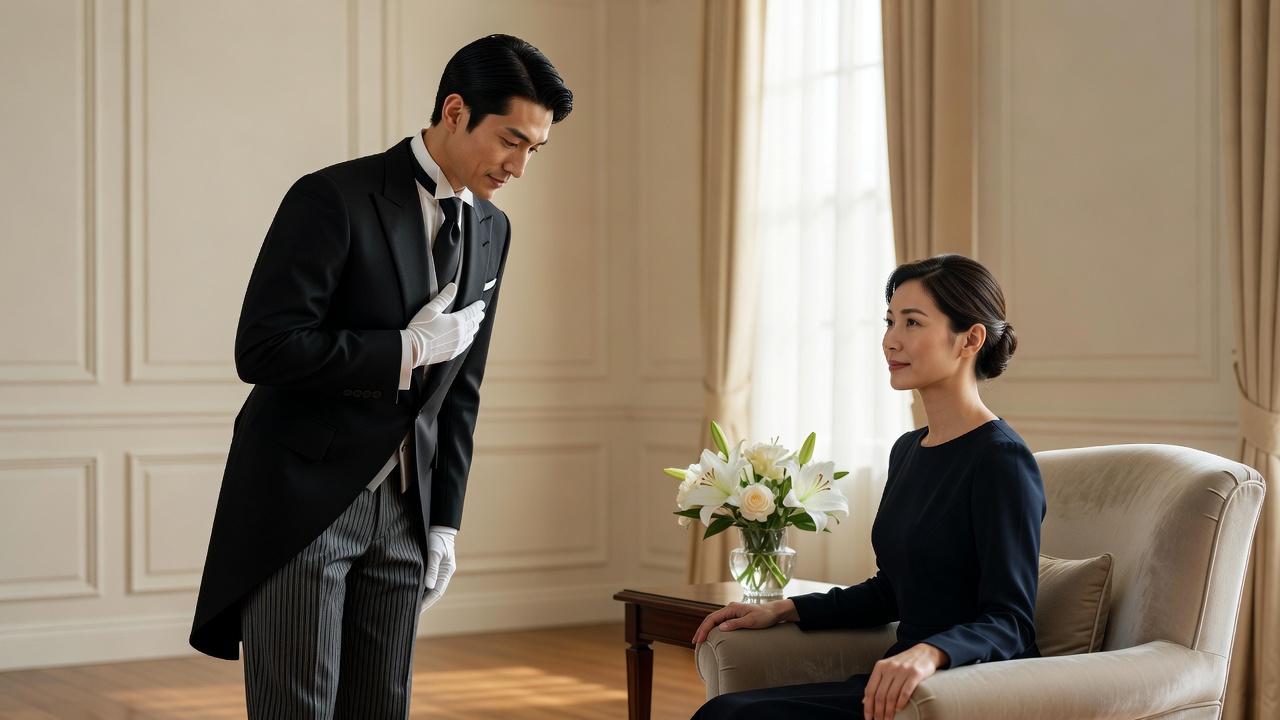
Techniques can be acquired through repetition, yet the ability to remain unobtrusive is closer to natural suitability. Without it, the role rarely lasts.
The more successfully a butler works, the less his presence is noticed. The position offers little praise, so it does not suit those who need frequent recognition. I state this plainly in the interview so only those who accept it proceed.
Sharing this assessment early protects the individual as well. Placing someone unsuited into service harms both parties.
When we are the ones answering
There are moments in hiring when we are the ones answering. Can leave be taken, can this be carried alongside a family, how many years until the next grade. An organisation that can only answer such questions vaguely will not attract people who stay. Whatever figures are asked for, we give on the spot.

The order in which training proceeds
First the habit of observation and note-taking, then the fundamentals of movement and deportment, followed by repeated practical drills, accompanied service, and finally independent assignments. No stage is skipped.
The first skill I instil is the habit of remembering and recording details. Next come posture, bearing and the handling of equipment. Only after that does the trainee accompany experienced colleagues to observe how judgements are made.
Independent responsibility comes last.
The time it takes differs
Skipping stages produces butlers who possess technique yet cannot read a room. Following the sequence ensures that, although rates of progress differ, the final standard remains consistent.
How long training takes varies. Some can be trusted alone within six months; others move up over two years. We do not hurry, because we have watched too many butlers sent out early leave within the first year. Keep to the order and the final standard comes out much the same.
Observing and recording
Deportment and equipment
From attending to standing alone

How I confirm that standards have been met
Through the Association’s certification examination. The assessment includes practical elements and evaluates both skill and attitude before granting staged certification.
Because those who train and those who certify share the same criteria, the goal of training never becomes vague. Certification marks a point from which further development is expected, not an end in itself.
The stages of certification and the principles of the examination are set out on the All Japan Butler Association’s certification page.
The instructor is the more nervous
On assessment day the people around the candidate are the more nervous, because the instructor who trained him is waiting in the corridor. If the candidate fails, the instructor is told what was lacking too. More often than not, the fault lies in how he was taught.

Selection standards directly determine service quality
If I only put people in place, quality depends on whoever happens to arrive. Only by remaining involved from the selection stage can I guarantee the standard I require.
A consistent level of service cannot be achieved unless selection, training and certification form a single unbroken chain. Delegating any part to an outside body breaks that chain at that point.
I publish the butler register both so clients may choose and so that the butlers themselves continue to feel the weight of being chosen.
The inconvenient side of publishing
Publishing the roster has its inconvenient side for us: imbalances in who gets asked for become visible as numbers. We keep to it because being unable to choose at all leaves the client far more uneasy than seeing those numbers does.

What is repeated in training
More time goes on learning to wait than on the movements themselves. Someone who can act is easier to train than someone who can hold still.
The longest hours in training go on what to do when there is nothing to do. Many people, finding their hands free, go looking for a task; yet most of a butler's day consists of standing by. Holding the posture, not letting the gaze drop, being able to move in a single step when called. Keeping that state is far harder than carrying a vessel.
The reason before the shape
Practice in deportment runs in one order: the correct form first, the reason immediately after. Why a door is drawn towards you, why a vessel is set down from the right. A form learned without its reason will always come apart in an unfamiliar room.
Learning on real equipment
Real equipment is used throughout. The weight of silver, the coolness of porcelain, the slip of linen. What the hands learn cannot be replaced by photographs or film.
Is a butler still watched after entering service
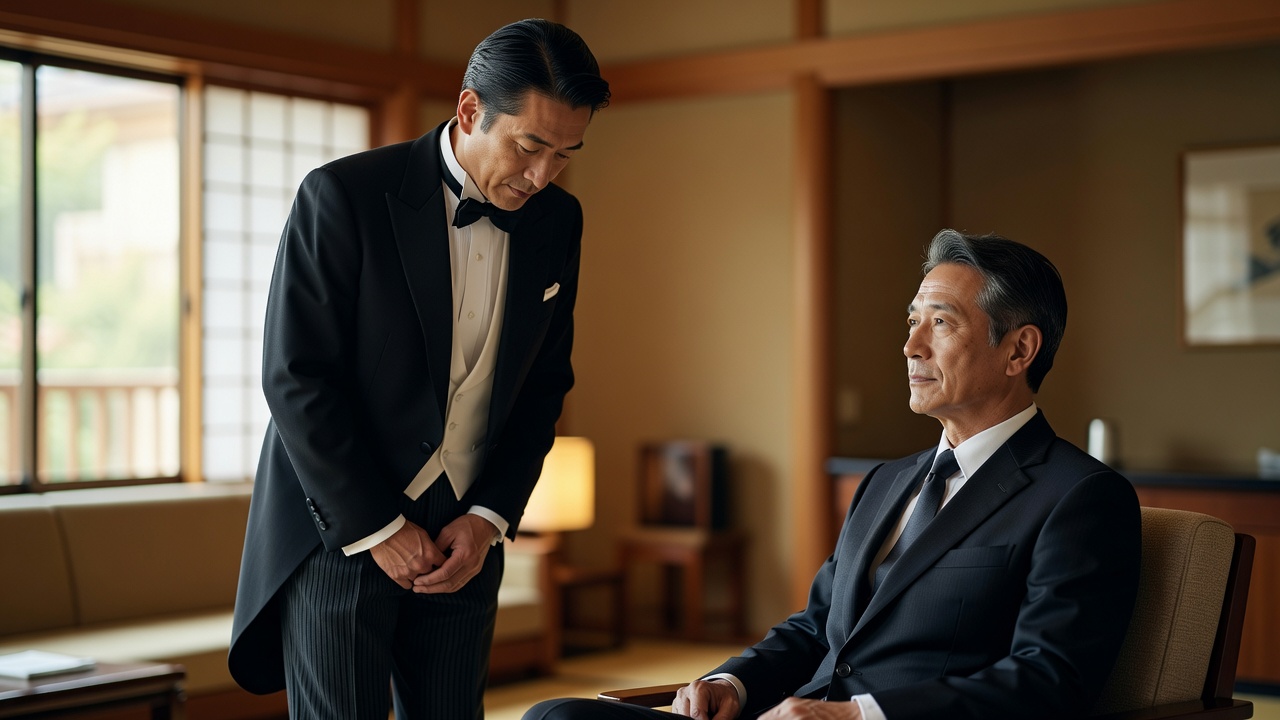
He is. Certification is a starting line, and the years afterwards are longer. Records and interviews catch any slippage early.
A butler in service writes up the day in the association's format. Not only what happened, but the moments of hesitation and how the judgement was made. We read what is written, and where a judgement has drifted from the standard we take it up with him at the next interview.
Slippage begins with fatigue
Slippage begins with fatigue rather than with skill. Visiting the same household for a long time, a butler can settle so far into its air that the intervals grow short. A change in the tone of the written record is usually the first sign.
Spacing the engagements
Adjusting the spacing of engagements, or placing a different household in between, is our work too. Where a post cannot be sustained, the acquaintance with that house is cut off at the same moment.
The record
The interview
The spacing
How those who are not selected are told
They are told, with the reason attached. Leave it unsaid and the person cannot know what to mend, and will stop at the same point next time.
Candidates are sometimes declined. When that happens we do not simply send the result. We say concretely at which point, and in what, we judged something to be missing: the interval kept with the other person, the grain of the written record, or the fit with this way of working at all.
Sometimes the answer is fit
Sometimes the answer is fit. Told plainly that this is work which rarely draws praise, some choose another road themselves. We do not count that as a failure. Spending years in a place that does not suit is the greater loss on both sides.
The second time moves quickly
Someone declined once may return after an interval. Because both sides remember where it stopped before, the second conversation moves quickly.
Frequently Asked Questions
How are butlers selected?
Before skills or career history I look for the habit of noticing another person’s state. This quality is difficult to develop through training alone.
Can someone with no experience become a butler?
Yes. Experience from other occupations often proves useful in making sound judgements on the job. Training begins with observation and record-keeping and proceeds in a fixed order.
How is the quality of butlers assured?
Through the Association’s certification examination. Because those who train and those who certify share the same criteria, the goal of training never becomes vague.
What takes the most time in training?
Learning to wait. Holding still when the hands are free is harder than carrying a vessel.
If someone is not selected, are they told why?
They are. We say concretely at which point, and in what, something was judged to be missing. Some return after an interval.
Related Pages
Enquiries about recruitment and training
I welcome press enquiries and consultations concerning the training and recruitment of butlers.
Go to contact