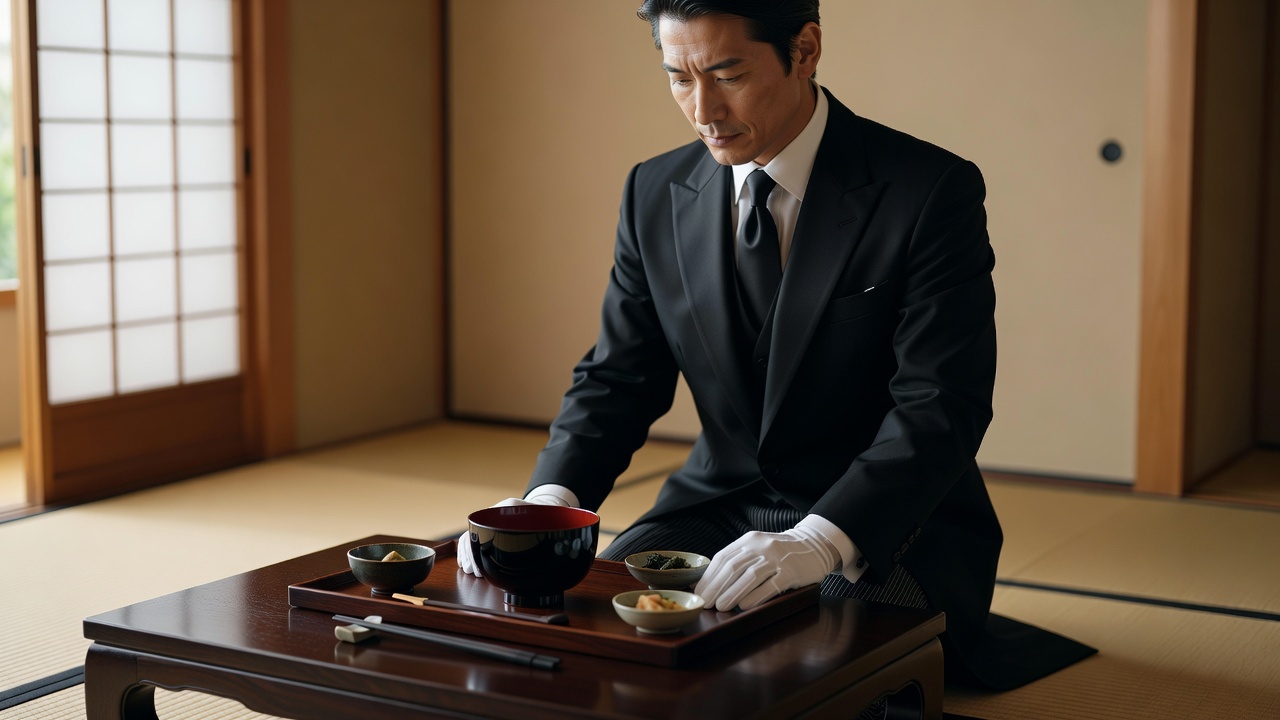
Japanese table manners begin with respect for the vessels and chopsticks.
Whereas Western dining is built around the order in which one uses the tools, Japanese cuisine is a culture of taking up the bowls, so the way one handles them becomes the etiquette itself.
Here I shall explain chopstick usage, how to manage the lids of bowls, the meaning behind the arrangement of the tray, and the flow of kaiseki, contrasting them with Western customs.
What Makes Japanese Table Manners Different
The key difference lies in taking up the vessels to eat. Unlike Western food, where plates stay on the table, Japanese etiquette is founded on the custom of holding bowls and small dishes.
Because it is a culture of holding vessels, one must distinguish between those that may be lifted and those that remain in place. Rice bowls, soup bowls and small dishes are held, while large platters and ceramic plates are left on the table.
Knowing this distinction removes nearly all uncertainty. It is easy to remember that whether to lift depends on the size of the vessel.
How to Handle Chopsticks
One takes them up with the right hand, supports them with the left, then transfers the grip. They are returned to the chopstick rest when not in use. Certain actions, such as laying them across a vessel or piercing food, must be avoided.
The motion begins by grasping the centre with the right hand, steadying from below with the left, then sliding the right hand into position. With practice the action becomes one fluid movement.
When a vessel is also to be held, it is lifted first and the chopsticks taken afterwards.
Actions to avoid include laying the chopsticks across a vessel, piercing food with them, or hovering indecisively over dishes. Each of these can unsettle fellow diners.
How to Manage Bowl Lids
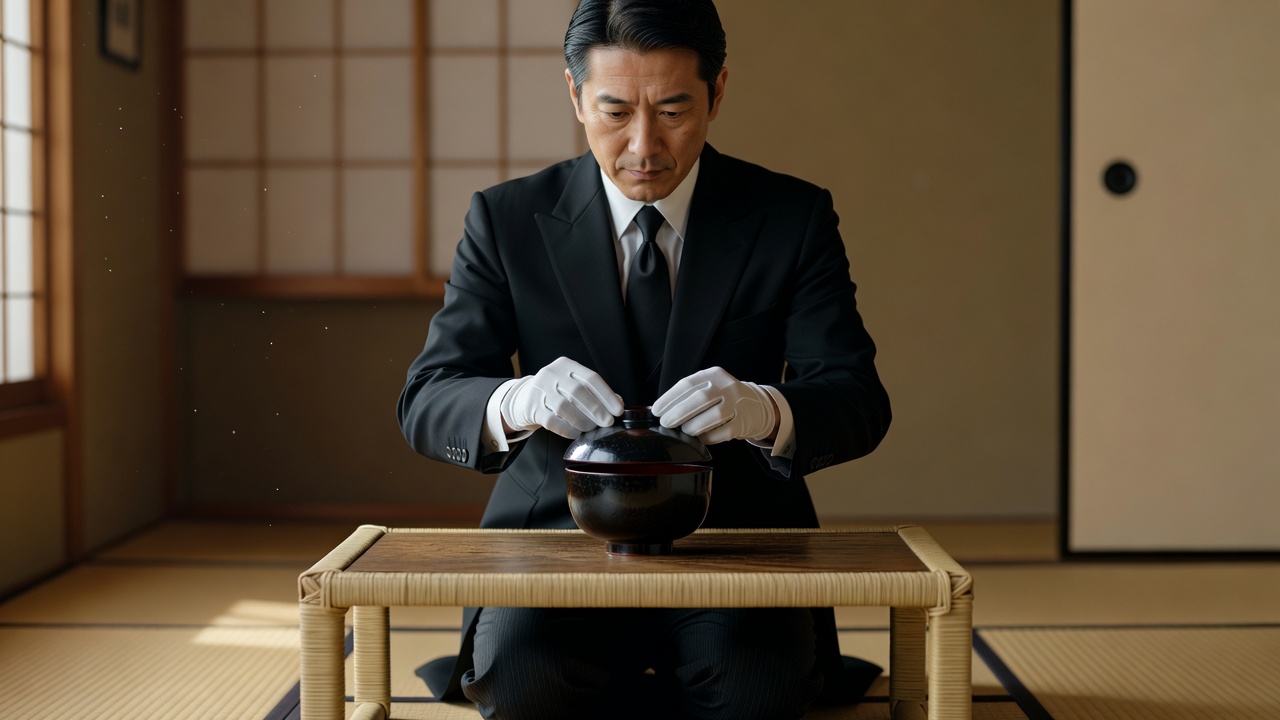
Both hands are used to remove the lid, which is then turned over and placed to the right of the tray. Once the meal is finished the lid is replaced. Leaving it inverted and stacked is best avoided.
If the lid resists, a gentle press on the rim allows air to enter and release it without spilling. Forceful pulling risks splashing the contents. The removed lid is inverted so that any moisture does not drip.
Replacing the lid after the meal protects the vessel and aids clearing. Leaving it inverted may damage the rim.
The Meaning of the Tray Arrangement
Rice is placed at the front left, soup at the front right, with the main and side dishes beyond. The layout is designed for ease of reach and the natural sequence of eating.
The arrangement exists for practical movement rather than appearance alone. Rice and soup, which are reached most often, sit nearest so the distance travelled by the chopsticks is minimised.
Understanding the reason removes hesitation when arranging a tray oneself.
Observing this order at home lends an air of composure to the table, and no special vessels are required to begin.
The Order of a Kaiseki Meal
The sequence opens with an appetiser, followed by soup, sashimi, grilled dishes and concludes with rice and soup. Each course arrives in turn, so one need only savour them in the order served.
Although kaiseki comprises many items, following the sequence is sufficient to observe proper etiquette.
The vessels and presentation reflect the season, so pausing to appreciate each arrival before taking up the chopsticks conveys respect for the intention behind it.
One should match the pace of fellow diners. Eating markedly faster or slower than the others causes unnecessary concern.
Points Worth Remembering at a Japanese Table
Avoid making noise, handle vessels with care, and keep pace with others. Observing these three principles ensures the meal proceeds smoothly even if finer points remain unfamiliar.
Except with certain noodles, sound is kept to a minimum. Vessels are managed with both hands and set down without noise. These two habits alone greatly improve the impression of one’s conduct.
Etiquette becomes liberating once its reasons are understood. With that foundation, one can respond appropriately even at an unfamiliar gathering.
Frequently Asked Questions
May one lift vessels during a Japanese meal?
Rice bowls, soup bowls and small dishes are lifted. Large platters and ceramic plates remain on the table. Judging by the size of the vessel makes the rule easy to recall.
Where should the bowl lid be placed?
Both hands are used to remove it, then it is turned over and set to the right of the tray. Once finished, the lid is replaced. Leaving it inverted and stacked may damage the rim.
Which chopstick actions should be avoided?
Laying them across a vessel, piercing food, or hovering indecisively are best avoided. Each can unsettle fellow diners.
Is there a fixed arrangement for the tray?
Rice sits at the front left, soup at the front right, with the main and side dishes beyond. The layout aids reach and sequence, and may be followed at home as well.
Related Pages
Lectures on Japanese Etiquette
I welcome enquiries about courses centred on the manners of Japanese cuisine.
Contact us