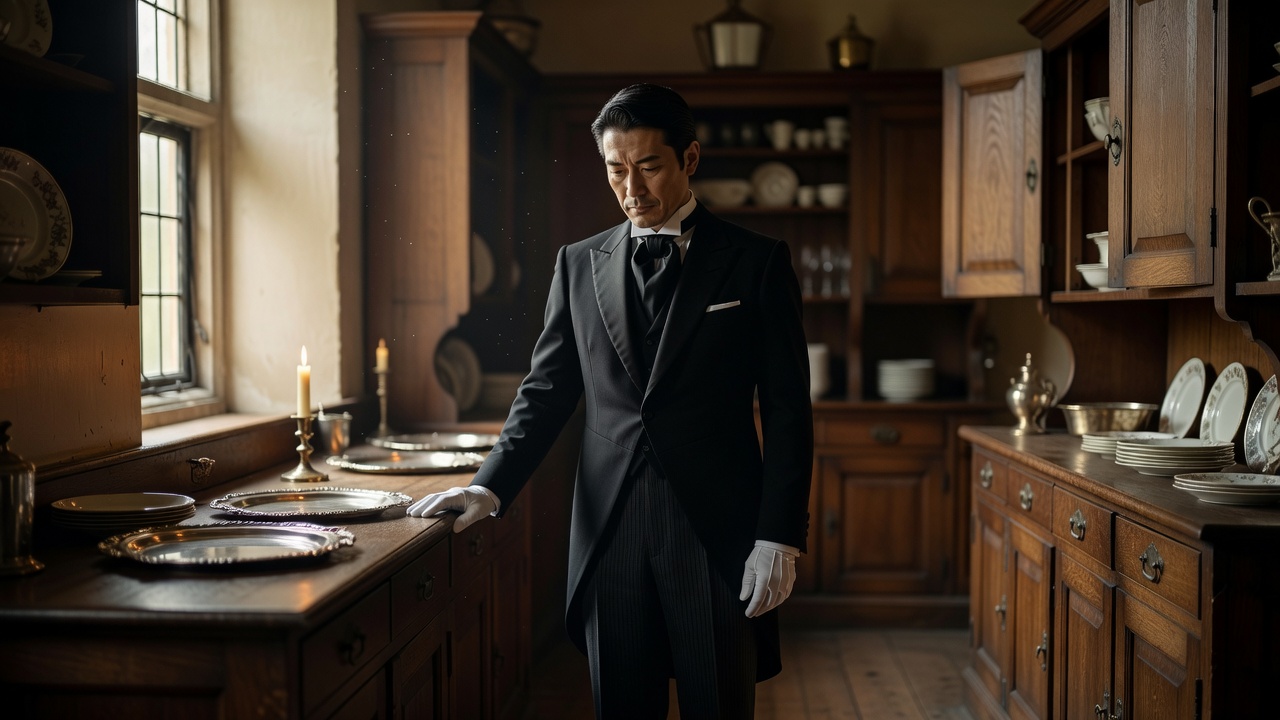
The history of the butler traces how the role grew from guarding the wine cellar to becoming the person who oversees the entire household.
It took shape in British stately homes, was organised within the class system, passed through the upheavals of the twentieth century, and reached its present form.
From my viewpoint as head I have set out this chronological account of what changed and what stayed the same.
Where did the butler come from?
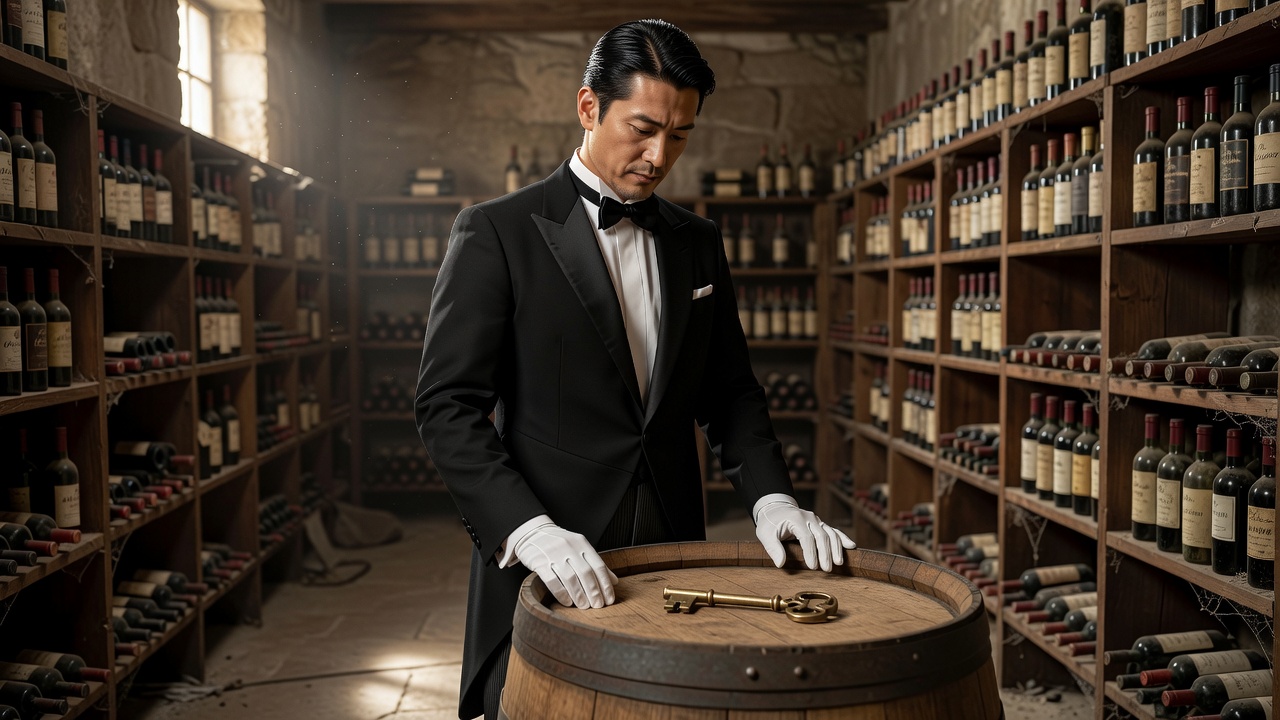
The starting point was the duty of looking after the wine cellar. The very word butler derives from an older term for the vessel or storeroom that held wine.
Wine was a costly and difficult asset to manage in those days. To be entrusted with it was a clear sign of the master’s confidence. The person who held the keys gradually took charge of tableware and silver, and later of people as well.
There is a consistent logic in the way the role expanded.
In other words, the butler did not begin as an overseer. The breadth of responsibility grew as trust was earned. That origin still shapes the nature of the work today.
How was the role organised within the class system?
In nineteenth-century Britain the duties of household staff were divided in great detail, and the butler stood near the top of that structure. It was in this period that rank and procedure were firmly established.
Large houses employed many servants whose tasks were separated into cooking, laundry, carriages, gardens and reception. The butler supervised the male staff and, together with the housekeeper, formed the centre of household management.
Seating plans, the order of service and the handling of equipment were all set down. Many of the forms still observed today were refined at that time through practical experience.
The detail was not introduced merely for show. Where large numbers of people worked, clear rules were essential so that the day could run without constant fresh decisions. This principle remains useful in present-day service.
What happened in the twentieth century?
Two world wars and the accompanying social changes removed the conditions that had supported large houses and numerous staff. The number of butlers fell sharply and the shape of the role altered.
Workers moved into other industries and maintaining grand houses became difficult. The model of employing many servants ceased to be viable, and for a time the occupation itself seemed to belong to the past.
The same current affected Japan, where the profession was nearly forgotten.
Yet demand did not disappear entirely. Instead of large teams, the work contracted to the essential functions. The butler’s duties were not simply reduced; they were concentrated.
How has the modern butler changed?
The live-in arrangement has been joined by engagements for set periods. The scope of work has also widened from household management to include scheduling and dealings with outside parties.
Clients can now choose the level of involvement that suits their way of life. It is common for a butler to attend only for guests or events while the family manages daily affairs.
The required skills have broadened to cover coordination with contractors, record-keeping and multilingual communication, alongside traditional deportment.
The outward form has changed, yet the core has not. Anticipating a person’s needs and making the necessary arrangements remains the same principle that existed when the keys to the wine cellar were first entrusted.
How did the butler reach Japan?
After Western butler culture was introduced, it was received together with Japanese ideas of hospitality, and a distinct Japanese form has since developed.
The Japanese word for butler originally denoted an official who handled administrative tasks.
When it was adopted as the translation for the English butler, the same characters came to refer to a different historical role and a different modern occupation.
Reception in Japan did not stop at simple importation.
Daily customs such as removing shoes at the entrance, a preference for restraint, and Japanese forms of etiquette were blended with the imported tradition, producing a style that is not identical to the British original.
I describe the actual situation of butlers in Japan on a separate page.
Frequently Asked Questions
When did butlers first appear?
The role began with responsibility for the wine cellar and expanded in British houses. In the nineteenth century staff duties were organised and the butler emerged as the senior coordinator.
What is the origin of the word butler?
It comes from an older term meaning the vessel or storeroom that held wine. The duty of guarding a valuable asset gradually widened to oversight of the whole household.
Has the butler’s work changed from past to present?
The form has changed. Live-in arrangements have been joined by shorter engagements, and coordination and record-keeping now carry greater weight. The central task of anticipating needs has remained unchanged.
Related Pages
Consultation on butler culture
I welcome enquiries about lectures or interviews that draw on the history and culture of butlers.
Contact us