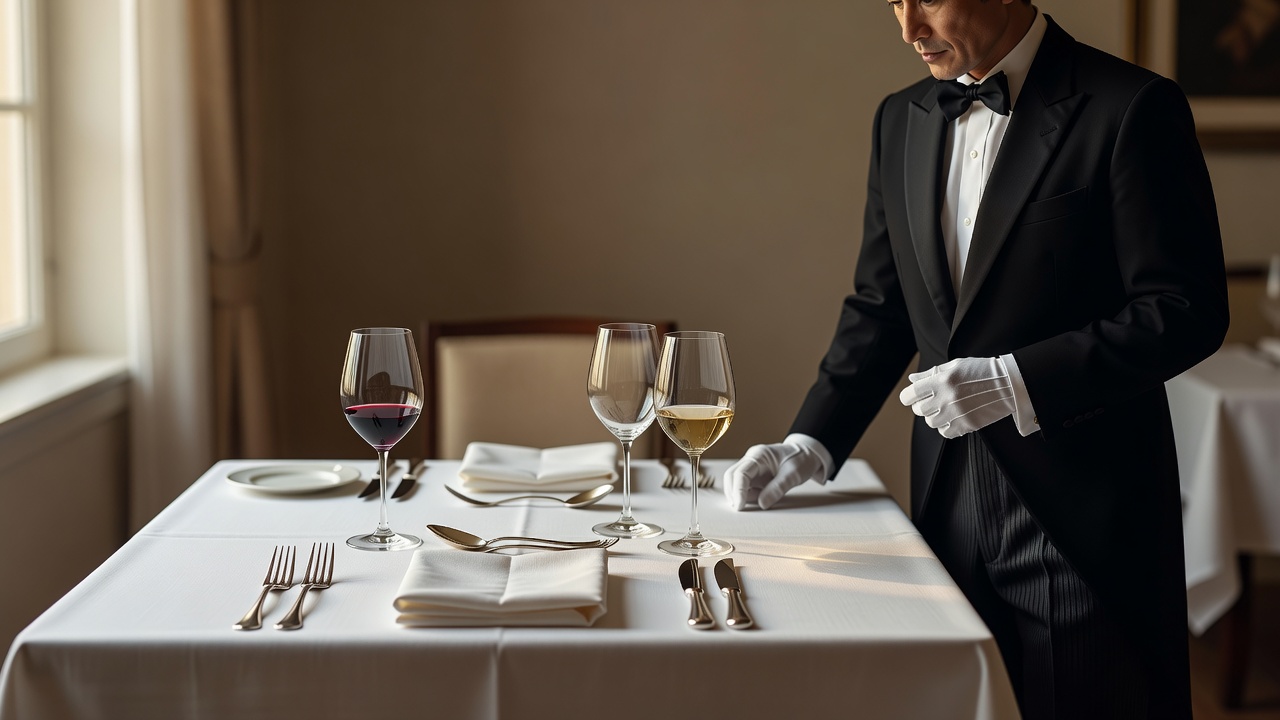
Table manners exist so that everyone seated together can enjoy the meal in comfort. They are not rigid rules meant to enforce formality, but rather a shared understanding that spares anyone unnecessary awkwardness.
Here I share the essentials we butlers apply in practice, presenting each custom with its purpose rather than as something merely to memorise.
Articles in This Category
The sequence of cutlery and the small actions that keep a course meal relaxed, explained for the moments that most often cause hesitation.
Japanese Table MannersHow to handle chopsticks and bowls, the meaning of lids and tray arrangements, and the quiet habits that make a Japanese meal graceful.
Wine ServiceHow to hold a glass, respond to pouring, manage refills, and decline gracefully when one prefers not to drink.
What table manners are for
They spare fellow diners any extra concern. When everyone follows the same customs, no one needs to watch another's movements and the meal can proceed undisturbed.
If manners falter, those around begin to wonder whether they should point it out or follow suit, and the meal ceases to be a relaxed occasion. Observing the customs is not about appearing refined but about keeping the atmosphere calm.
Therefore, correcting someone unfamiliar with the forms defeats the purpose. I never offer corrections; instead I adjust quietly so the lapse goes unnoticed.
How to handle the napkin
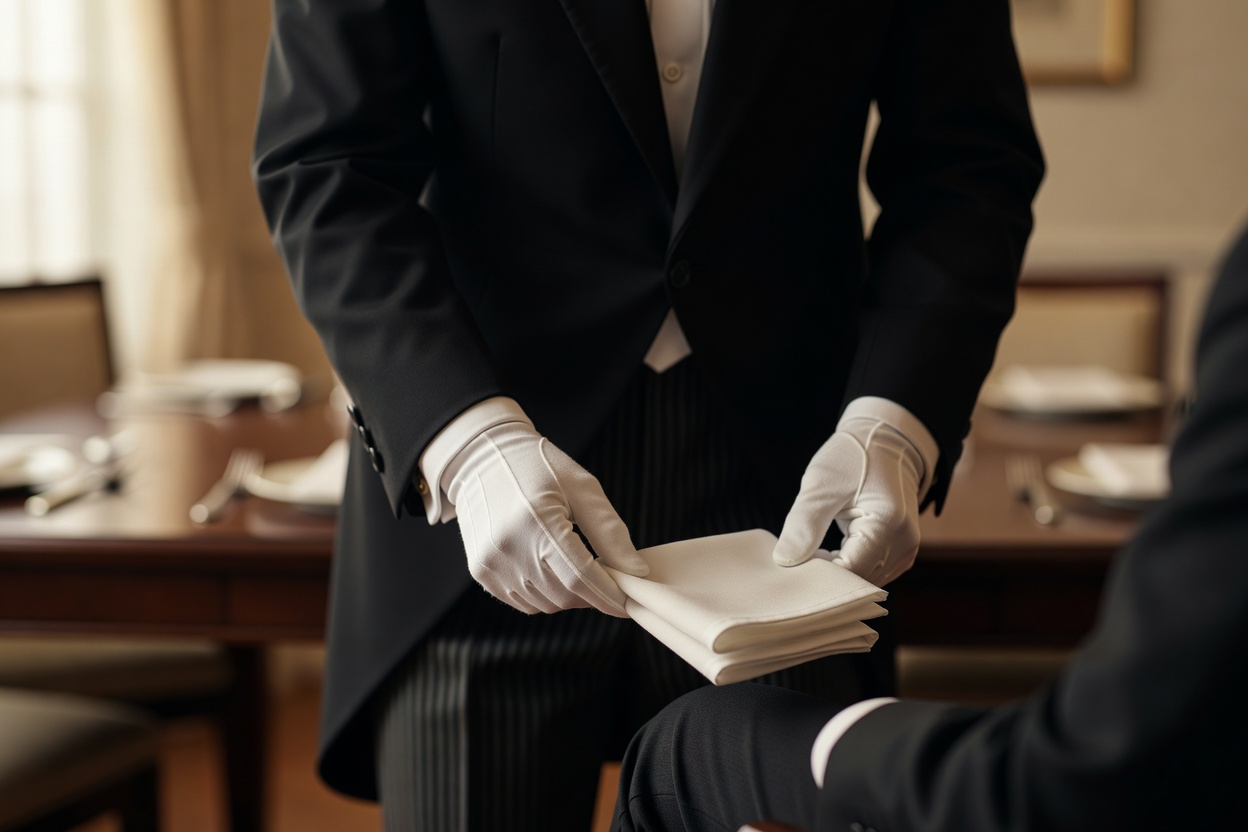
Once seated, fold it in half and place it on your lap. When leaving the table temporarily, leave it on the chair; when the meal ends, fold it loosely and set it to the left of your place.
The fold faces you so that the inner surface, used to wipe the mouth, remains hidden from view. Once the reason is clear, the placement becomes second nature.
There is no need to refold it perfectly at the end. An overly tidy napkin can be read as a sign that the food was not to one's liking, so a light fold is sufficient.
The order in which to use the cutlery
Work from the outside in. The knives and forks arranged on either side of the plate are placed in the sequence the courses will arrive.
The layout is not decoration but guidance. Starting from the outermost piece removes any need to wonder what comes next; if in doubt, simply count from the outside and the choice is always correct.
Should a piece fall, do not retrieve it yourself; simply signal for assistance. A flustered attempt to pick it up disturbs the table far more.
Signals for during and after the meal
During the meal rest the knife and fork in a V shape; when finished, align them at the lower right of the plate. These positions indicate whether the plate may be cleared.
An open V means "I am still eating"; handles together at the lower right means "please remove the plate". The arrangement conveys the message without words.
Knowing the signals spares the server any hesitation, which is itself part of good manners.
Posture and conversational timing
Keep your back from pressing too far into the chair, keep elbows off the table, and never speak with food in the mouth. These three points cover the essentials.
An upright posture creates a better impression than any number of minor rules. Sit tall and avoid leaning over the plate; the effect is immediately more composed.
Time conversation to avoid the moment a guest has just taken a bite. Speaking when a reply is impossible forces an awkward swallow; consideration of such timing is part of the manners themselves.
The guiding principle when uncertain
Follow the host's lead. When the correct form is unclear, observe the person presiding and move one beat behind them.
Customs vary by region and establishment, so it is impossible to know every variation. Holding to the single principle of matching the host carries one through most situations.
Detailed customs for Western and Japanese meals are explained on separate pages.
Frequently Asked Questions
Why are table manners necessary?
They spare fellow diners any extra concern. When everyone follows the same customs, no one needs to watch another's movements and the meal can proceed undisturbed.
Which piece of cutlery should I use first?
Work from the outside in. The pieces are arranged in the order the courses arrive, so counting outward removes any doubt.
How do I signal that I have finished?
Align the knife and fork at the lower right of the plate. During the meal an open V shape indicates you are still eating.
What should I do if I am unsure of the correct form?
Follow the host's movements one beat later. Customs differ by place, so it is unnecessary to memorise every variation.
Related Pages
Table Manners Courses
I welcome enquiries about lectures and training sessions built around these customs.
Contact us