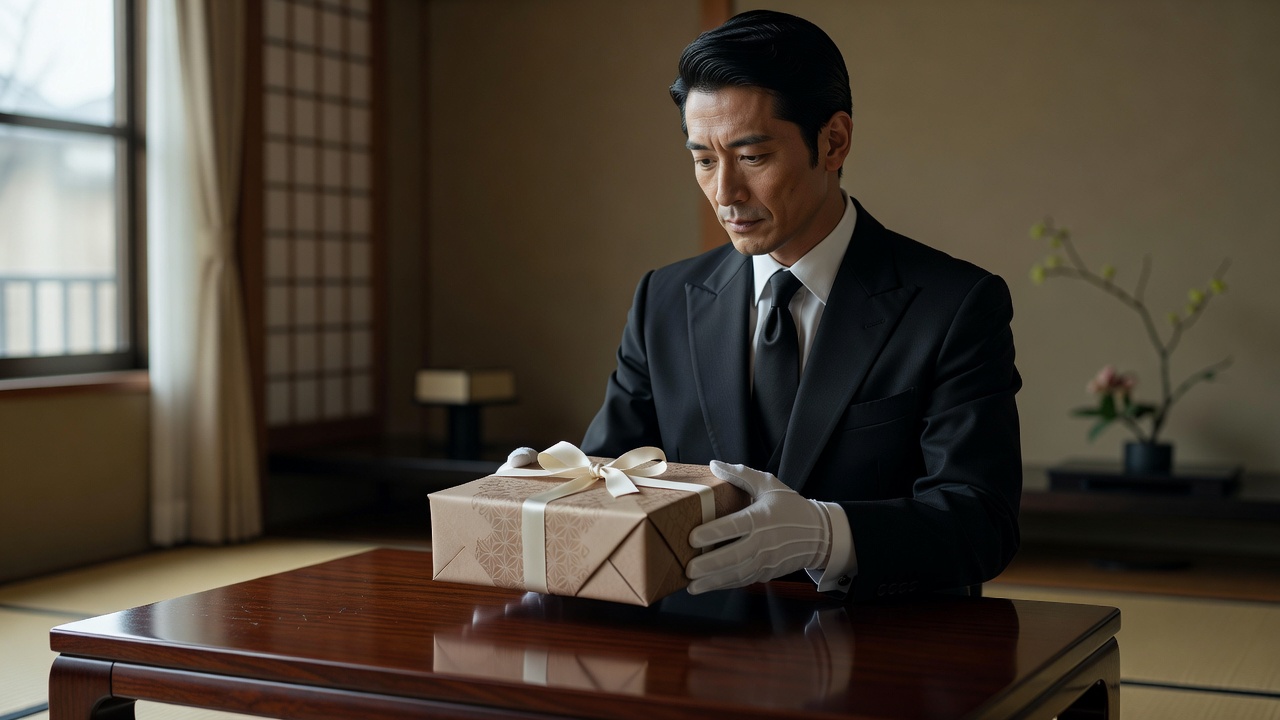
Gift-giving is the occasion on which one's ability to read the recipient's circumstances shows most clearly. Rather than the choice itself, the central question is whether the gift will prove a burden.
In these pages I explain the etiquette that changes between celebratory and condolence occasions, the items best avoided, the thinking behind noshi and inscriptions, and the proper conduct when handing over a gift.
The Criteria for Choosing a Gift
I advise choosing something that will not trouble the recipient after it has been received. It should keep well, be easy to divide, and take up little space. These three points form my practical standard.
Selecting according to one's own taste or rarity can easily become a burden. I therefore look for items that keep, can be shared with family or colleagues, and are not oversized. Meeting these conditions alone avoids most pitfalls.
I also avoid anything excessively costly, as it may oblige the recipient to reciprocate. Keeping the gift within the bounds of the relationship conveys true consideration.
What Changes Between Celebratory and Condolence Occasions
The wrapping, the colour and knot of the mizuhiki, and the inscription all change. Celebratory occasions are further divided into those that may be repeated and those that occur only once, each requiring a different knot.
For occasions that may recur I use the bow that can be retied; for one-time celebratory events and all condolence occasions I use the knot that cannot be retied.
Both weddings and funerals call for the latter. Knowing this distinction prevents major errors.
At condolence occasions I avoid ornate wrapping or vivid colours. Items that leave nothing behind are generally preferred.
Items Best Avoided
Certain items carry meanings according to the occasion. Knives, combs and white handkerchiefs are best avoided in some circumstances.
Knives suggest severing ties, while combs are avoided for their sound. White handkerchiefs may evoke parting. None are absolute prohibitions, yet when some people mind them it is safer to choose something else.
With food, unless I can confirm the recipient's health or dietary restrictions, I select long-keeping classics. Sending something the recipient cannot eat creates an awkward disposal problem.
The Approach to Noshi and Inscriptions
The inscription states the purpose of the gift. Words such as 'with thanks', 'congratulations' or 'get well soon' make the reason immediately clear.
The inscription exists not for formality but so the recipient can organise gifts easily. When several arrive at once, knowing the purpose is a practical help.
I write the name smaller than the inscription. The purpose, not the giver, is the main point.
Conduct When Handing Over a Gift
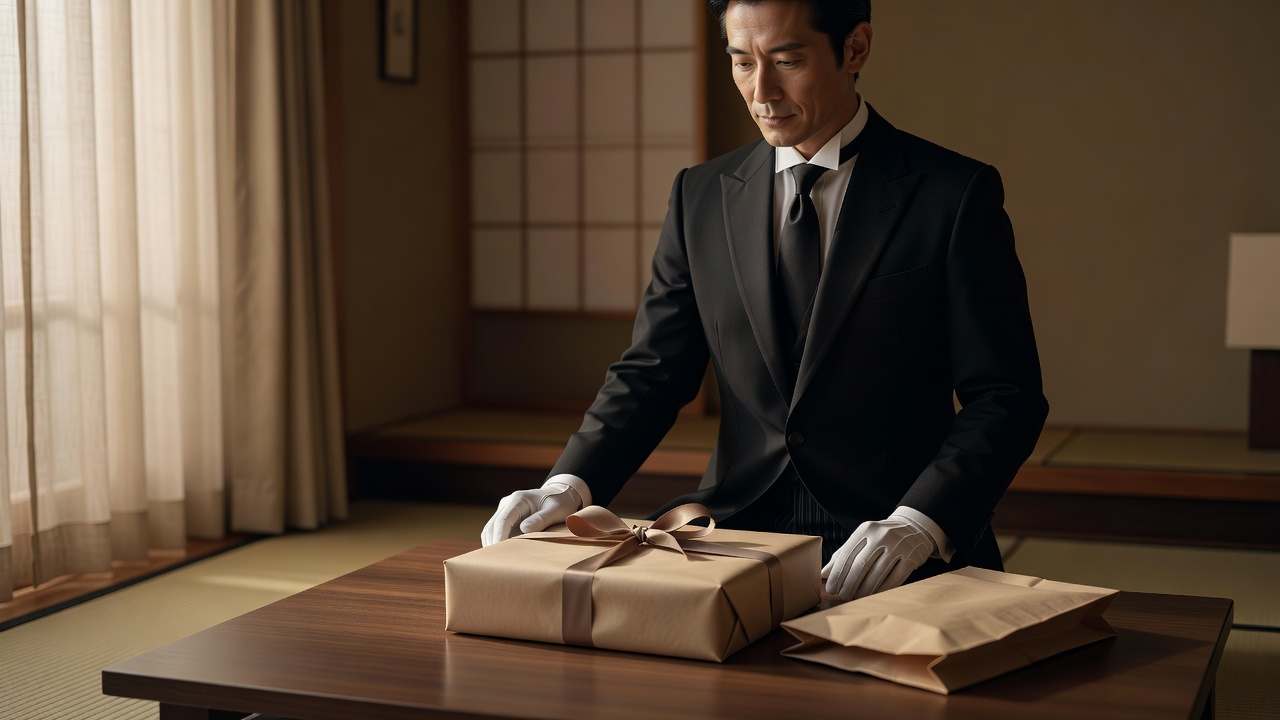
I remove the gift from its paper bag and present it with both hands, front facing the recipient. Handing it over still in the bag is an abbreviated form; the bag itself is properly only for carrying the gift home.
Indoors I take the gift from the bag before presenting it. I turn it so the front faces the recipient, hold it with both hands, meet the eye and then offer it; the movement then appears calm.
Outdoors or during a standing conversation, however, leaving the gift in the bag is more natural. The situation takes precedence over strict form.
Words to Add When Presenting a Gift
I avoid the set phrase 'it is only a trifle' and instead add a brief remark about the choice or the recipient's pleasure.
Stock expressions of modesty can now sound unnatural. A short phrase such as 'I heard you like these' or 'they keep well, so everyone can share' conveys the thought more directly.
A long explanation is unnecessary. One sentence is enough before returning to the main conversation.
Frequently Asked Questions
On what basis should I choose a gift?
I choose something that will not trouble the recipient after it has been received. The three practical standards are that it keeps well, is easy to divide, and takes up little space.
Are there gifts I should avoid?
Knives, combs and white handkerchiefs can carry meanings in certain circumstances. They are not absolute prohibitions, yet when some people mind them it is safer to avoid them.
May I hand over a gift still in its paper bag?
Indoors I remove the gift from the bag and present it front-first with both hands. Outdoors or during a standing conversation the bag may remain.
Should I say 'it is only a trifle'?
The phrase can now sound unnatural. A brief remark about the choice or the recipient's pleasure is more effective.
Related Pages
On the Etiquette of Gift-Giving
I am happy to advise on the manners of gift-giving and greetings.
Enquiries