PILLAR 01
The skills of service
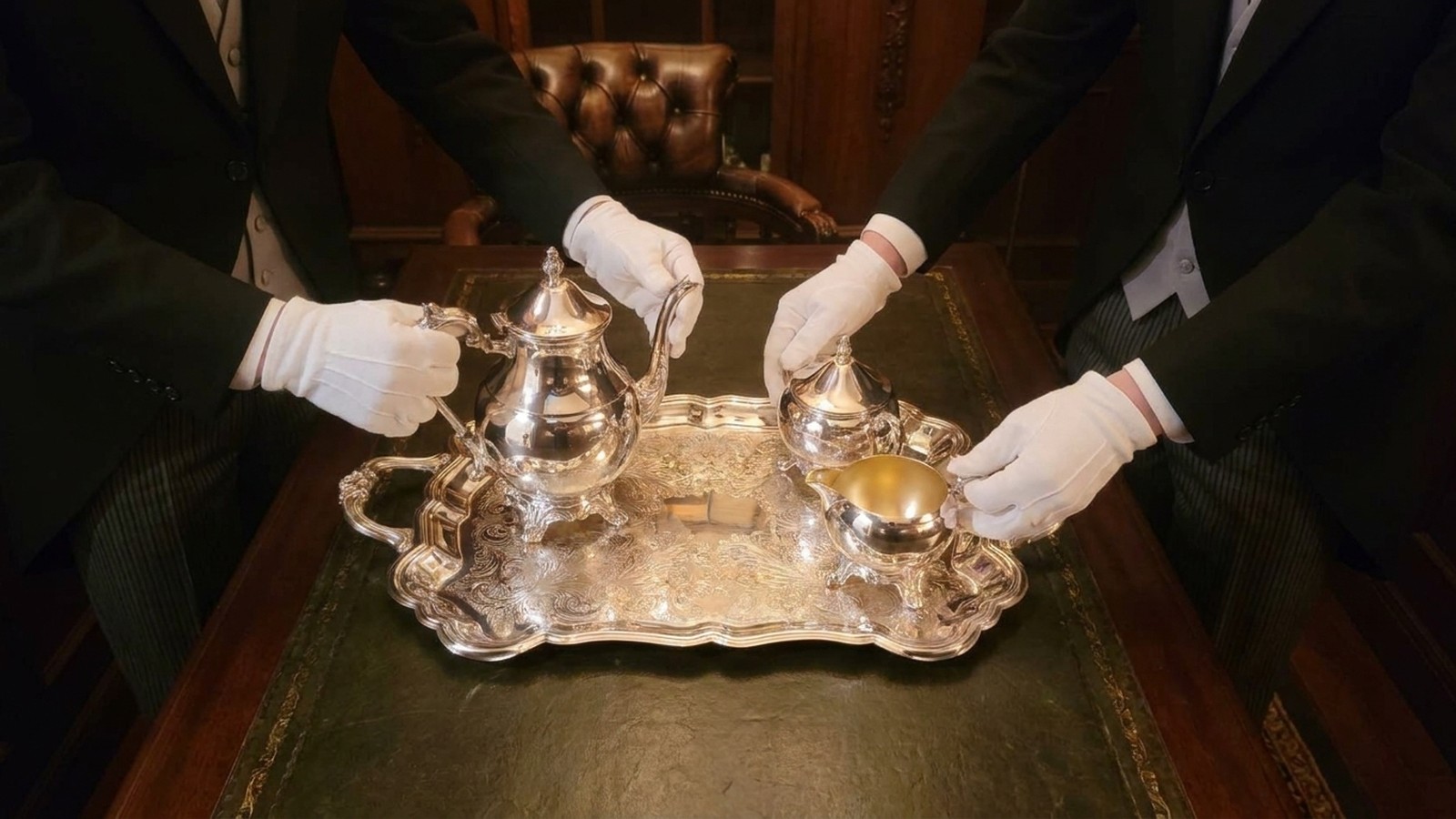
Tea, coffee, wine, laying the table, handling silver: the practical pillar, repeated until the hands remember, and the first thing looked at in the examination.
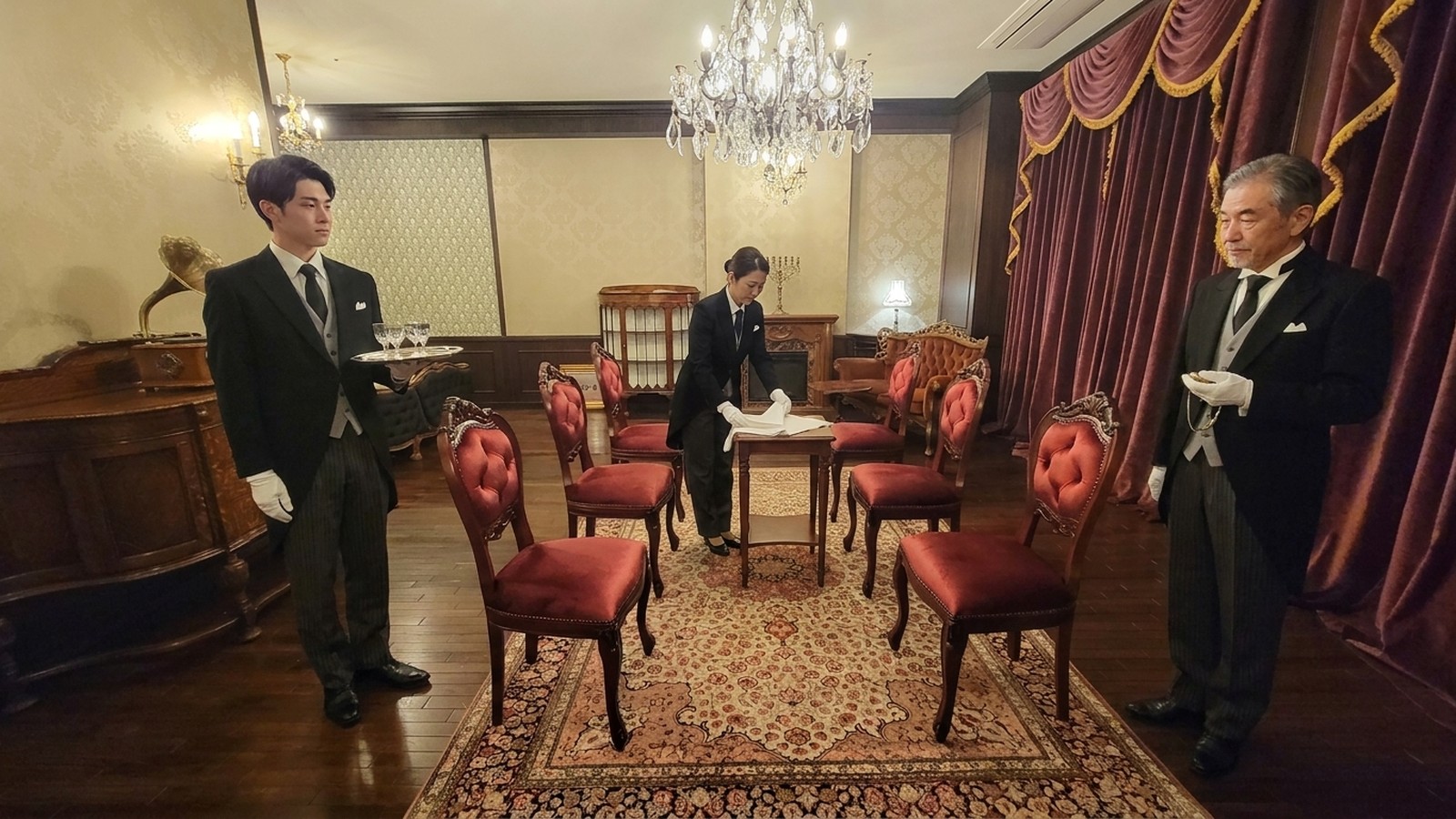
A school where the butler's profession can be learned in earnest, run by the All Japan Butler Association. As the association's head I also serve as the academy's principal. What is taught, by whom, how, and where graduates go: the inside of the school, from the teaching side.
The Japan Butler Academy is a school for people who wish to become butlers. Japan has many schools for hotel work and hospitality, but almost none that teach the butler's profession itself. That is why the association keeps a school: to end the age in which a butler learned by imitation in the field.
The campus is in Aomi, Odaiba, Tokyo, in the same building as the association's headquarters. Classes are on weekends, six hours a day: work during the week, and acquire the butler's forms at the weekend. Most students are working adults with their own fields in service, offices or medicine.
What I repeat in the classroom as principal is that the butler's is a profession of watching the other person. We teach how to make tea and how to polish silver, but those are means of watching. The moment technique becomes the goal, the butler slips back into being a server.
When it was decided to keep a school, the first thing I wrote was not a set of rules but a list of what we would not teach: the obliging smile, excessive honorifics, words that flatter. A hospitality school may teach those; a butler's school does not. The butler's profession is not to raise the other person up but to stand quietly before them.
There was another thing a school was meant to prevent: the craft closing up inside one person. However fine a butler may be, if he does not teach, the craft ends with him. Only once it takes the form of a classroom does deportment pass to the next generation. A school is the device by which a craft is moved from a person into an institution.
The first thing a student is given is not a tool but a notebook. Whatever was noticed in class is written down the same day. The following week those words are read back and the instructor answers them. A butler's work is also the work of keeping records, so the notebook begins on the first day of study.
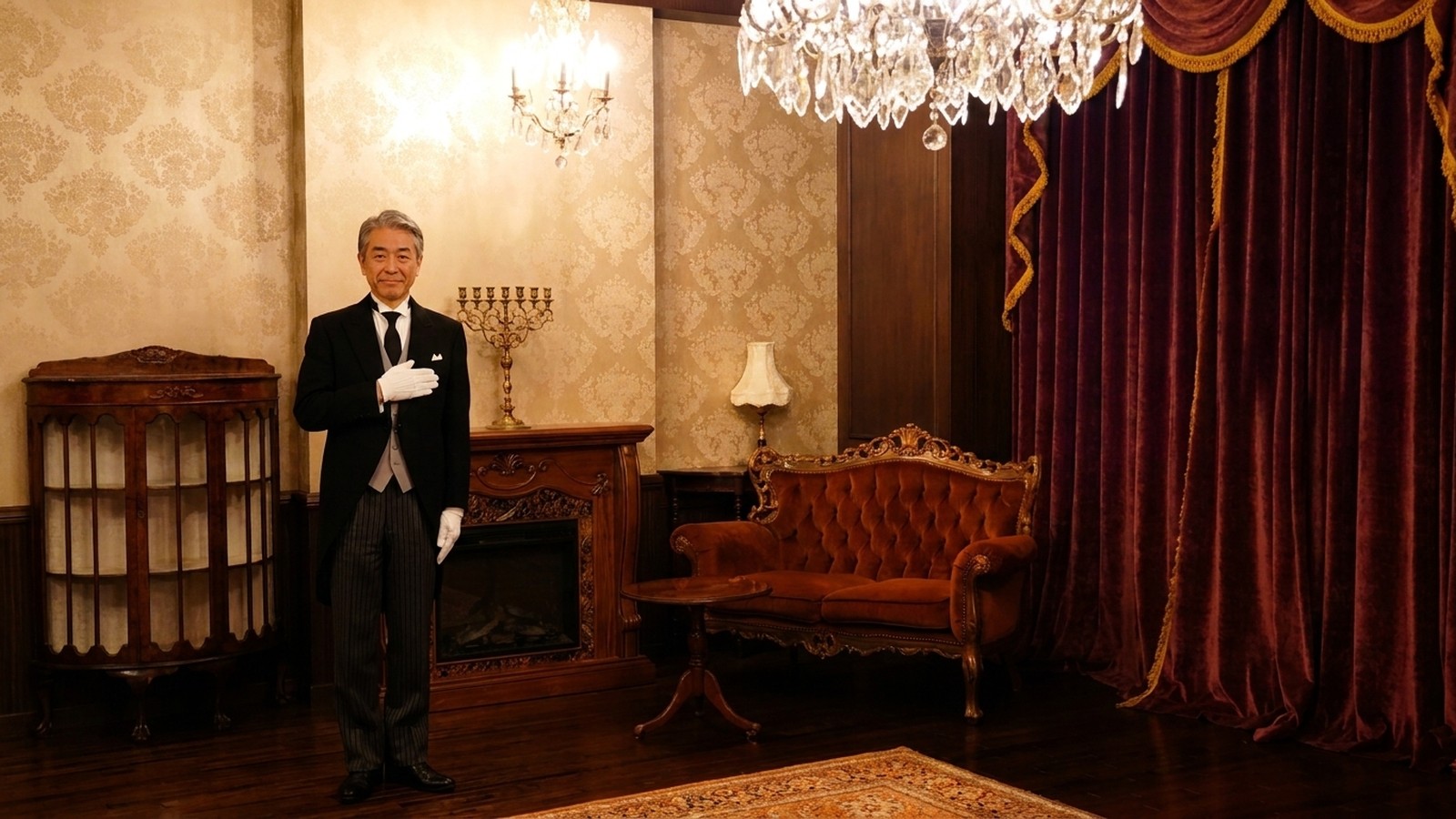
The school belongs to the association, a body whose founding dates to 1890. The meaning of a school inside the association is single: what is taught in the classroom coincides with what the certification examination asks. Learn at an outside school and sit the association's examination, and teaching and criteria inevitably drift apart. One body holding both removes the drift.
The association's etiquette has been woven over 135 years. The academy's textbooks divide that etiquette by course and attach a reason to every movement. From the student's side, to study here is to study the association's standard itself.
The backing is not only institutional. The instructors are butlers certified by the association, the classroom is the association's residence, the materials are the association's textbooks. That the whole learning environment sits inside the association's standard is what backs this school. It may look obvious from outside, but no other butler school has assembled all of it.
That the school sits inside the association shows in how quickly the textbooks change. When a new kind of occasion appears in the field, the association's articles are revised and the teaching material follows within the same term. Relying on outside publishing could never move at that speed.
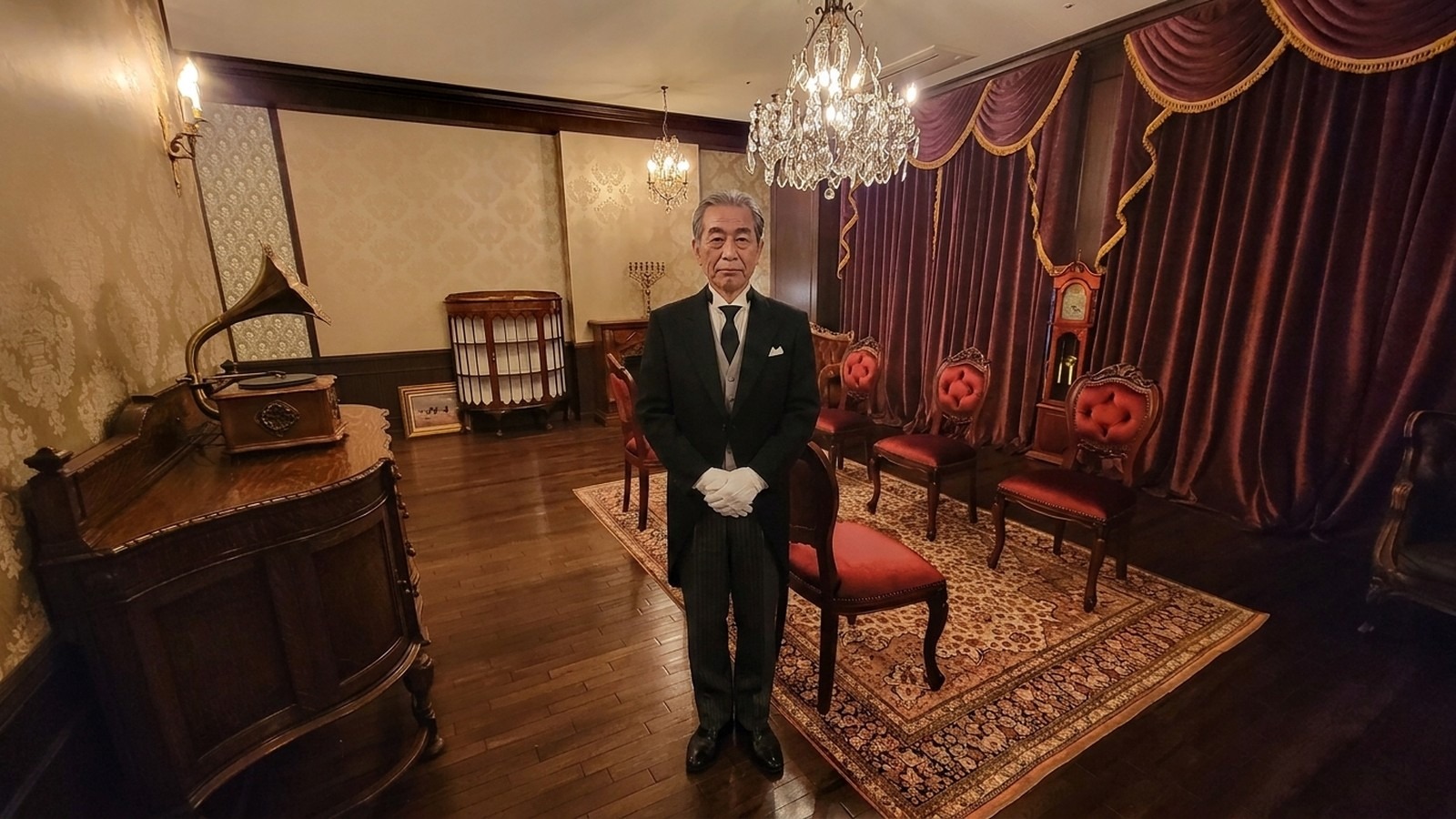
Before any school rule, the first list drawn up was of what we would not teach: the ready smile, the over-polite register, the phrases that flatter. A butler does not lift the other person; he stands quietly before them.
Three things mark study here: classes kept small, practice with real silver and a real table, and teaching by working butlers. All three follow from the fact that the butler's is a profession acquired only by watching and copying from someone standing beside you.
Behind the three features stands a fourth: the classroom is inside the residence. In the next room, graduated butlers are actually serving a mistress, and between classes students glimpse the textbook's forms moving in reality across the corridor. There is no surer teaching material.
A small class also means there is nowhere for a student to hide. A hand that stops is seen; an interval misjudged is named on the spot. People call it severe, but being corrected in a classroom costs less than being corrected for the first time in someone's home. The classroom is the one place where failing is permitted.
Practise with real silver and it will be marked. We use it anyway, because no one becomes a butler with hands that fear marking the work. Handle a thing timidly and the movement stiffens, and a stiff movement is unsettling to watch from the guest's chair. The association budgets on the assumption that the practice silver is replaced each year. The marks are part of the tuition.
Six students at most, three at least: a number small enough for the instructor to watch each student's hands and eyes.
Practice uses the association's silver, porcelain and table. Hands trained on imitations always falter before the weight of the real thing.
The instructors are certified butlers who work in THE BUTLER's field, so that the words of the lectern are the words of the field.
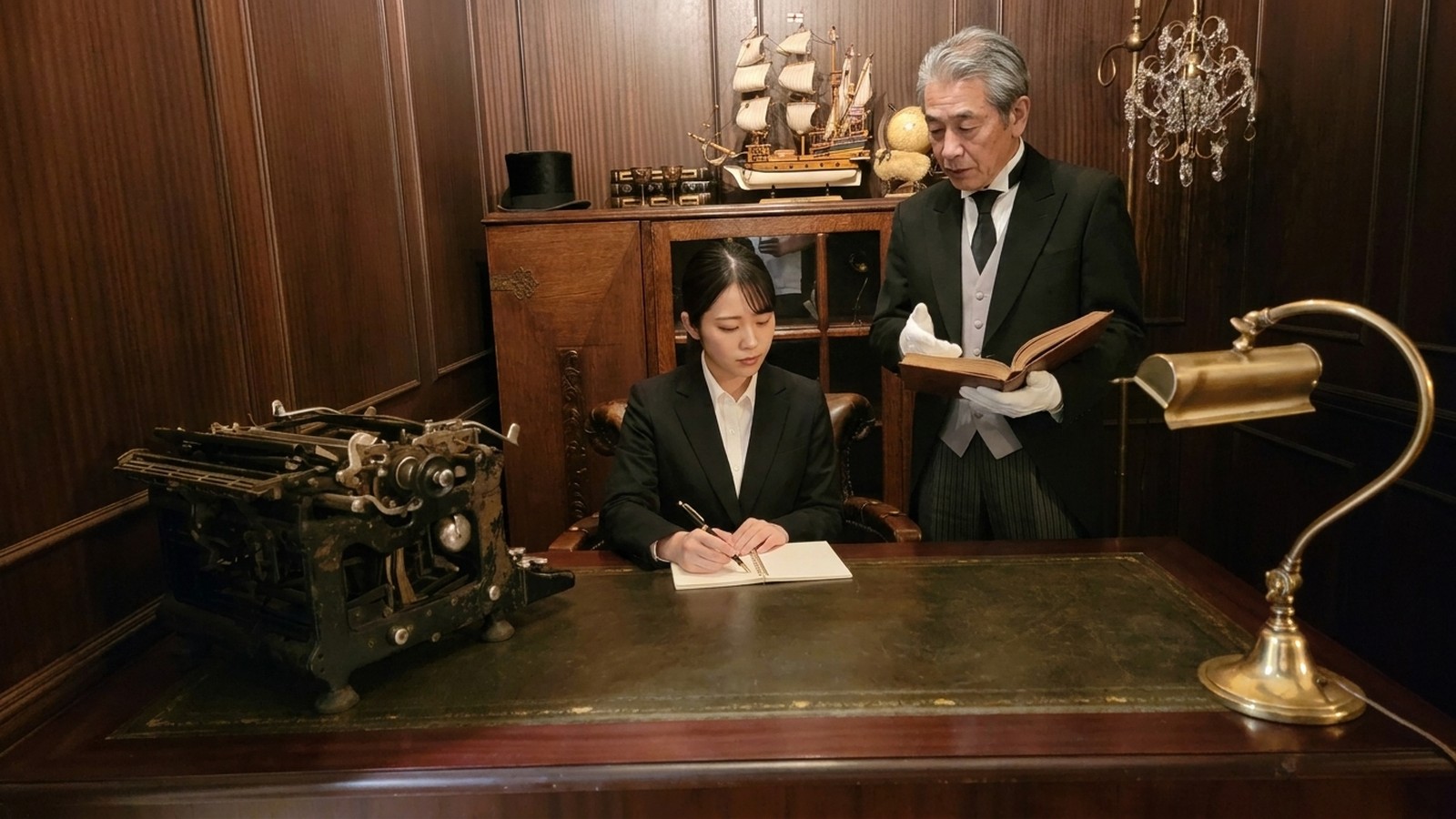
There are three courses; choose the one that matches the level you aim at. A higher course includes the content of the lower ones, so you may enter it directly without experience. Duration and hours are as follows.
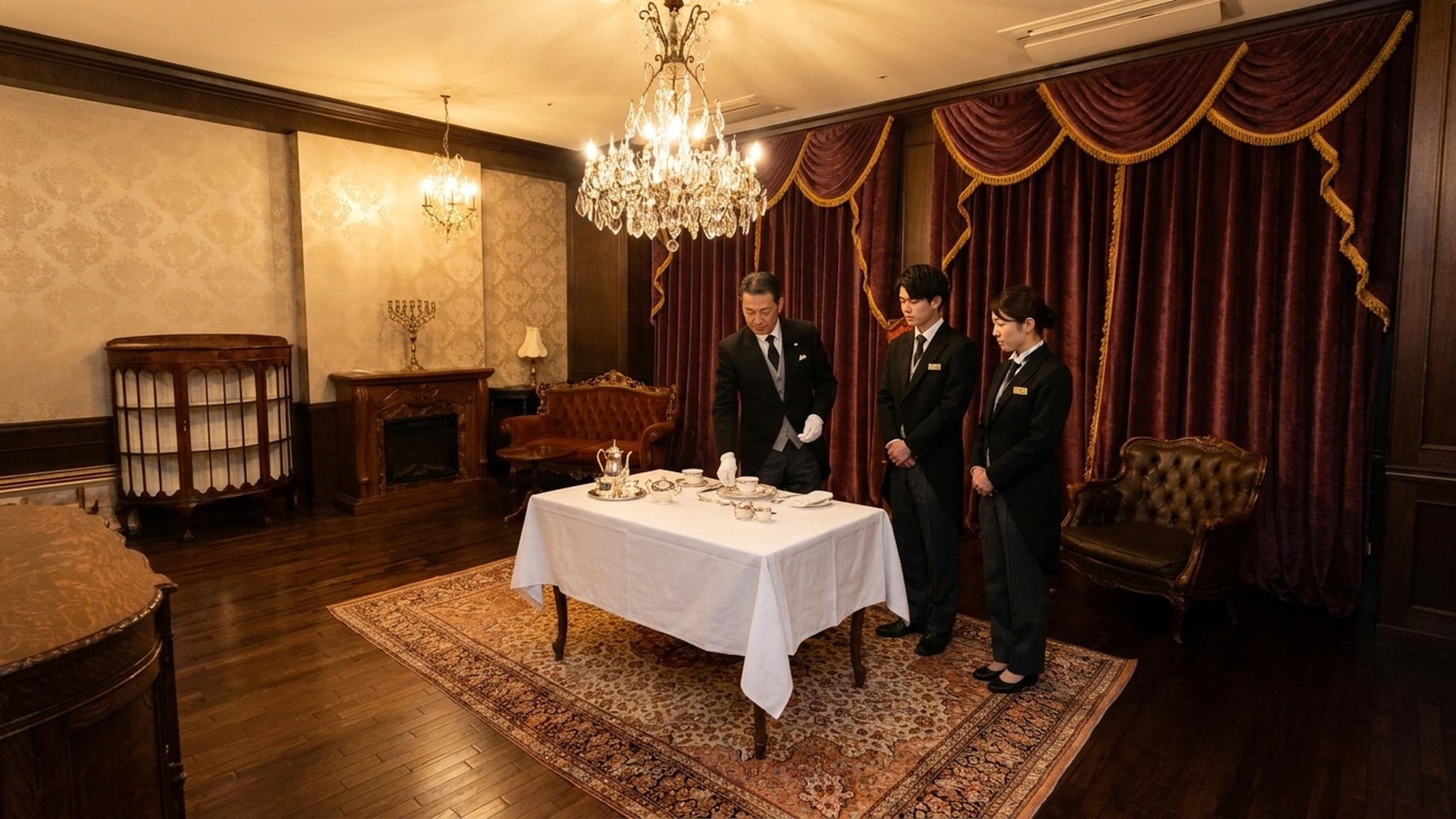
How tea is brought, how a table is laid, how a visitor is received, how to stand and how to bow. The entry course drives the groundwork of the craft into the body over a short span. Finish it, pass the practical, and the title of Certified Associate Butler follows.
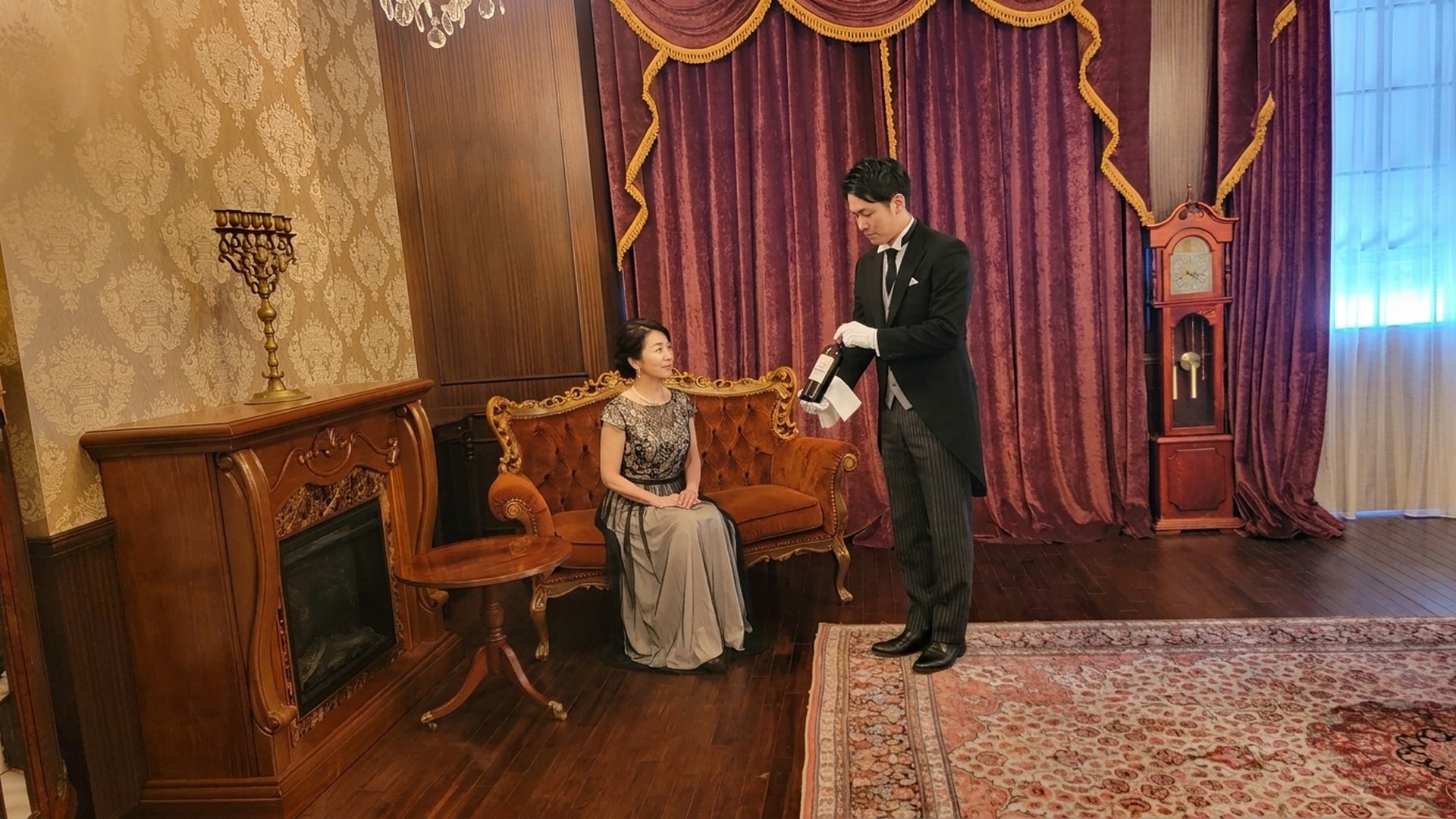
Including the Essential content, this intermediate course moves on to wine service, running occasions and international etiquette. It includes practice in experiencing genuine service as a guest, and completion confers Certified Professional Butler.
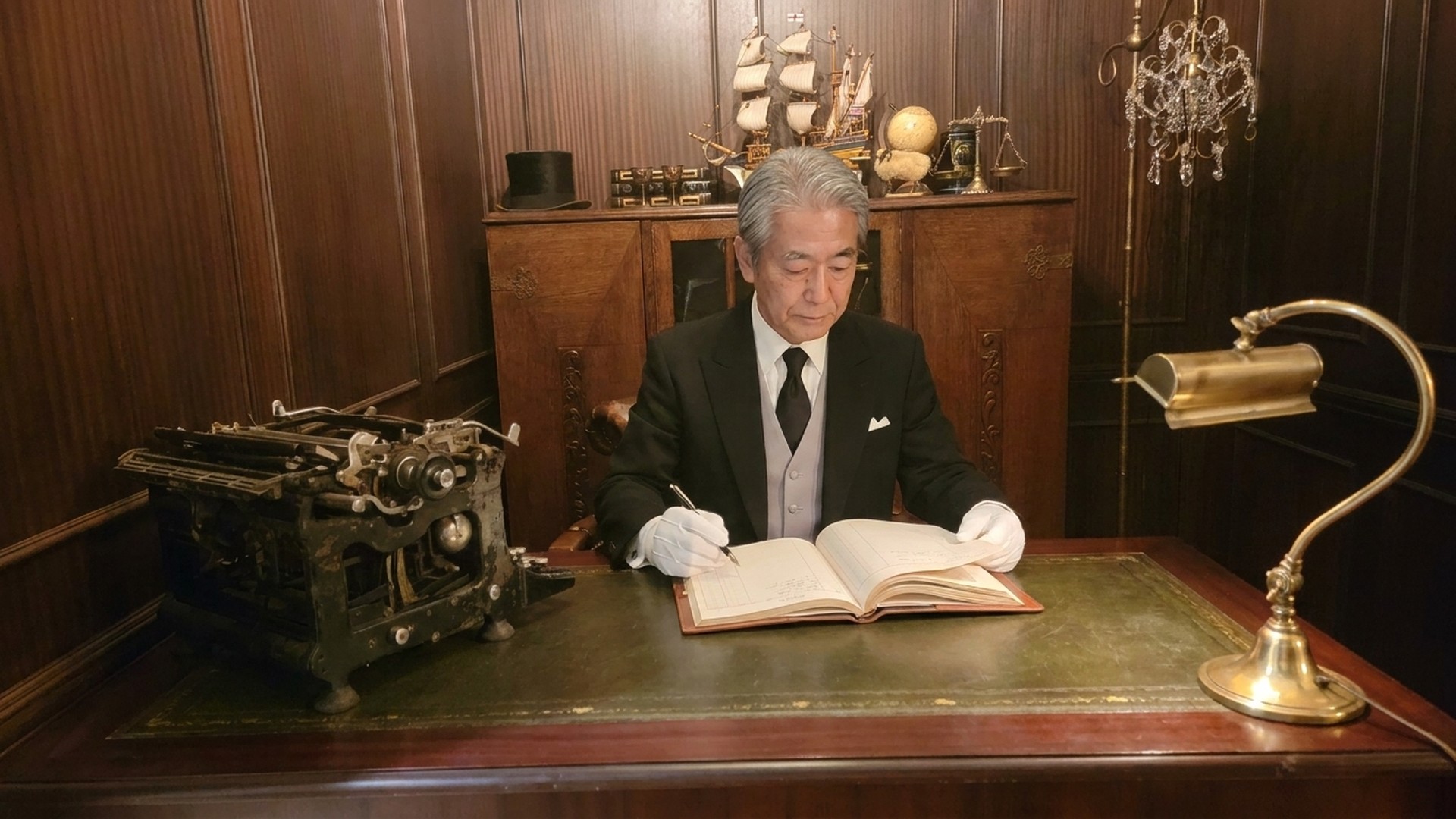
Including Essential and Advanced, the highest course covers management, crisis response and international protocol. The practical examination at its end takes the form of a graduation dinner, and a pass confers Certified Master Butler.
The content of the courses rests on three pillars: the skills of service, etiquette and culture, and practice in the field. Each pillar follows textbooks supervised by the association.
Tea, coffee, wine, laying the table, handling silver: the practical pillar, repeated until the hands remember, and the first thing looked at in the examination.
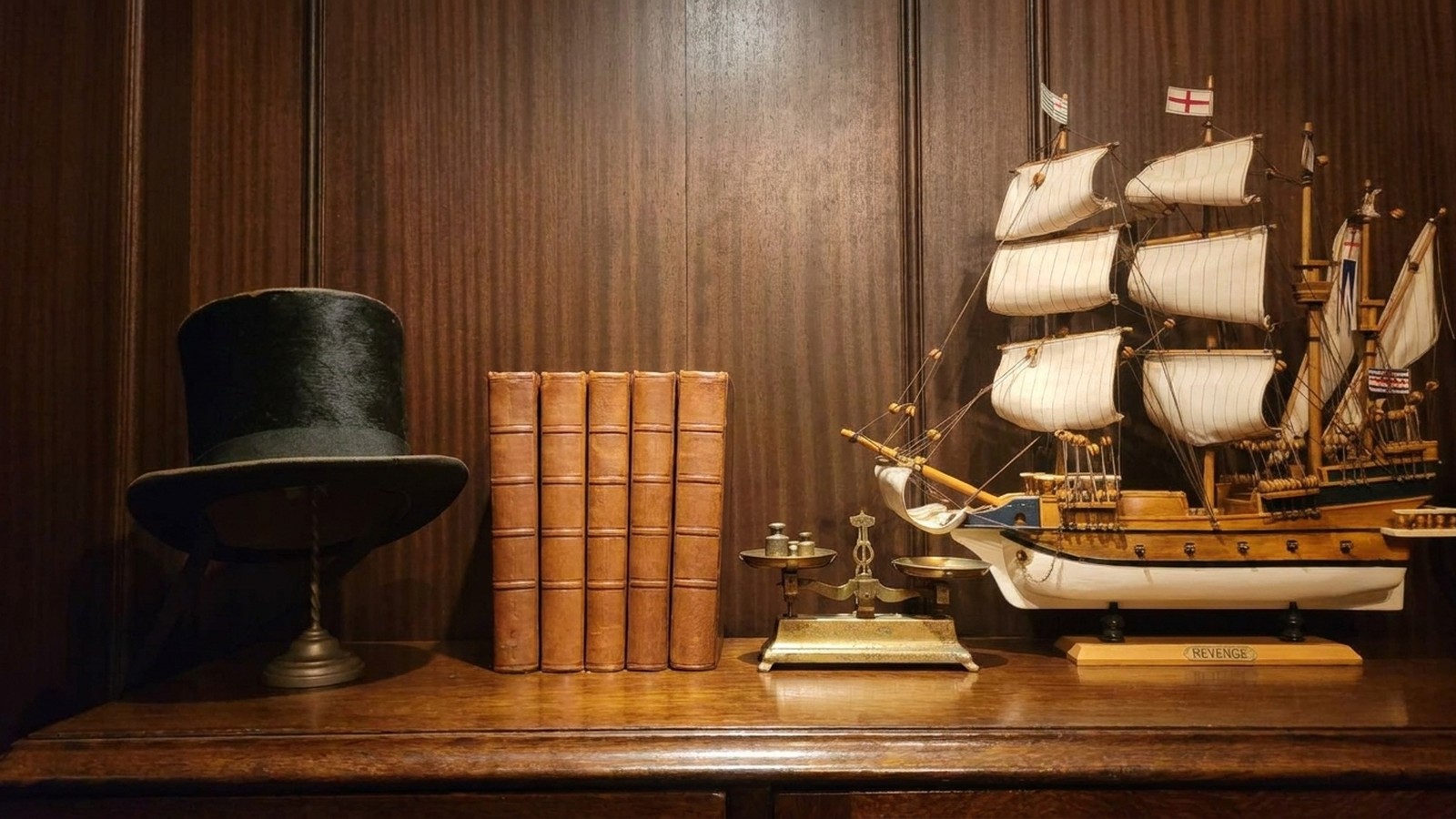
Attire, the bow, speech, and the history and culture of the butler: the pillar that supplies the why behind each movement, using association-supervised textbooks throughout.

Practice with real guests in mind, and the experience of receiving first-class service as a guest: the pillar that makes classroom forms usable in front of people.
On the final day of each course there is a practical examination, and those who pass receive the association's certification. It is not a state qualification but a private one based on the association's criteria, with three titles corresponding to the courses.
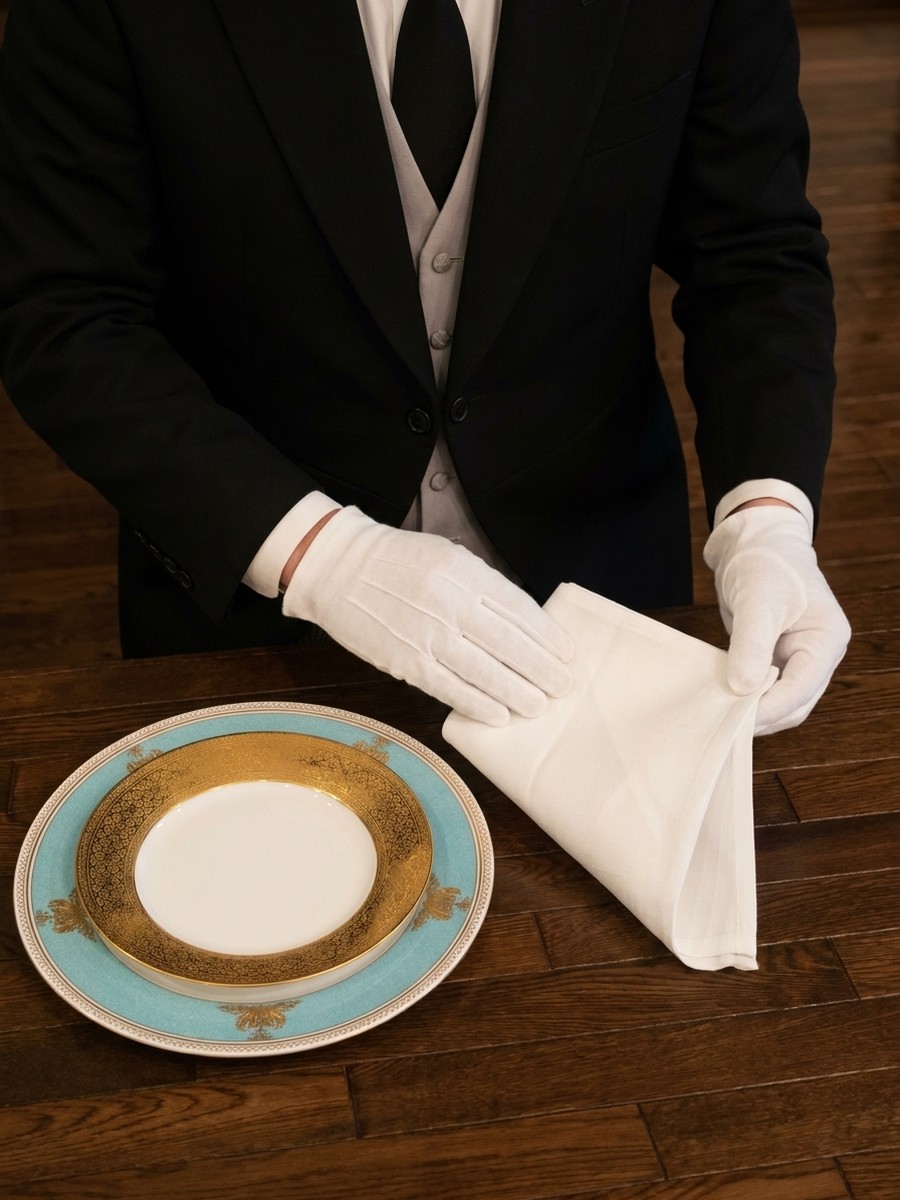
Conferred on those who have shown, in the practical work of tea, table and reception, that the basic forms are in place.
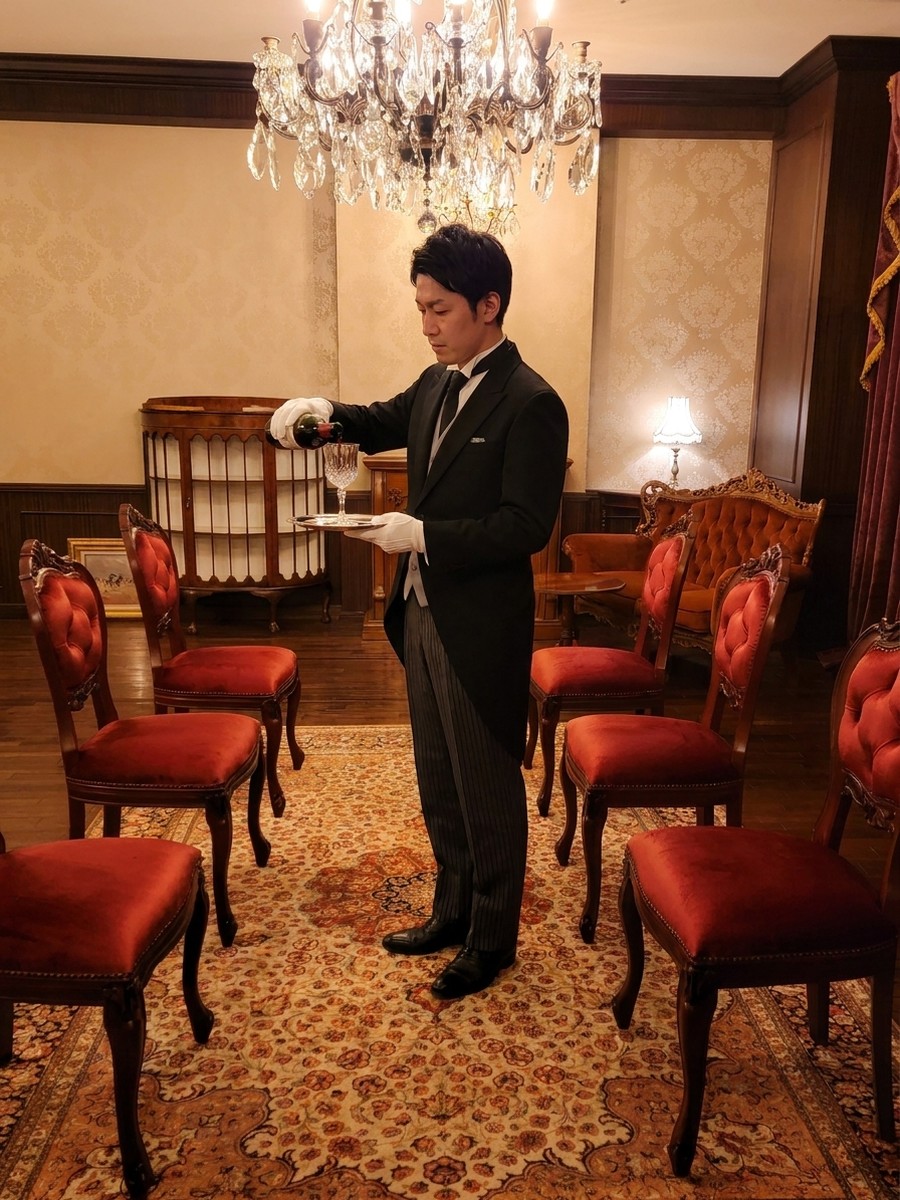
Conferred on those who have shown, through practical work extending to wine, occasions and international etiquette, that they can be entrusted with engagements of a day or more.
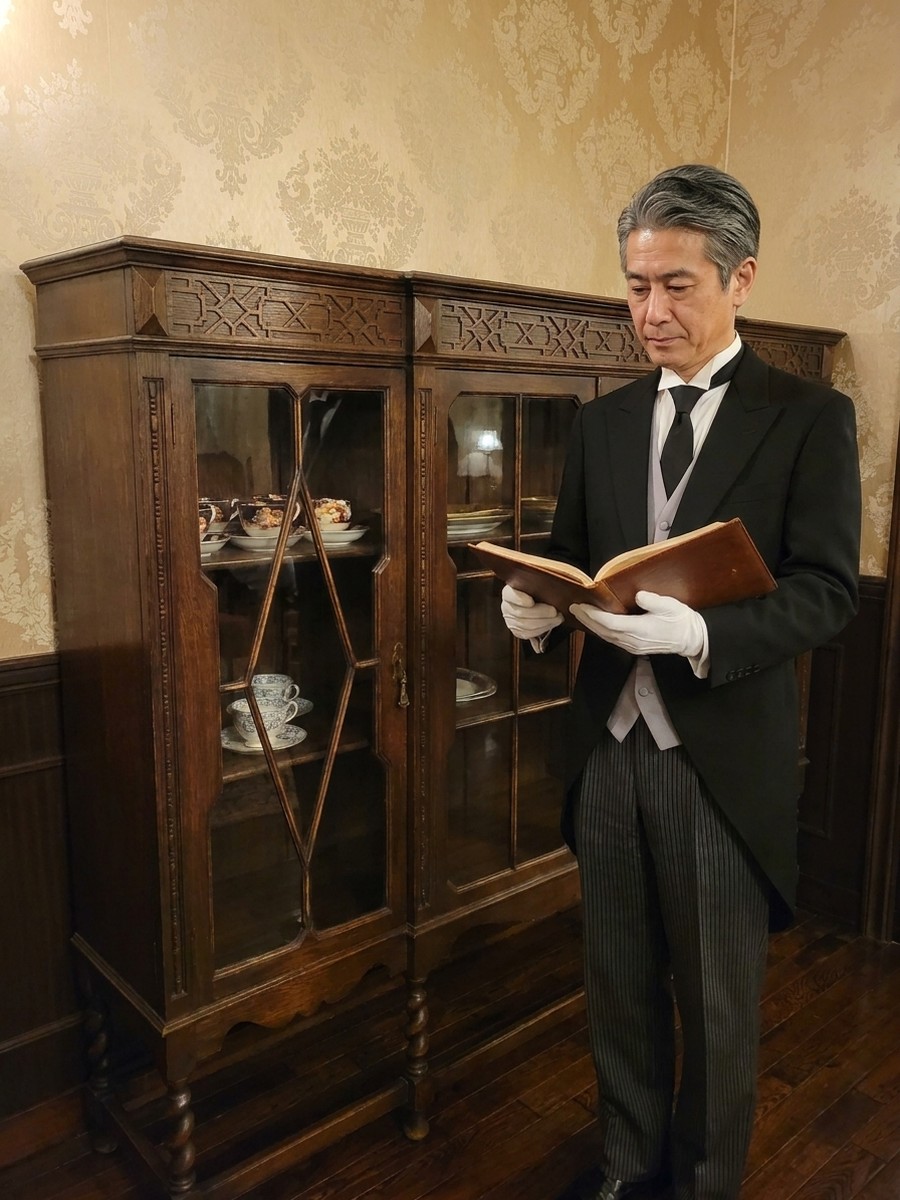
Conferred on those who pass the examination held as a graduation dinner, running several roles at once: the grade at which one can lead people and design a whole house.
All classes are held on weekends: six hours a day, four periods of ninety minutes. Preparation and review are done with on-demand video, and the contact hours go to practice and questions. The timetable assumes you keep working, so there is no need to leave your job.
The words an instructor says most in the contact hours are "wait". The cup is moved before the hand reaches for it; speech begins before it is invited. Technique can be learned from video, but timing can only be copied from the instructor standing beside you. That is why the contact hours are spent entirely on practice.
Once during each course there is a day when the instructor tells the students, "today I teach nothing". That day the students run the afternoon tea by themselves: planning, failing, recovering. Whether the forms they were taught have become their own can only be known on a day when nothing is taught.
Preparation was moved to on-demand video because the hours in the room are too valuable to spend otherwise. Six hours in the same room as the instructor cannot be replaced by a recording. The weight of a vessel, the way steam rises, the breathing of the person opposite — far too much of this work is only legible off a screen.
The first thing corrected in class is usually not posture but the gaze. A student trying to learn a movement watches only their own hands, and a butler watching his hands cannot notice what the other person wants. The instructor repeats the same sentence many times: look at the person, not at your hands. It usually takes some weeks before it lands.
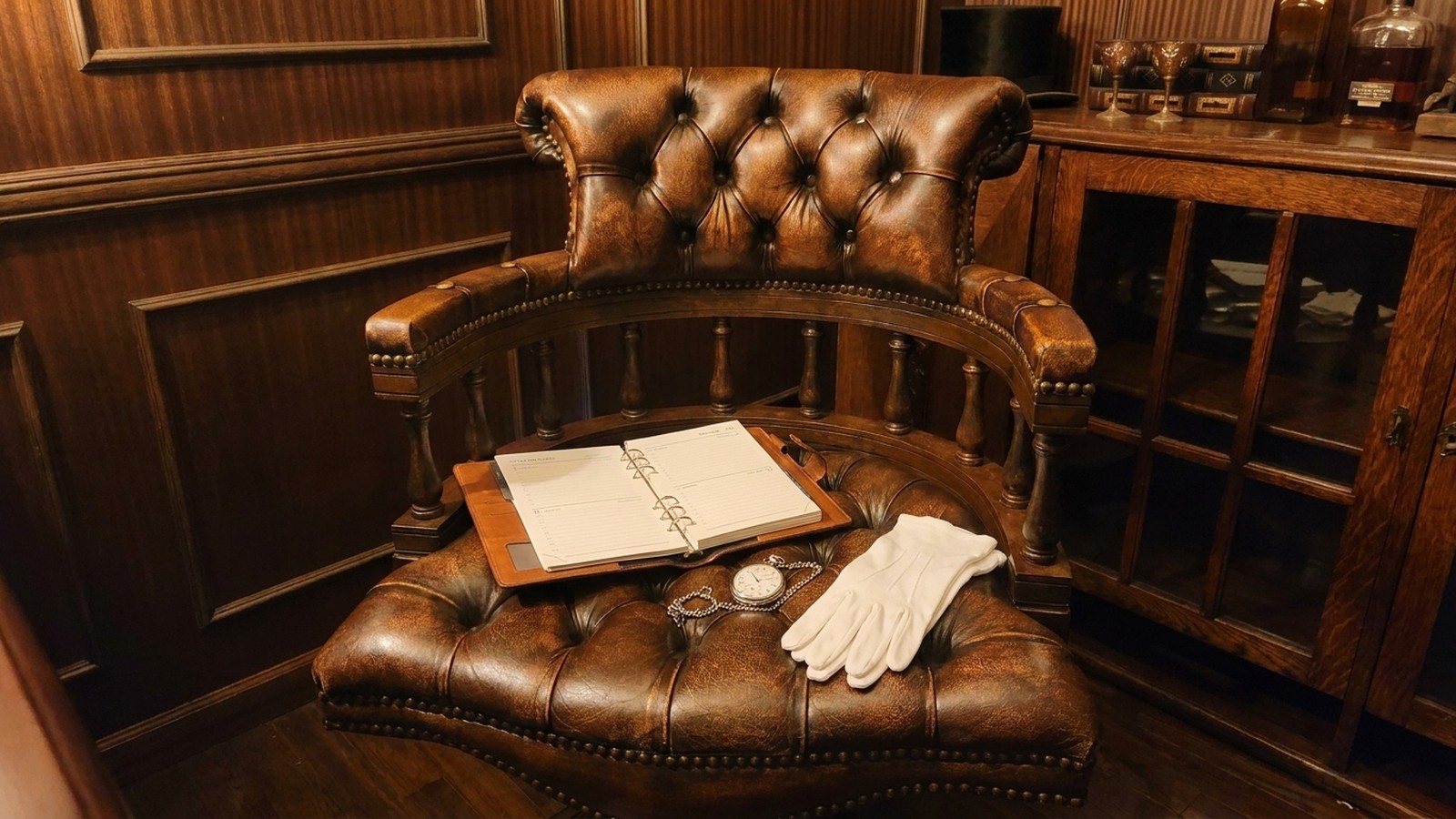
Courses from Advanced upward include practice in which students sit on the guest's side, receiving first-class service at hotels and restaurants and putting into words what felt right and what jarred. What cannot be seen while serving becomes plain at once when one is served.
This practice was added because the butler's work is the work of imagining the other person's point of view, and imagination needs material. The memory of being treated as a guest becomes the yardstick for watching a client in the field.
After the practice, students write three things they noticed and three things that were good. Those who can write more of what they noticed than of what was good have already begun to acquire a butler's eye. Those who can only write what was good are given a different seat at the next practice: change the angle and what is seen changes.
Sitting on the guest's side has a second purpose. Someone unused to being served rarely serves well. A person who is excessively apologetic creates situations in which the other party feels apologetic too. The hours spent in the guest's chair are hours spent learning that measure in the body.
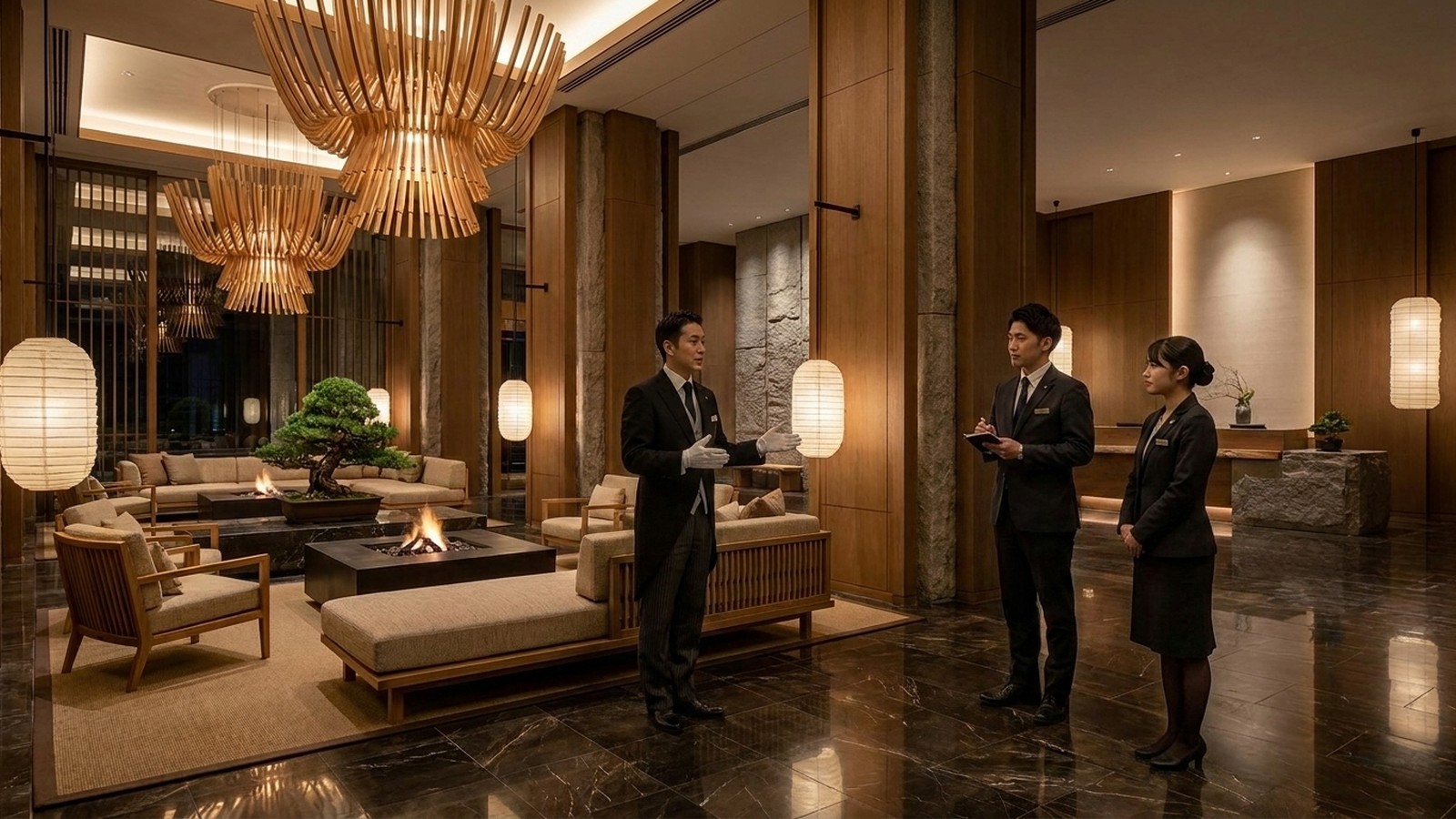
Three things were settled before the content of any course. Each exists to keep the language of the classroom from drifting away from the work.
A form the instructor cannot perform himself does not enter the course. What has not entered the body cannot be handed on.
Six is the most one instructor can watch at once. From the seventh, a slipped movement goes unseen and reaches a household as it is.
Practise on real silver and it will be marked. We use it anyway, because no one becomes a butler with hands that fear marking the work.
The campus is at Aomi 2-chome, Koto City, Tokyo, in the same building as the association's headquarters, THE BUTLER's desk and the Queen's Butler residence; classroom practice uses the residence's table and silver. Visits and individual consultations are by appointment.
That the campus is inside the residence has one more meaning. On class days students see the butlers who actually serve at Queen's Butler at work. The forms of the textbook are moving, in reality, in the next room. A single wall between the place of learning and the place of work: that is the distance at this school.
One reason the campus stands in Odaiba is that it lies a little away from the centre of the city. At the weekend a student changes trains and comes out to the waterfront, and that journey helps separate the working week from the hours of study. Most students say they do not begrudge the travelling time.
2-7-4 Aomi, Koto City, Tokyo (Odaiba)
Weekends, six hours a day, six students (minimum three)
Brochures and individual consultations are free, and available online.

Most who complete a course and receive certification go on to the field of THE BUTLER, the butler service the association runs. Because the school that trains and the desk that sends out belong to the same association, the road does not break. The association is also preparing a scheme to pass butler-related vacancies to graduates.
Age and previous occupation are no bar. The judgement of those who have worked in service, offices or medicine carries straight over into a butler's work. In all my years in the classroom, the people who became good butlers were those who had watched the other person in their previous work.
Some graduates choose a path other than the butler's: back to a hotel, into the family business, back to a clinic. I count that a success too. The form of watching the other person works in whatever profession it is carried to. When people who studied at a butler's school behave like butlers elsewhere, butler culture is spreading.
Career consultations are taken by me directly, as principal. Whether to stand as a butler or carry the forms back to the present workplace, the school remembers every graduate's name. The association's training occasions are always open to graduates, and when they wish to raise their grade they may return to the classroom.
What I often say to graduates is that they need not try to make a name in the first year. A butler's work is not the kind that draws applause on the spot. Six months later the household notices that nothing has been going wrong. That is how good work by a butler shows itself.
Few graduates go straight to a resident post. Most begin with engagements of a few hours and move to full days after several seasons have passed. From the school's side it can look slow, but we do not hurry them. This is a profession whose real quality appears only on the second and third visit to the same house. Reaching that second visit is a graduate's first task.
Since the association handles openings, it does not pass them on by terms alone. We first ask how the household intends to treat a butler. There have been offers we declined because they seemed to count a butler as a pair of hands and nothing more. A school that sends its graduates out is responsible for what happens where they land.
Graduates sometimes come back to the classroom years later, to check a form that has run aground in the field. On those days I take the listener's seat rather than the instructor's. Someone who works in a household is stuck in far more concrete ways than I am, standing in a classroom, and I am usually the one learning. The school stays open to its graduates partly for our own sake.
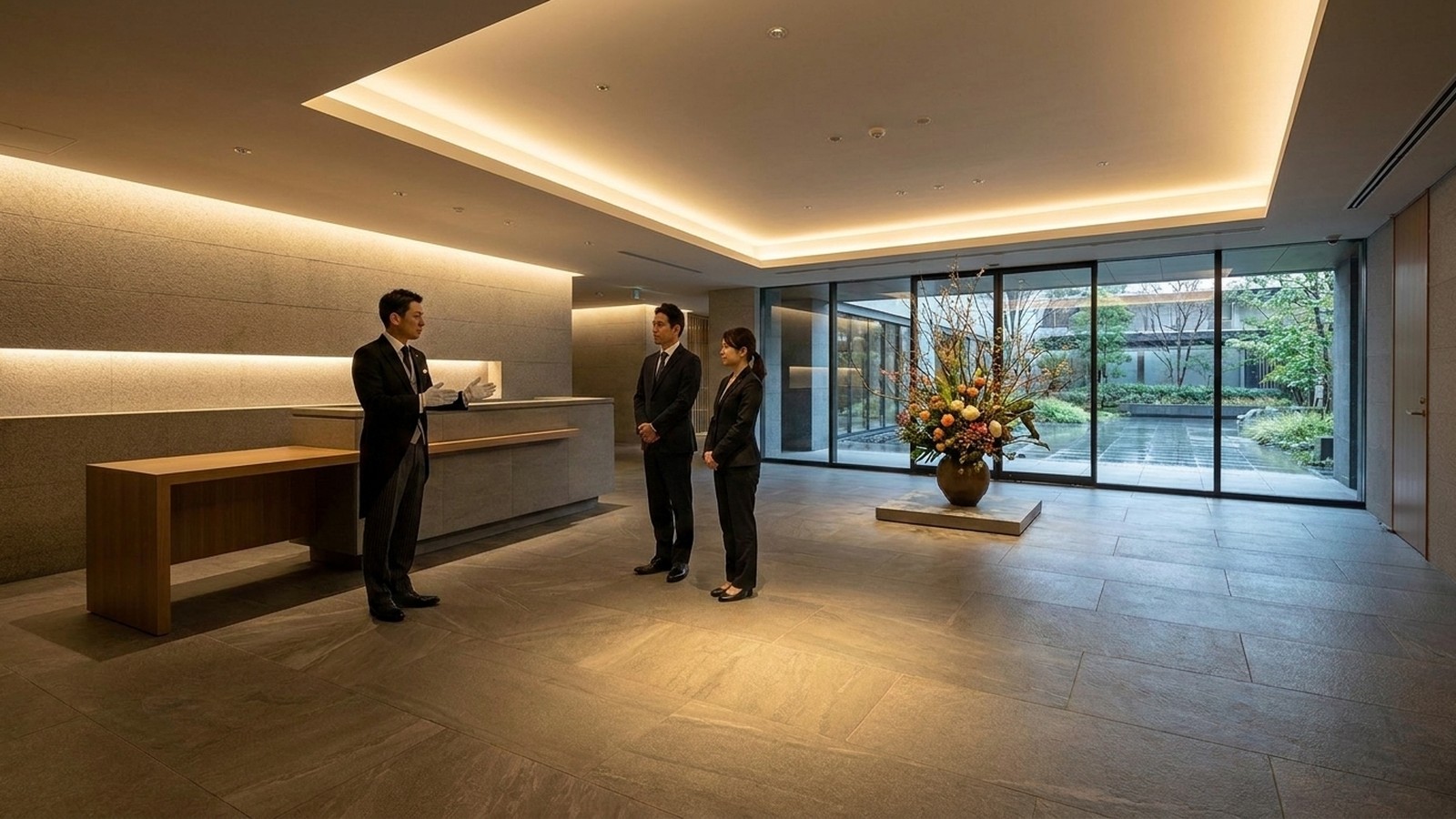
Consideration is not something one is born with. Put the form of looking at another person into the body and anyone can do it. Were it talent, there would be no need for a school.
Some say attentiveness is inborn. My answer as principal is the opposite: attentiveness comes to anyone who puts the form of watching the other person into the body. That is why a school is needed. If it were a gift, no school would be.
When I teach a form I always attach the reason. Why the cup is placed from the right; why one steps half a pace back before speaking. A form whose reason is known holds when the setting changes; a form whose reason is unknown breaks in the first unfamiliar setting. That is why the textbooks carry the reasons.
And one more thing. The last lesson I teach is the moment to abandon the form. When it is clear the other person does not want to be received by the book, the butler leaves the form and follows the person. Only when that is possible can the form truly be said to have been learned.
When I teach a form I always perform it myself. What can be explained in words is in the textbook; what the instructor must do in the classroom is show the body moving exactly as the words say. A form the instructor cannot show is not taught. That is the promise of this school's instructors.
Putting a form into the body is tedious for everyone: the same movement dozens of times over. Those who can bear that tedium become butlers who can wait quietly through the dull hours in the field. What the school teaches is conduct, and at the same time the strength to wait.
Teach a form together with its reason and unexpected questions come back. If that is the reason, a student will say, would this other order of steps not be more natural? I welcome such questions. The association's articles have been revised by two forces: voices from the field, and questions of exactly this kind from the classroom.
The hardest thing to teach is what to do with the hours in which nothing is done. A student whose hands fall idle looks for something to do. Yet most of a butler's day is made of waiting: holding the posture, not letting the gaze drop, being able to move in a single step when called. This state, which looks like doing nothing at all, is the form that takes the most training.
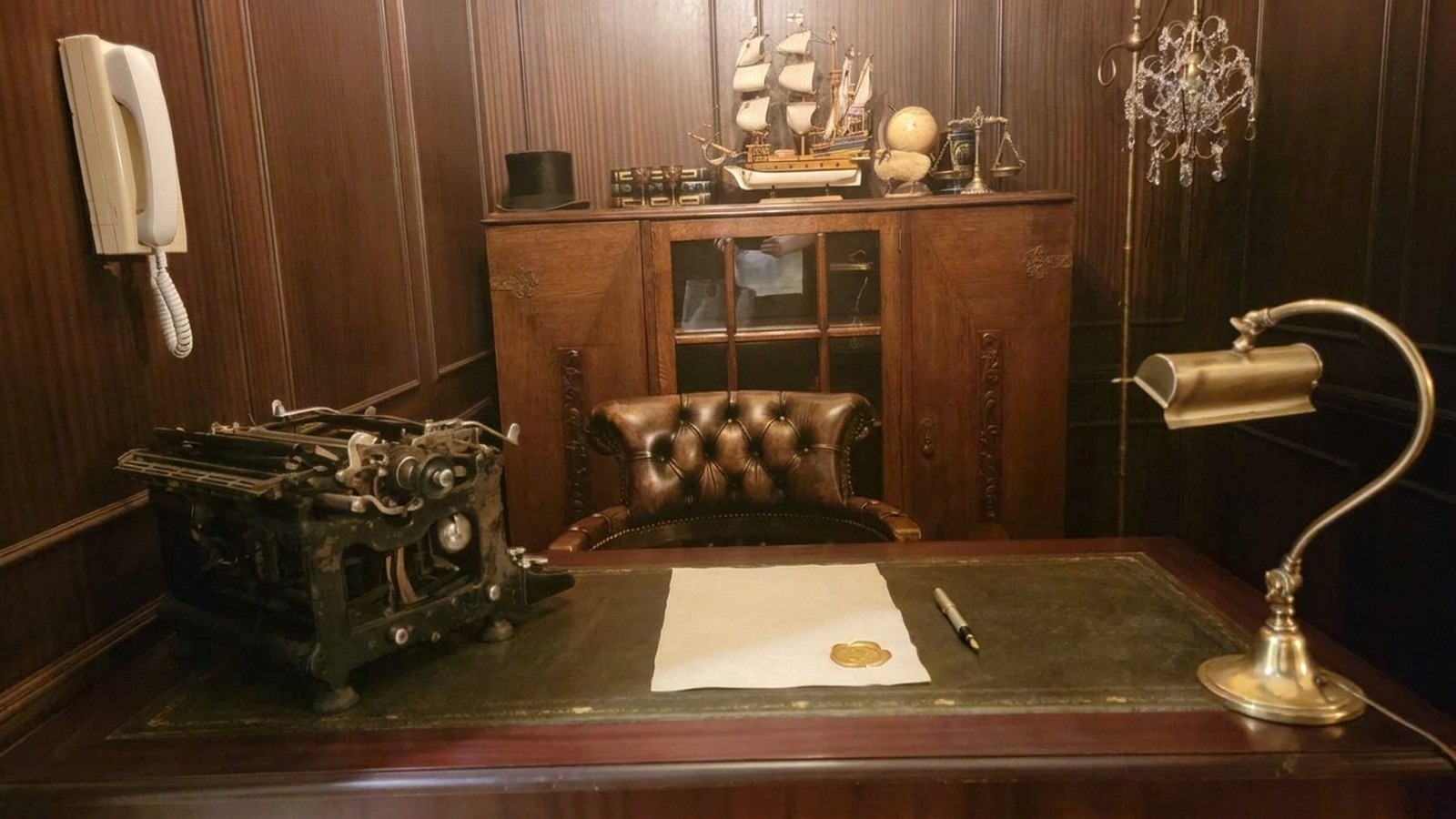
The classrooms are the rooms of the residence itself. Practice uses the association's table, silver and attire. Three follow.
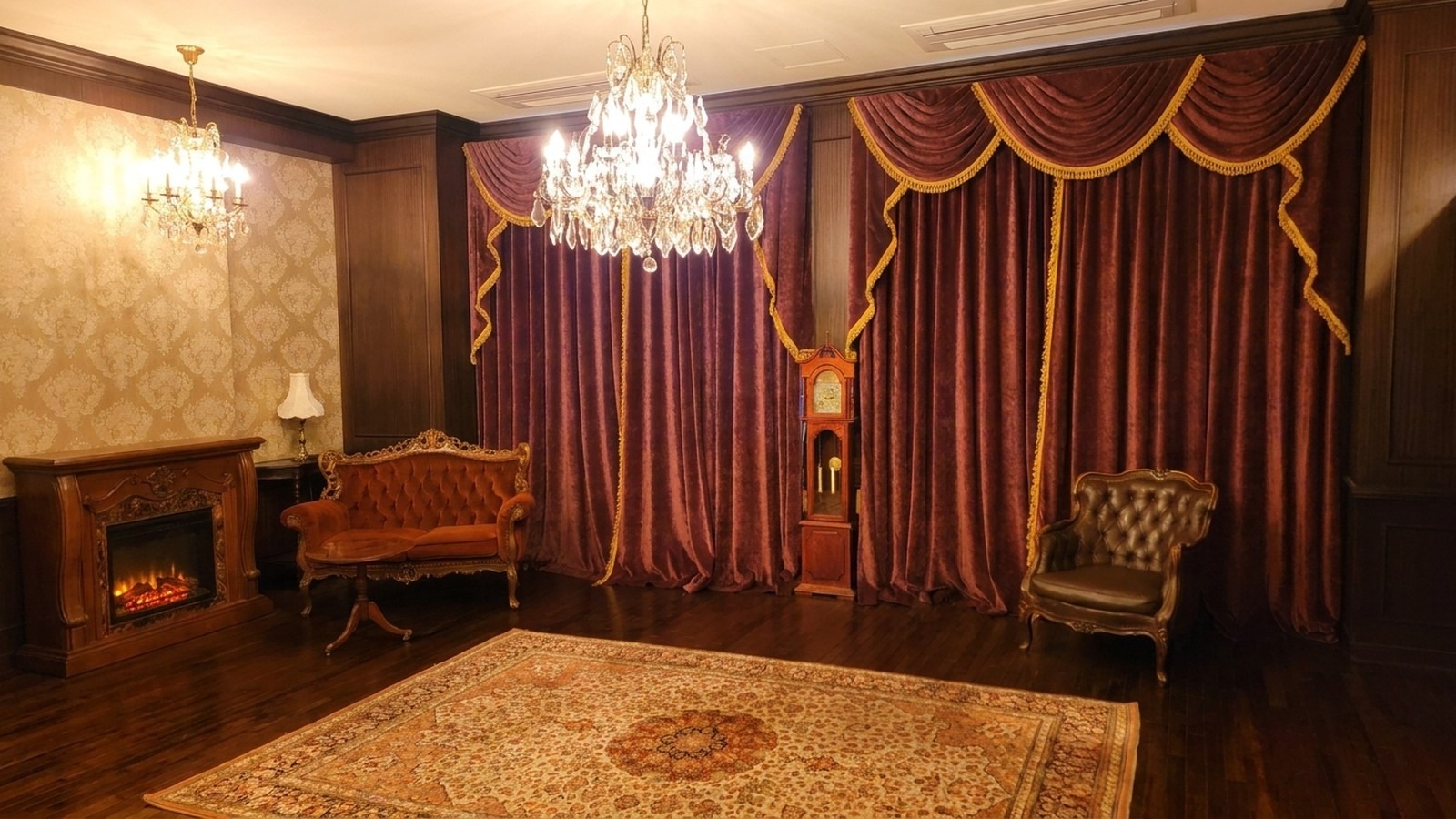
In a salon with a fireplace and chandelier, students practise receiving guests and laying the table. The classroom is a real residence, so there is no gap with the real occasion.
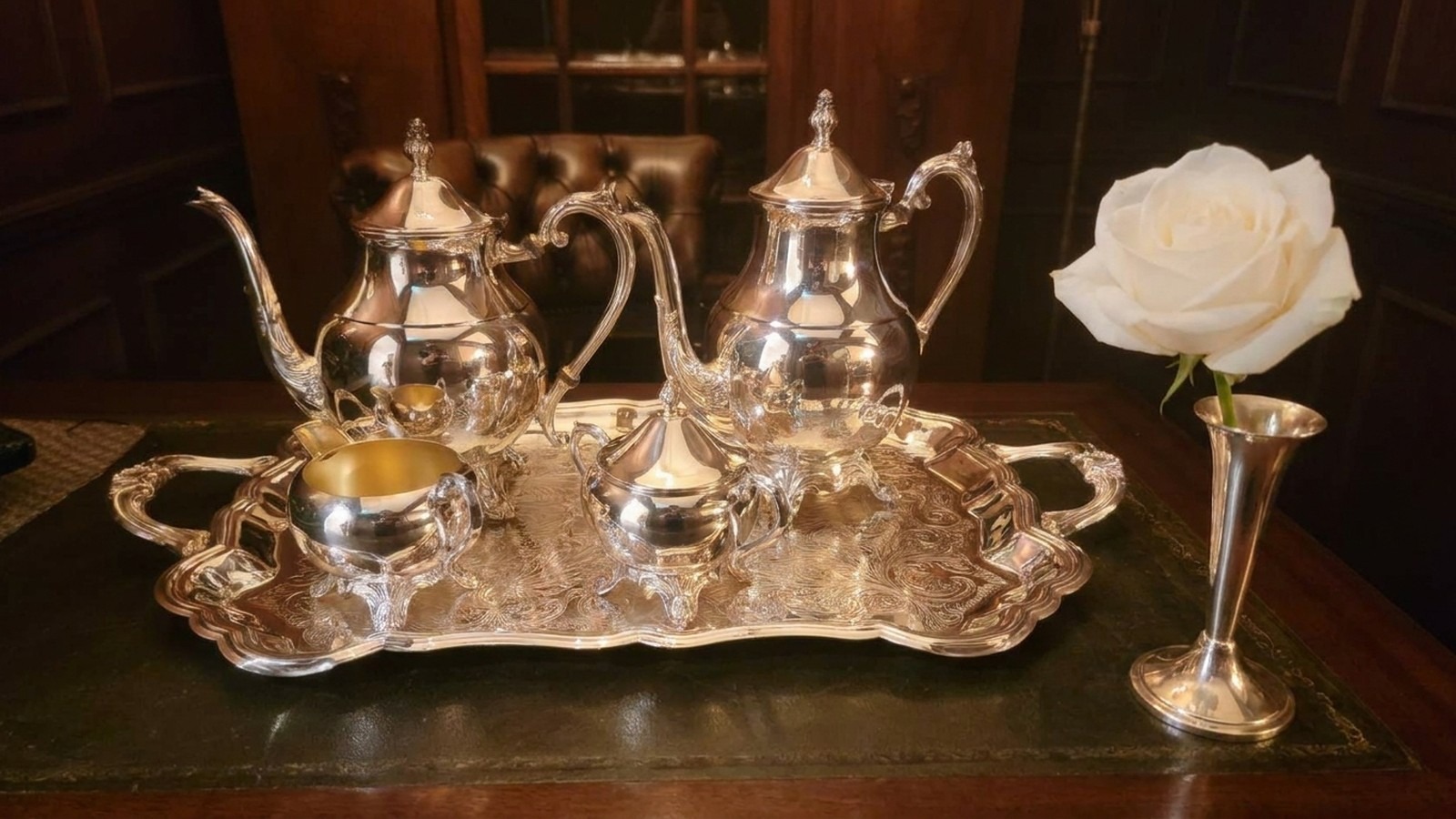
Students use the association's silver tea service and porcelain, learning the weight, the way heat travels and the sound: the feel of the hands that only the real thing can teach.
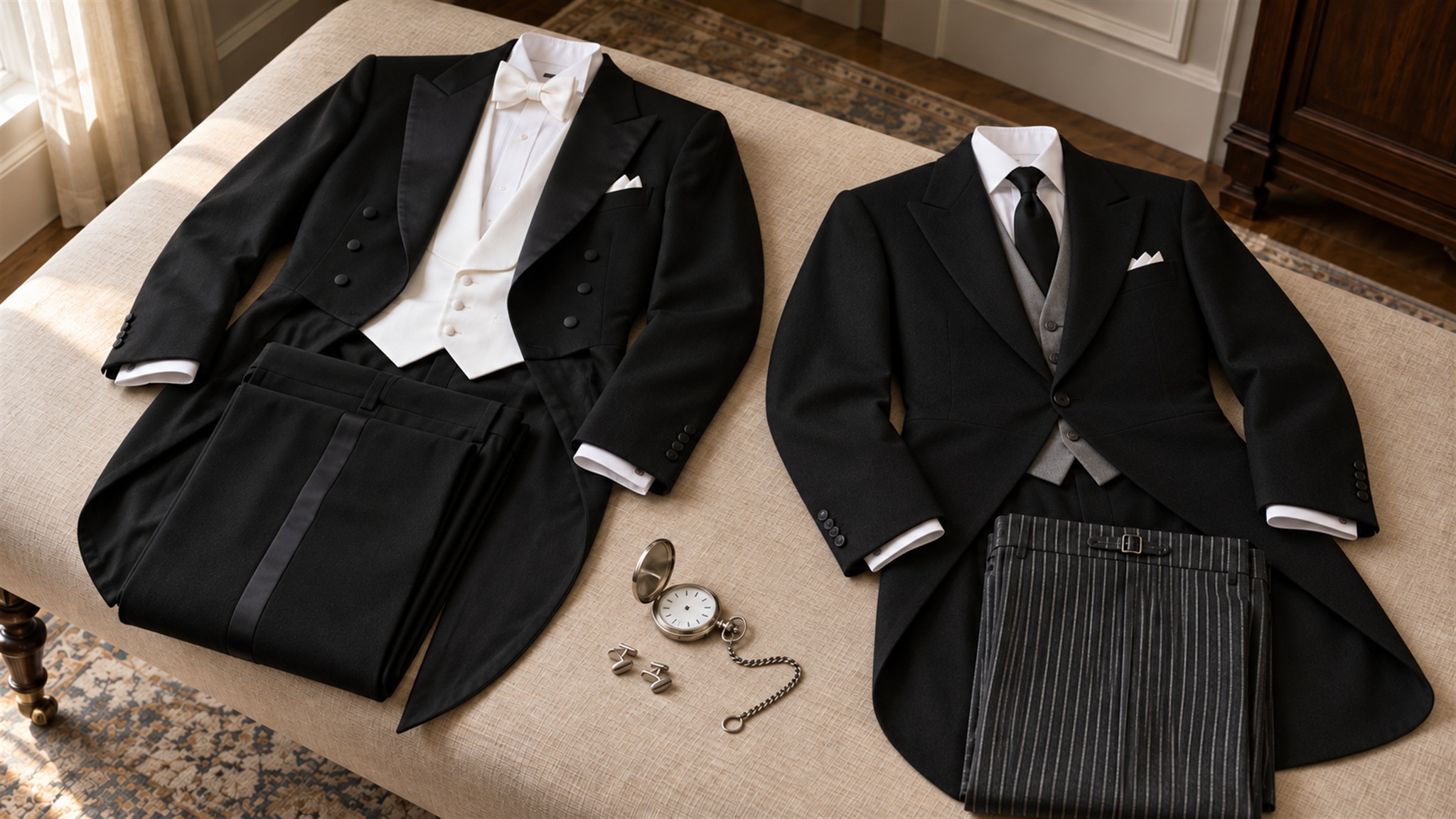
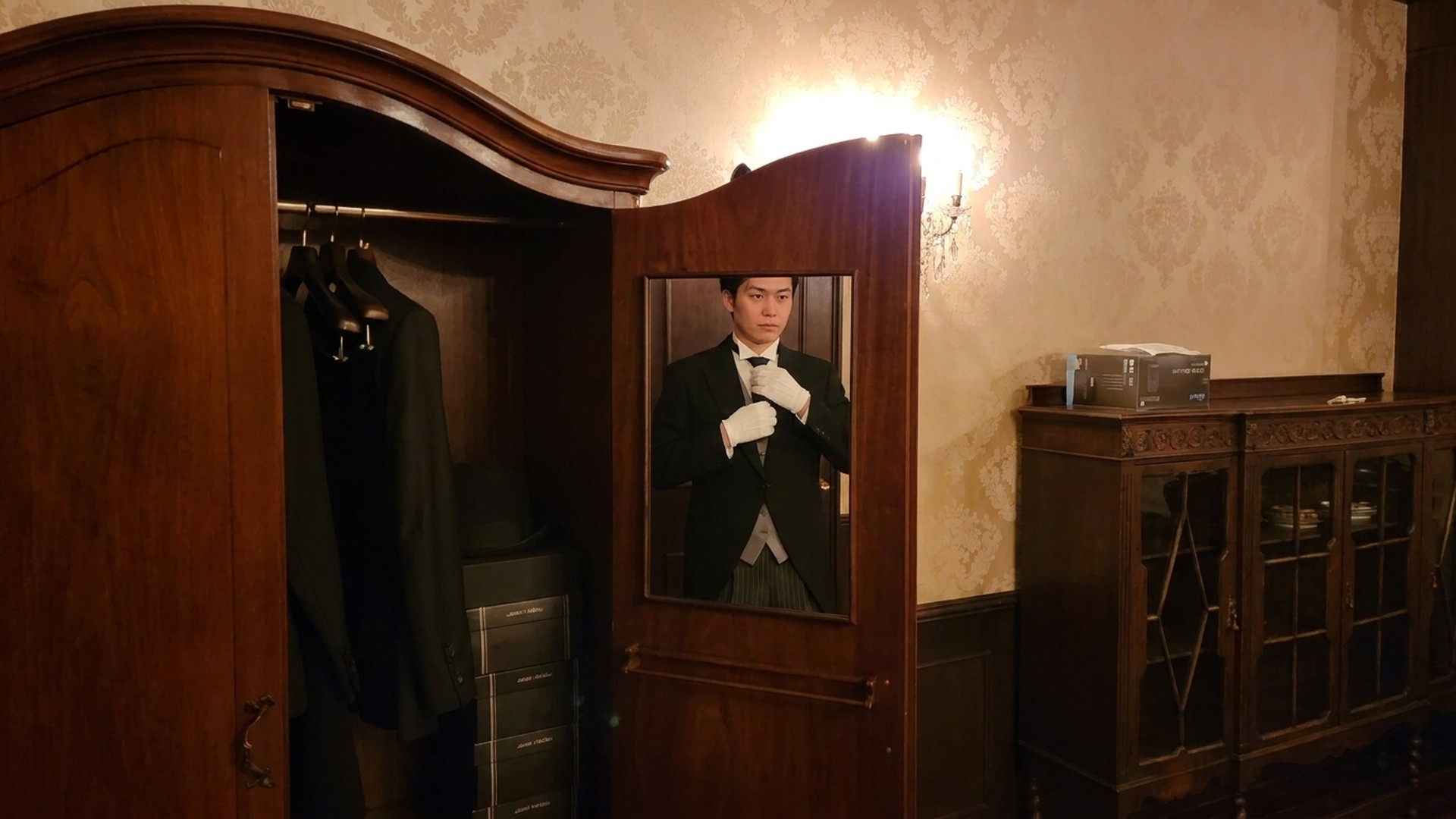
Morning coat, tailcoat, white gloves. In the attire classes students wear the real articles and learn how to wear and care for them, because attire is the butler's calling card.
Each course opens every season. For those still deciding, there are one-day trial classes and seminars: try the service of tea and the form of the bow in half a day, feel the air of the classroom, and then choose a course.
Brochures and individual consultations are free and available online. Application details, dates and conditions are on the official site. If I may say one thing as principal: a single day's trial gives the answer faster than the time spent deciding.
What I watch in a trial class is not skill with the cup. It is whether, when the instructor speaks, the student looks at the instructor's face or at the hands. Those who look at the face are already watching the other person before being taught, and they are handed the next form from the first day of the course.
Roughly three in ten of those who come to the one-day course have no intention of becoming butlers. They come wanting to host their families better, or to change how their own shop receives people. That is quite all right with me. The more people who carry the form home, the better the profession itself is understood.
After the one-day course, the difference between those who enrol and those who do not shows in an unexpected place. Those who enrol almost always try, on leaving, to clear away the vessels they used — though no one taught them to. What a butler school watches for is whether the hand moves of its own accord. Technique can be taught; the impulse to move cannot.
Course dates, tuition, application details and trial-class booking are on the Japan Butler Academy's official site. This page is an introduction from the principal's standpoint, so please confirm enrolment conditions on the official site.
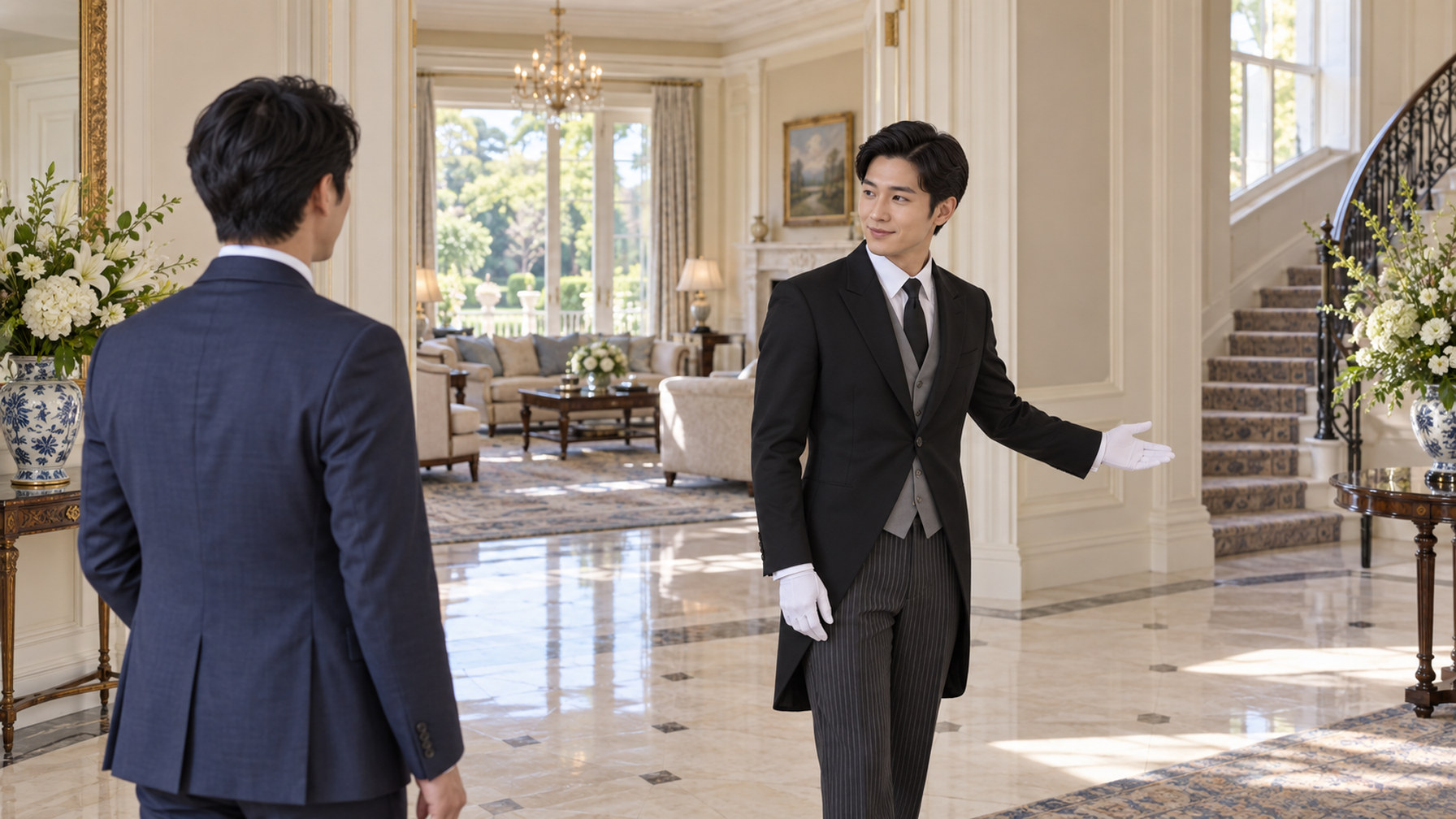
The butler service run by the All Japan Butler Association. Choose, by name and face, the one butler who suits your household or your business.
Learn more →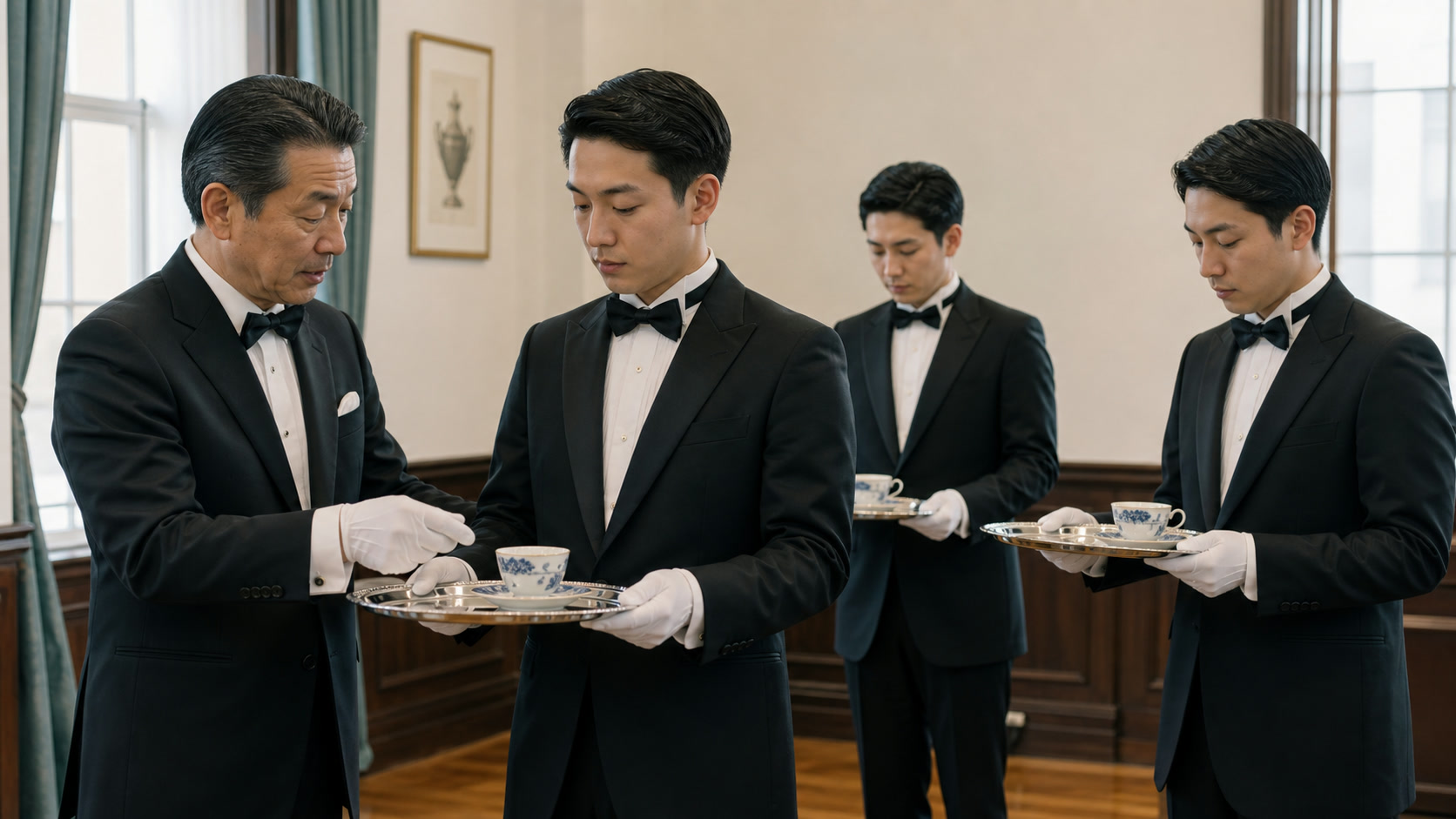
Founded in 1890: the parent body that trains butlers, recognises them by a standard and gives them rank. The academy, the residence in Odaiba and the butler service itself are all run by this one body.
Learn more →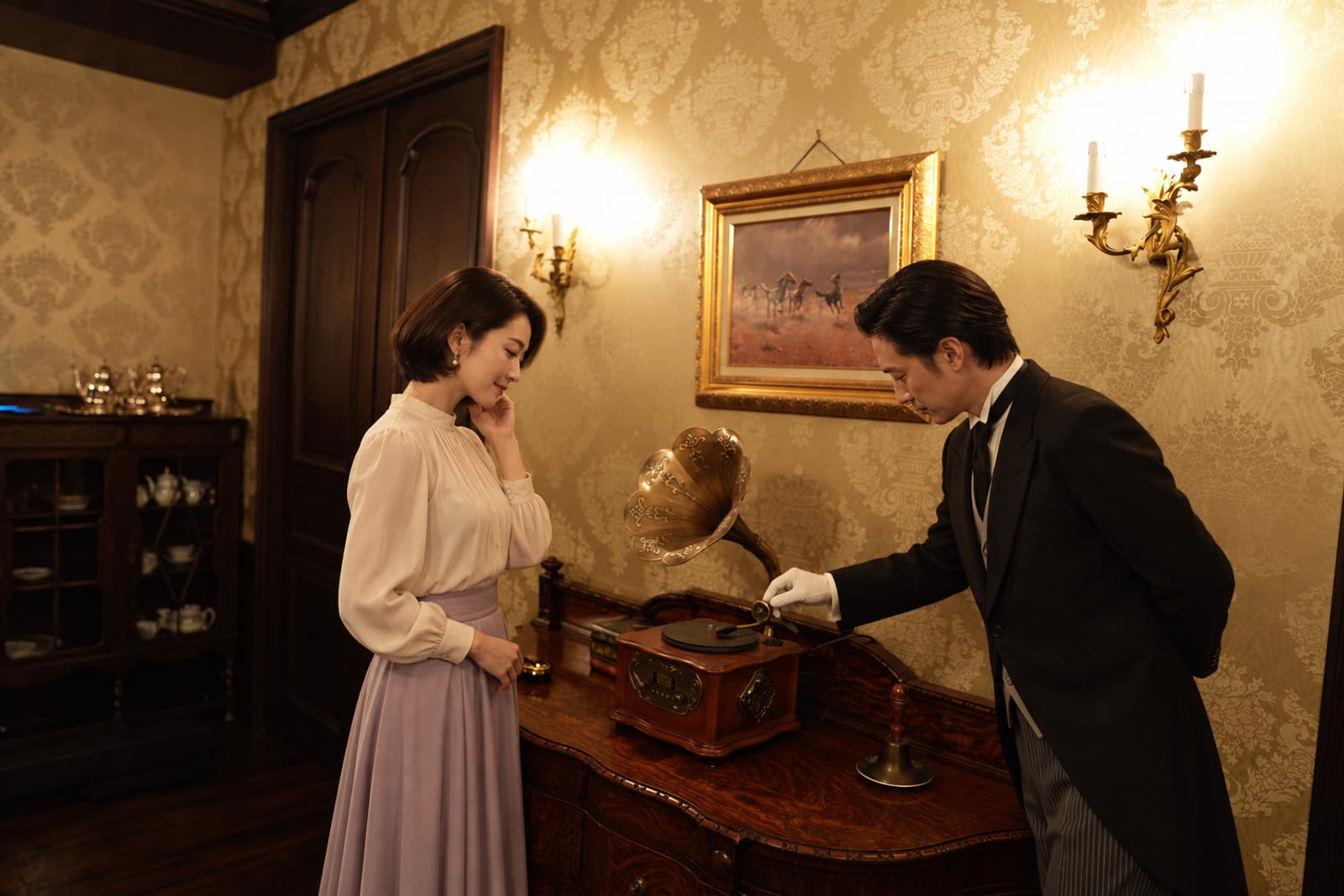
A butler salon that receives women as mistress of the house. One residence in Odaiba with four doors: salon, studio, apprentice experience and online shop, all kept by the All Japan Butler Association.
Learn more →If you are unsure which desk to approach, Butler Bell will point you to the right one.