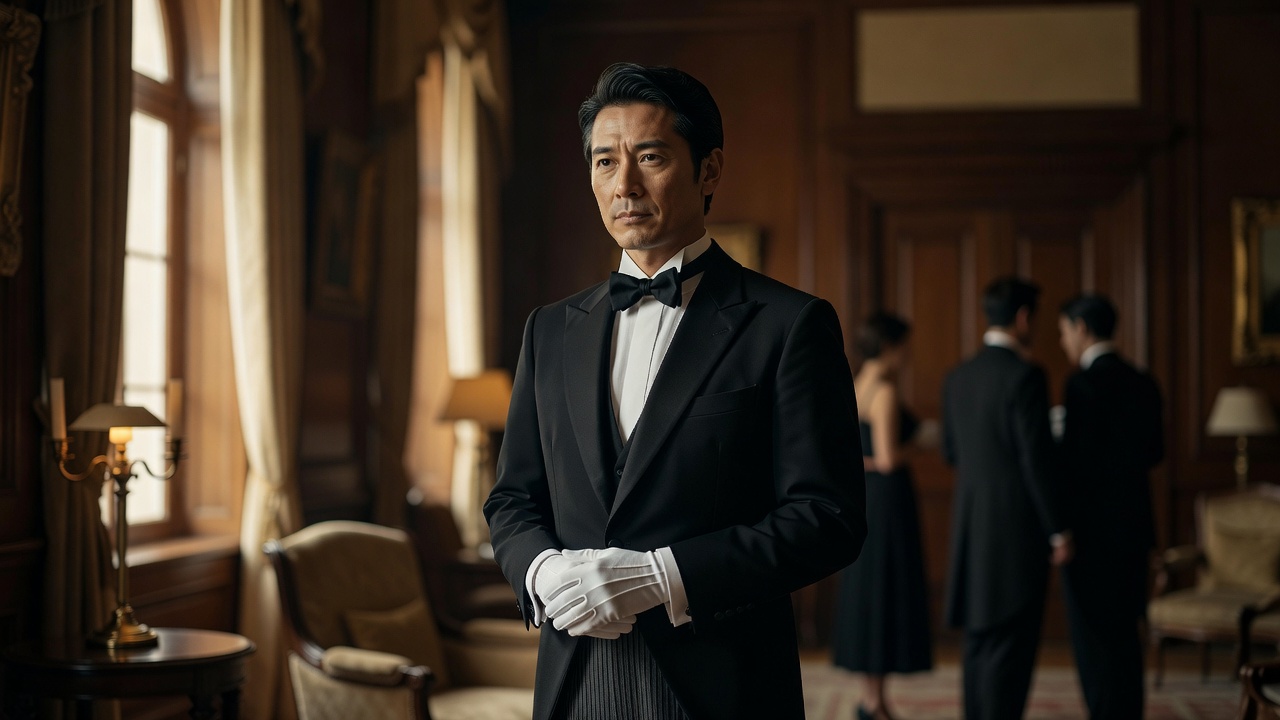
True hospitality, in my view, springs from the harmony between a caring heart and flawless technique. Neither element alone is enough; only when both are present can a guest feel genuinely at ease.
As head I set out how Western butler traditions and Japanese hospitality may be combined, and which principles I uphold in service.
A Butler Supports the Light, Rather Than Being a Shadow
A butler is often described as a shadow, yet I believe the true role is to support the light. Our duty is to help the client shine from behind the scenes.
Applause at any event belongs to the client, never to the butler. Success is measured by the remark that everything felt so natural one forgot a butler was present. Remaining unobtrusive is not modesty; it is the very design of the profession.
This principle guides every daily decision. When choosing between an action that draws attention to myself and one that simply improves the setting, I always select the latter. Such choices steadily define the butler’s proper place.

Heart and Technique Are Both Essential
Good intentions alone produce no form, while technique without feeling turns cold. Genuine hospitality appears only when a caring heart and reliable skill operate together.
Without knowledge of procedure even the best intentions lead to disorder. Conversely, flawless procedure that ignores the guest’s actual state becomes unwanted interference.
Butler training begins with repeated practice of movements precisely so that technique becomes second nature and leaves room for genuine attention to the guest.
Technique, then, is the tool that creates space for the heart to work. Viewed in this light, the value of patient repetition becomes clear.
How Western Butler Traditions and Japanese Hospitality Combine
I take the established British framework as a foundation and adapt it to Japanese daily life and refined Japanese movements. The forms are never imported unchanged.
British butler practice offers a long-refined, rational system of movement, precedence and handling of objects; these remain the essential base.
At the same time, the custom of removing shoes at the entrance, the coexistence of tatami and chairs, and the preference for restraint are distinctly Japanese.
My work is therefore one of translation rather than importation. I observe what feels comfortable in each household and adjust the forms accordingly. This act of translation itself constitutes the butler’s role in Japan.

Silence Also Has Its Duties
Choosing not to speak is itself part of the butler’s work. The aim is not continued conversation but the maintenance of the distance the guest requires.
When a guest is tired or deep in thought, words become a burden. Placing a drink and withdrawing, lowering a lamp, or moving without sound can be the most courteous response. There are many occasions when saying nothing is the kindest service.
The ability to choose silence depends on whether one is truly observing the guest. Watching, I find, is more difficult than speaking, and I am reminded of this every day.
The Responsibility of Preserving the Profession
Personal excellence alone does not secure the future of the craft. Education, standards and the passing on of skills to the next generation form part of the head’s responsibility.
In Japan the butler’s calling once nearly disappeared. Without practitioners the skills are lost; without standards quality cannot be maintained.
That is why the Association maintains training, certification and placement systems. Only with such structures can the profession be handed on.
My task is not to complete the work in my own lifetime but to prepare what must be passed forward. This is the reason I articulate these principles.
Frequently Asked Questions
What does hospitality mean to Butler Bell?
It arises from the harmony of a caring heart and flawless technique. Neither element alone suffices; only when both are present can a guest feel genuinely at ease.
Is a butler meant to remain in the shadows?
I regard the butler not as a shadow but as one who supports the light. The client is the principal figure, and success is measured by the feeling that everything was so natural the butler’s presence was forgotten.
Are Western and Japanese butlers the same?
The foundation is shared, yet the forms are not adopted unchanged. British practice is respected while being adapted to Japanese daily life and refined Japanese movements. This work of translation itself forms part of the Japanese butler’s role.
Related Pages
Enquiries
We welcome enquiries regarding interviews, lectures and training.
Contact us