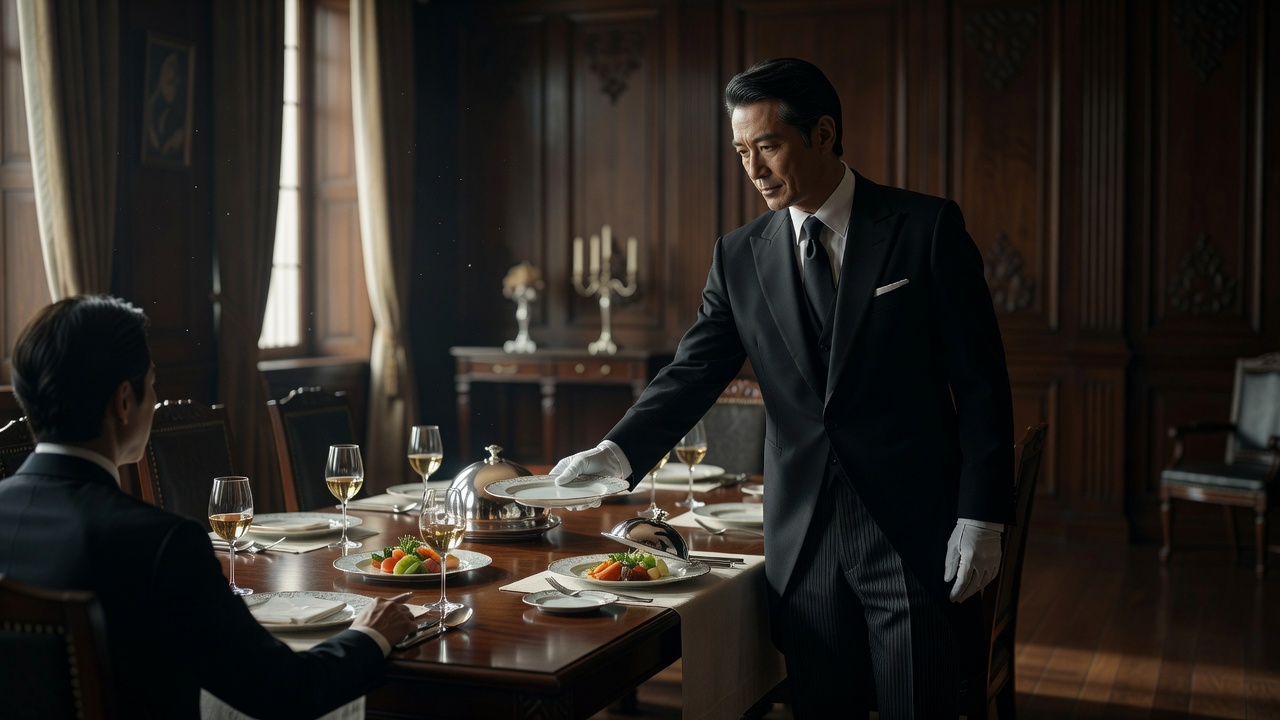
In a Western course meal the rule is to begin with the outermost pieces of cutlery. The sequence exists not to impress, but to let everyone concentrate on the food without uncertainty.
I shall therefore walk through the handling of soup and meat courses, the correct way to eat rice, and the proper placement of cutlery at the end of each stage.
How the courses proceed
The usual order runs from hors d’oeuvre, soup, fish and meat to dessert, with the corresponding cutlery arranged from the outside in.
The number of pieces laid at the start gives a fair indication of how many courses will follow. Working from the outside leaves only the dessert implements at the end. Any cutlery placed horizontally above the plate is reserved for dessert.
Additional pieces may be brought during the meal; the same principle applies—use the newest arrivals from the outside.
How to drink soup
Draw the spoon towards you and sip without noise. When tilting the bowl, raise the far edge.
Moving the spoon away from you ensures any spill falls into the bowl rather than onto your lap. Once the soup is low, lift the far side of the plate and tilt it accordingly.
When finished, rest the spoon inside the soup plate or, if a cup is used, on its saucer.
Dealing with fish and meat
Cut and eat one mouthful at a time; never dissect the whole portion in advance, as flavour and appearance both suffer.
Begin with the upper side of the fish, remove the bones, then continue on the lower side without turning the fillet over. For meat, cut a single mouthful from the left edge and convey it to the mouth at once.
When extra pressure is required, lower the angle of the knife so the blade works quietly; silence at table remains one of the chief courtesies of Western dining.
How to eat rice and bread
Rice may be carried on the back or the front of the fork; bread is broken by hand and eaten piece by piece.
The practice of loading the back of the fork became common in Japan but is not required; continuing with an awkward method only draws attention.
Bread is usually taken once the soup course is cleared. Break off one mouthful at a time so the torn surface is not displayed. Butter each piece separately.
Signalling the end and handling the napkin
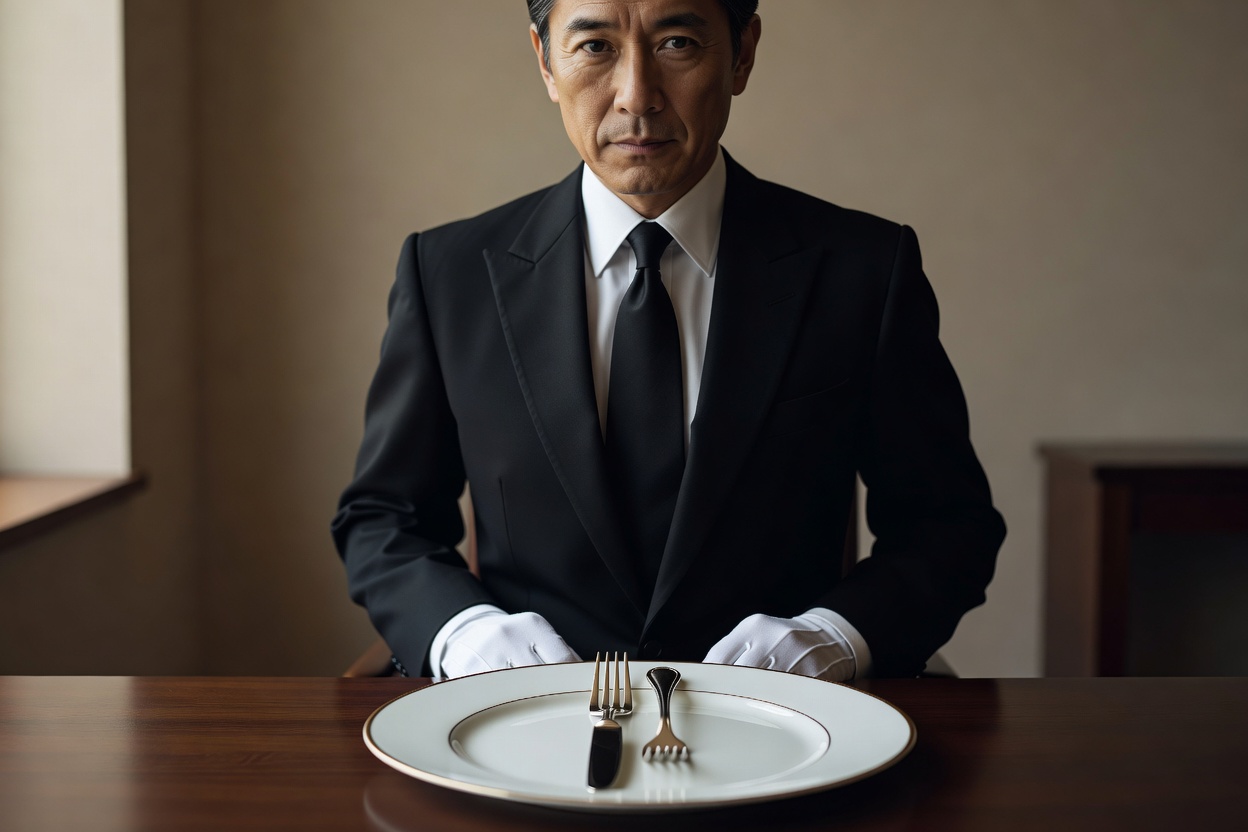
Place the knife and fork together at the lower right of the plate. Fold the napkin lightly and leave it on the left side of the table before rising.
The usual alignment has the handles pointing to the lower right with the blade turned inward; an outward blade is considered discourteous to the waiter.
If you leave the table temporarily, rest the napkin on your chair; placing it on the table may be taken as a sign that you have finished.
Handling awkward moments
Whether cutlery is dropped, wine is spilt or the order is mistaken, the calmest response is to inform the staff quietly rather than attempt an immediate correction.
If an implement falls, do not retrieve it yourself; attract the waiter’s attention instead. The same applies to any spill; sudden movements only increase notice.
An error in sequence can be corrected from the next course onward; most diners will not have observed it, and composure itself forms part of good manners.
Frequently Asked Questions
Which piece of cutlery should I use first?
Begin with the outermost implement. The pieces are arranged to match each course, and any cutlery lying horizontally above the plate is intended for dessert.
How should soup be drunk?
Draw the spoon towards you. When little remains, tilt the far edge of the plate. Above all, avoid making a sound.
Must rice be carried on the back of the fork?
There is no need to follow that convention. The front of the fork is perfectly acceptable; persisting with an awkward method only makes one appear uneasy.
What should I do if I drop a piece of cutlery?
Do not attempt to retrieve it yourself. Quietly inform the waiter; any sudden movement draws more attention than the mishap itself.
Related Pages
Enquiries about Manners Courses
I am pleased to arrange practical sessions on Western table manners.
Contact Us